Clinical Research Development Unit, Alborz University of Medical Sciences, Karaj, Iran.
Student Research Committee, School of Medicine, Alborz University of Medical Sciences, Karaj, Iran.
BMC Geriatr. 2023 Oct 19;23(1):680. doi: 10.1186/s12877-023-04302-5.
The identification of new prognostic tools for the prediction of burn patients' morbidity outcomes is necessary. Considering the feasibility of frailty assessment in the clinical setting, we aim to systematically review the literature on the associations between frailty and adverse outcomes in burn patients.
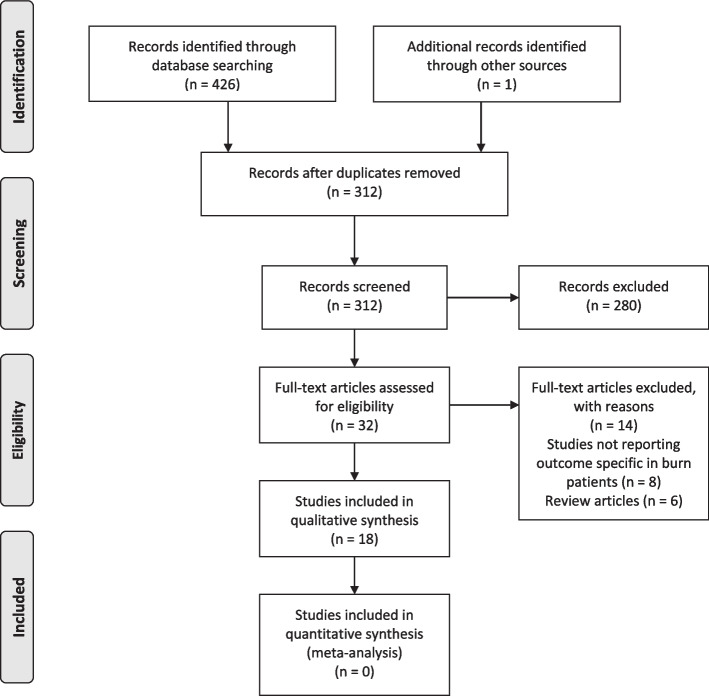
Studies were retrieved from MEDLINE (through PubMed), Web of Science, Scopus, and Embase from their inception up to 8 September 2022. Included studies were those that used frailty indices to predict adverse outcomes in burn patients. The quality assessment was done using the National, Heart, Lung, and Blood Institute (NHLBI) checklist. The results were synthesized narratively.
We included 18 studies. The sample size among the included studies varied between 42-1615 patients. There were 12 research articles and 6 conference abstracts. Most of the studies were recently published in 2021 and 2022. Seven different frailty measures were evaluated. The following frailty measures were used: Canadian Study for Health and Ageing (CSHA) Clinical Frailty score (CFS), Modified frailty index-11 (mFI-11), Hospital frailty index, FRAIL scale, Emergency General Surgery Frailty Index (EGSFI), and Burn frailty index (BFI). There was only one report regarding a specific frailty index designed for the burn population (BFI). Except for one study (which used mFI-11), all included studies have shown a significant effect between assessing frailty and predicting worse outcomes. The CFS was an independent predictor of mortality among the burn population with high certainty of evidence. We found a significant association for other frailty indices as a predictor of mortality, however, the certainty of evidence regarding those was not high. Eight studies found a positive association between assessing frailty and unfavorable discharge location. There was no association between frailty and increased length of stay.
In conclusion, the postadmission assessment of frailty can be a reliable tool for predicting unfavorable outcomes and mortalities among patients with burn injuries. In addition, future studies with various populations from other countries are required to evaluate the efficacy of frailty indices measurement in order to strengthen the available evidence.
需要寻找新的预后工具来预测烧伤患者的发病情况。考虑到在临床环境中进行虚弱评估的可行性,我们旨在系统地回顾有关烧伤患者虚弱与不良结局之间关联的文献。
我们从 MEDLINE(通过 PubMed)、Web of Science、Scopus 和 Embase 数据库中检索了从成立到 2022 年 9 月 8 日的研究。纳入的研究使用虚弱指数来预测烧伤患者的不良结局。使用美国国立心肺血液研究所(NHLBI)清单进行质量评估。结果以叙述性方式进行综合。
我们纳入了 18 项研究。纳入研究的样本量在 42-1615 例之间不等。其中 12 项为研究文章,6 项为会议摘要。大多数研究于 2021 年和 2022 年最近发表。评估了七种不同的虚弱测量方法。使用的虚弱测量方法如下:加拿大健康与老龄化研究(CSHA)临床虚弱评分(CFS)、改良虚弱指数-11(mFI-11)、医院虚弱指数、脆弱性量表、急诊普通外科虚弱指数(EGSFI)和烧伤虚弱指数(BFI)。只有一项报告涉及为烧伤人群设计的特定虚弱指数(BFI)。除了一项研究(使用 mFI-11)外,所有纳入的研究都表明评估虚弱与预测较差结局之间存在显著关联。CFS 是烧伤人群死亡率的独立预测因素,具有高确定性证据。我们发现其他虚弱指数作为死亡率预测指标存在显著关联,但这些关联的证据确定性不高。八项研究发现评估虚弱与不利出院地点之间存在正相关。虚弱与住院时间延长之间没有关联。
总之,入院后评估虚弱可以作为预测烧伤患者不良结局和死亡率的可靠工具。此外,还需要来自其他国家不同人群的进一步研究来评估虚弱指数测量的疗效,以加强现有证据。