Kim Hee Jin, Thyssen Gregory N, Delhom Christopher D, Fang David D, Naoumkina Marina, Florane Christopher B, Li Ping, Jenkins Johnie N, McCarty Jack C, Zeng Linghe, Campbell B Todd, Jones Don C
Southern Regional Research Center, Cotton Fiber Bioscience and Utilization Research Unit, United States Department of Agriculture-Agricultural Research Service (USDA-ARS), New Orleans, LA, United States.
Sustainable Water Management Research Unit, United States Department of Agriculture-Agricultural Research Service (USDA-ARS), Stoneville, MS, United States.
Front Plant Sci. 2024 Oct 30;15:1472675. doi: 10.3389/fpls.2024.1472675. eCollection 2024.
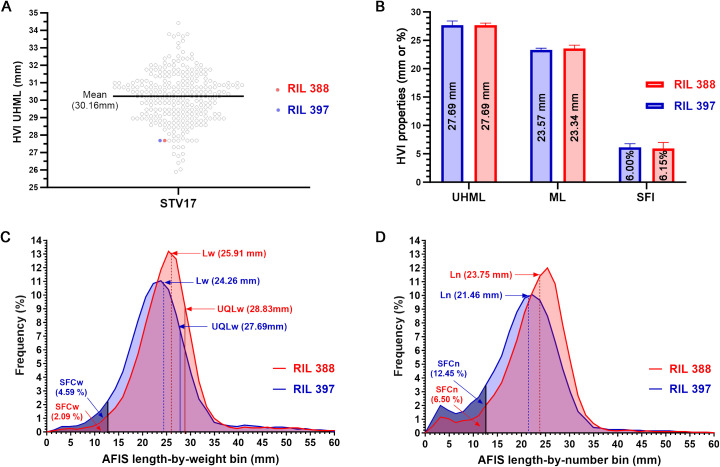
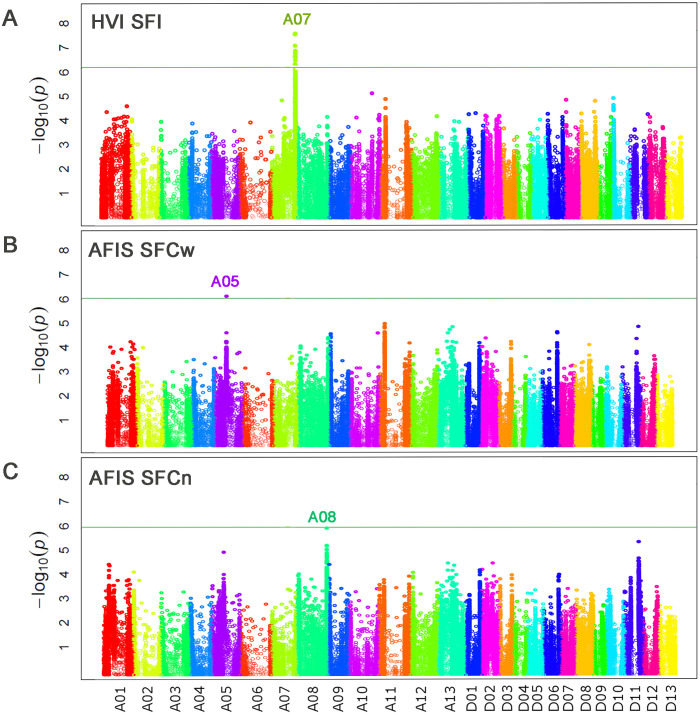
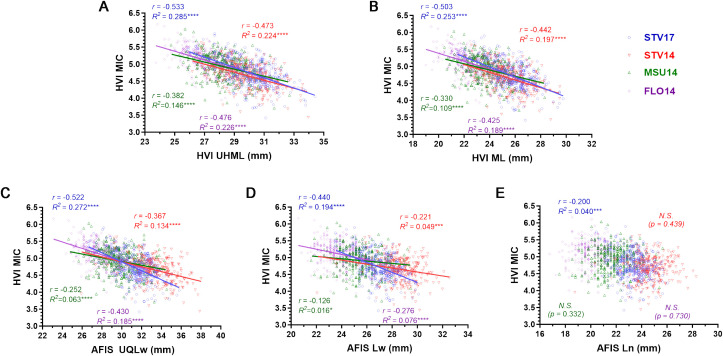
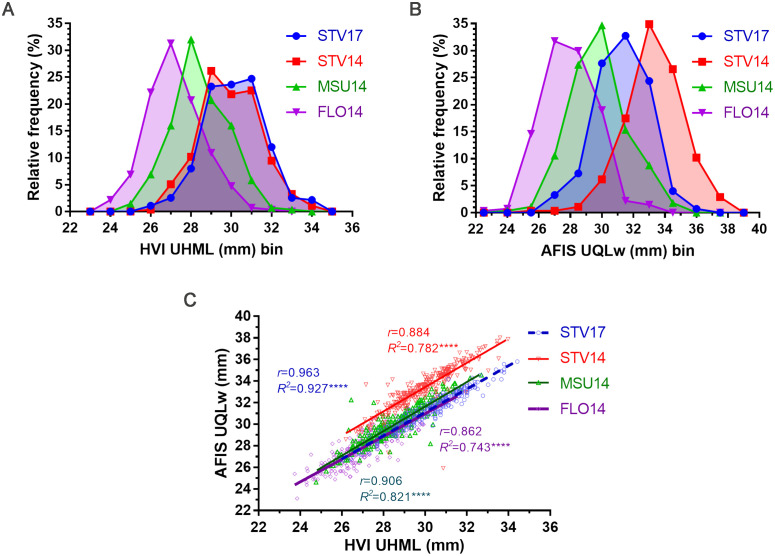
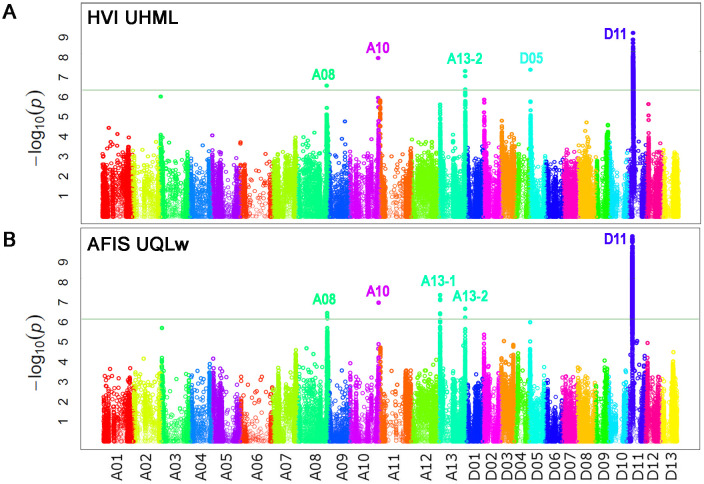
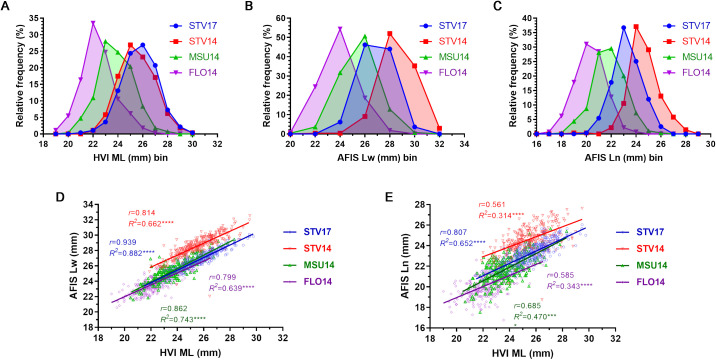
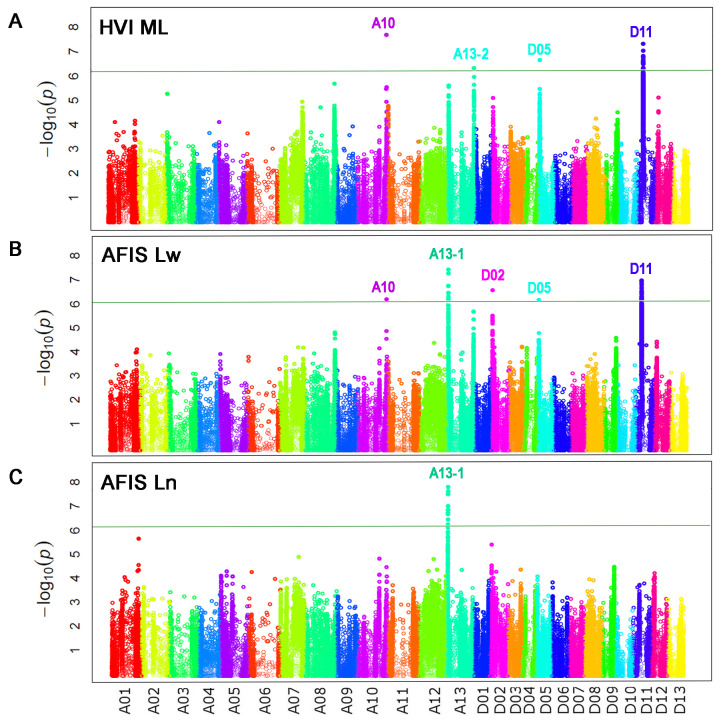
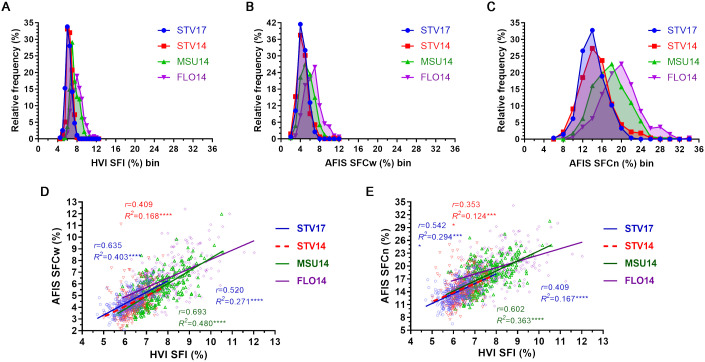
Within-sample variation in cotton fiber length is a major factor influencing the production and quality of yarns. The textile industry has been searching for approaches of improving the long fiber fraction and minimizing the short fiber fraction within a cotton sample to produce superior fiber and yarn quality. USTER High Volume Instrument (HVI) has been widely used for a rapid assessment of cotton fiber length traits from a fiber bundle. However, its effectiveness for genetic studies has been questioned due to the indirect estimations of the cotton fiber traits that cannot be measured from a fiber bundle. To overcome the limits of the HVI fiber length traits, we utilized the Advanced Fiber Information System (AFIS) measuring fiber length traits directly from individual fibers based on weight or number. Comparative fiber length analyses showed AFIS provided higher sensitivity in detecting the fiber length variations within and among cotton samples than HVI. The weight-based AFIS length traits were strongly correlated with the corresponding HVI lengths, whereas the number-based AFIS mean length showed a relatively weaker correlation with the HVI lengths. Integrations of the weight based-length traits with genome-wide association studies (GWAS) enabled classifying the QTLs specifically associated with long, mean, or short fiber length traits and identified a false positive associated with the indirectly estimated HVI short fiber trait. Unlike the weight based-AFIS length traits, the number-based AFIS length trait did not show a negative correlation with a weight related-HVI property, and identified a single QTL that was not detected by the corresponding HVI trait. These results suggested that integrating the AFIS method with GWAS helped discoveries of the genome loci involved in the within-sample variation in cotton fiber length and characterizations of the fiber length QTLs.
棉纤维长度的样本内变异是影响纱线生产和质量的主要因素。纺织行业一直在寻找提高棉样中长纤维比例并最小化短纤维比例的方法,以生产出质量更优的纤维和纱线。乌斯特大容量测试仪(HVI)已被广泛用于从纤维束快速评估棉纤维长度特性。然而,由于对无法从纤维束测量的棉纤维特性进行间接估计,其在遗传研究中的有效性受到质疑。为了克服HVI纤维长度特性的局限性,我们利用先进纤维信息系统(AFIS)直接基于重量或数量从单根纤维测量纤维长度特性。比较纤维长度分析表明,与HVI相比,AFIS在检测棉样内部和之间的纤维长度变异方面具有更高的灵敏度。基于重量的AFIS长度特性与相应的HVI长度密切相关,而基于数量的AFIS平均长度与HVI长度的相关性相对较弱。将基于重量的长度特性与全基因组关联研究(GWAS)相结合,能够对与长、平均或短纤维长度特性特异性相关的数量性状基因座(QTL)进行分类,并识别出一个与间接估计的HVI短纤维特性相关的假阳性。与基于重量的AFIS长度特性不同,基于数量的AFIS长度特性与与重量相关的HVI特性没有负相关,并识别出一个相应HVI特性未检测到的单一QTL。这些结果表明,将AFIS方法与GWAS相结合有助于发现参与棉纤维长度样本内变异的基因组位点,并对纤维长度QTL进行表征。