College of Biosystems Engineering and Food Science, Zhejiang University, Hangzhou 310058, China.
Key Laboratory of Spectroscopy Sensing, Ministry of Agriculture and Rural Affairs, Hangzhou 310058, China.
J Adv Res. 2021 May 12;35:215-230. doi: 10.1016/j.jare.2021.05.002. eCollection 2022 Jan.
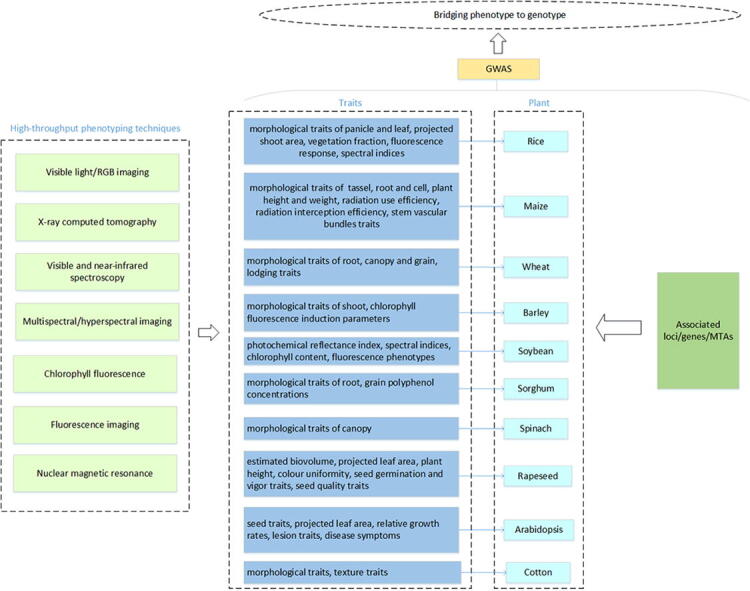
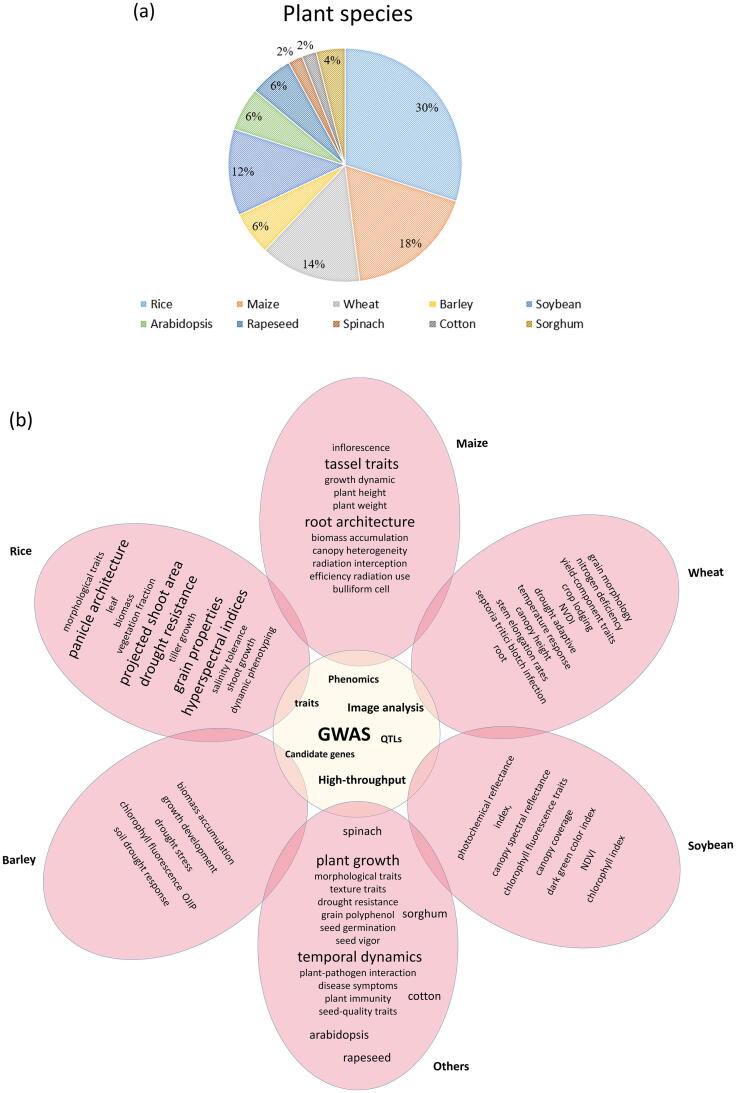
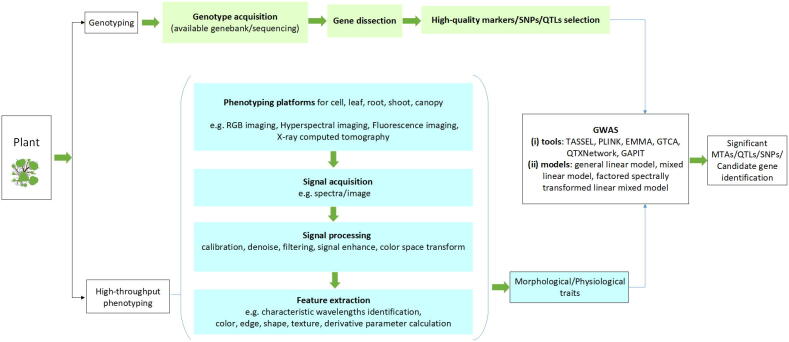
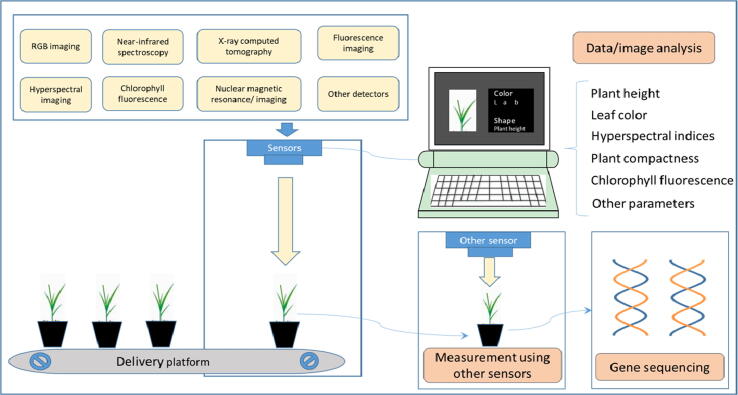
Linking phenotypes and genotypes to identify genetic architectures that regulate important traits is crucial for plant breeding and the development of plant genomics. In recent years, genome-wide association studies (GWASs) have been applied extensively to interpret relationships between genes and traits. Successful GWAS application requires comprehensive genomic and phenotypic data from large populations. Although multiple high-throughput DNA sequencing approaches are available for the generation of genomics data, the capacity to generate high-quality phenotypic data is lagging far behind. Traditional methods for plant phenotyping mostly rely on manual measurements, which are laborious, inaccurate, and time-consuming, greatly impairing the acquisition of phenotypic data from large populations. In contrast, high-throughput phenotyping has unique advantages, facilitating rapid, non-destructive, and high-throughput detection, and, in turn, addressing the shortcomings of traditional methods. This review summarizes the current status with regard to the integration of high-throughput phenotyping and GWAS in plants, in addition to discussing the inherent challenges and future prospects. High-throughput phenotyping, which facilitates non-contact and dynamic measurements, has the potential to offer high-quality trait data for GWAS and, in turn, to enhance the unraveling of genetic structures of complex plant traits. In conclusion, high-throughput phenotyping integration with GWAS could facilitate the revealing of coding information in plant genomes.
将表型和基因型联系起来,以确定调控重要性状的遗传结构,这对于植物育种和植物基因组学的发展至关重要。近年来,全基因组关联研究(GWAS)已被广泛应用于解释基因与性状之间的关系。成功的 GWAS 应用需要来自大群体的综合基因组和表型数据。尽管有多种高通量 DNA 测序方法可用于生成基因组数据,但生成高质量表型数据的能力远远落后。传统的植物表型测量方法主要依赖于人工测量,既费力、不准确又耗时,极大地影响了从大群体中获取表型数据。相比之下,高通量表型测量具有独特的优势,可实现快速、非破坏性和高通量检测,从而克服了传统方法的缺点。 本文综述了高通量表型测量与植物 GWAS 整合的现状,讨论了其内在的挑战和未来的前景。 高通量表型测量,实现了非接触和动态测量,有望为 GWAS 提供高质量的性状数据,从而进一步揭示复杂植物性状的遗传结构。 总之,高通量表型测量与 GWAS 的整合可以促进植物基因组中编码信息的揭示。