Department of Hepatobiliary Surgery, Siyang Hospital, Suqian, Jiangsu, 223799, China.
Department of General Surgery, The Second Affiliated Hospital of Nanchang University, Nanchang, Jiangxi, 330008, China.
Biol Direct. 2024 Nov 20;19(1):118. doi: 10.1186/s13062-024-00567-x.
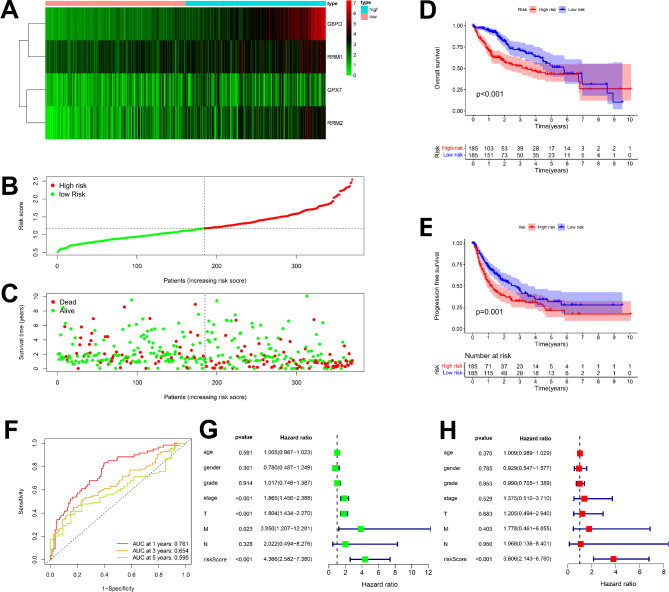
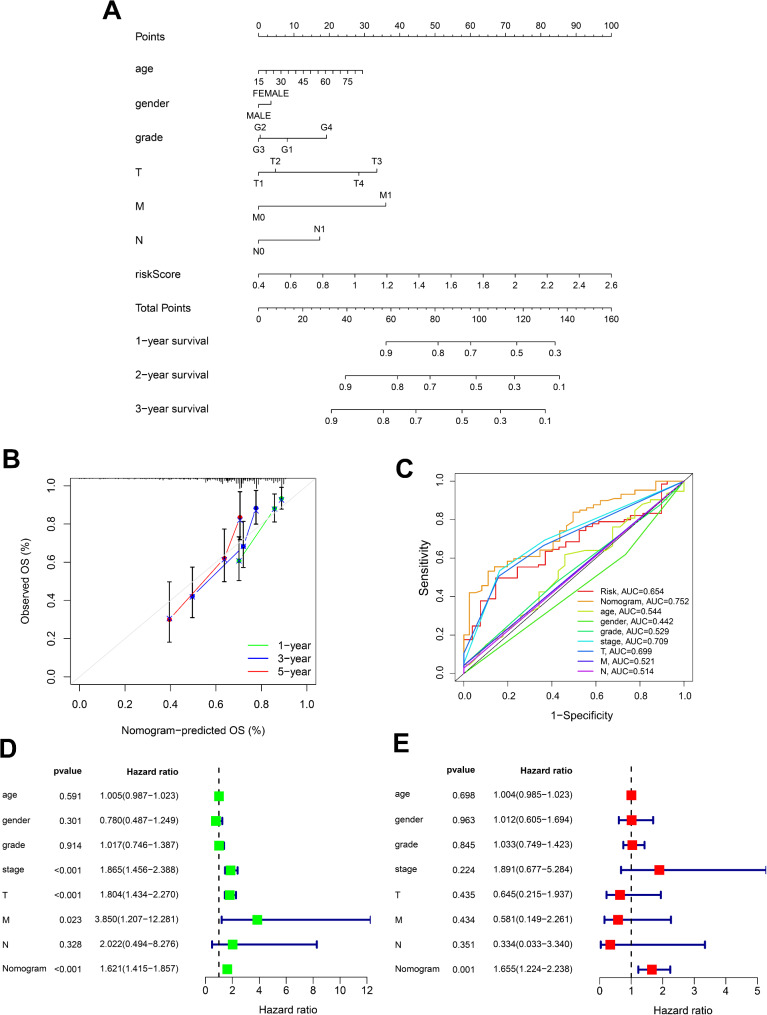
Hepatocellular carcinoma (HCC) ranks among the most lethal malignancies around the world. However, the current management strategies for predicting prognosis in HCC patients remain unreliable. Our study developed a robust prognostic model based on glutamine metabolism associated-genes (GMAGs), utilizing data from The Cancer Genome Atlas database. The prognostic values of model were validated through the databases of the Gene Expression Omnibus and International Cancer Genome Consortium via Kaplan‒Meier curves and receiver operating characteristic (ROC). The potential biological pathways associated with prognostic risk were investigated through different enrichment analysis, and Gene variation analysis. The correlation between prognostic model and therapeutic responses were analyzed. Quantitative real-time PCR (qRT-PCR) and cellular experiments were measured to analyze the GMAGs. Consequently, a prognostic model was constructed of 4 GMAGs (RRM1, RRM2, G6PD, and GPX7) through least absolute shrinkage and selection operator (LASSO) regression analysis. The Kaplan‒Meier curves and ROC curves showed a reliable predictive capacity of prognosis for HCC patients (p < 0.05). The enrichment analyses revealed a multitude of biological pathways that are significantly associated with cancer. Patients with high prognostic risk might be sensitive to immunotherapy (p < 0.05). The results of qRT-PCR revealed that all 4 GMAGs exhibited significantly higher expression levels in HCC samples compared to normal samples (p < 0.05). Moreover, the knockdown of RRM1 suppresses the progression of HCC cells. In this study, we developed a robust prognostic model for predicting the prognosis of HCC patients based on GMAGs, and identified RRM1 as a potential therapeutic target for HCC.
肝细胞癌(HCC)是全球最致命的恶性肿瘤之一。然而,目前用于预测 HCC 患者预后的管理策略仍然不可靠。我们的研究基于谷氨酰胺代谢相关基因(GMAGs),利用来自癌症基因组图谱数据库的数据,开发了一种稳健的预后模型。通过 Kaplan-Meier 曲线和接收者操作特征(ROC)曲线,利用基因表达综合数据库和国际癌症基因组联盟数据库验证了模型的预后价值。通过不同的富集分析和基因变异分析,研究了与预后风险相关的潜在生物学途径。分析了预后模型与治疗反应的相关性。通过定量实时 PCR(qRT-PCR)和细胞实验测量分析了 GMAGs。通过最小绝对收缩和选择算子(LASSO)回归分析,构建了一个由 4 个 GMAGs(RRM1、RRM2、G6PD 和 GPX7)组成的预后模型。Kaplan-Meier 曲线和 ROC 曲线显示,该模型对 HCC 患者的预后具有可靠的预测能力(p<0.05)。富集分析显示,与癌症显著相关的生物学途径有很多。高预后风险的患者可能对免疫治疗敏感(p<0.05)。qRT-PCR 的结果显示,与正常样本相比,所有 4 个 GMAGs 在 HCC 样本中的表达水平均显著升高(p<0.05)。此外,RRM1 的敲低抑制了 HCC 细胞的进展。在这项研究中,我们基于 GMAGs 开发了一种用于预测 HCC 患者预后的稳健预后模型,并确定 RRM1 是 HCC 的一个潜在治疗靶点。