Department of Molecular Biology, University of Texas Southwestern Medical Center, Dallas, TX, USA.
Department of Biophysics, University of Texas Southwestern Medical Center, Dallas, TX, USA.
Science. 2024 Nov 22;386(6724):eadq8587. doi: 10.1126/science.adq8587.
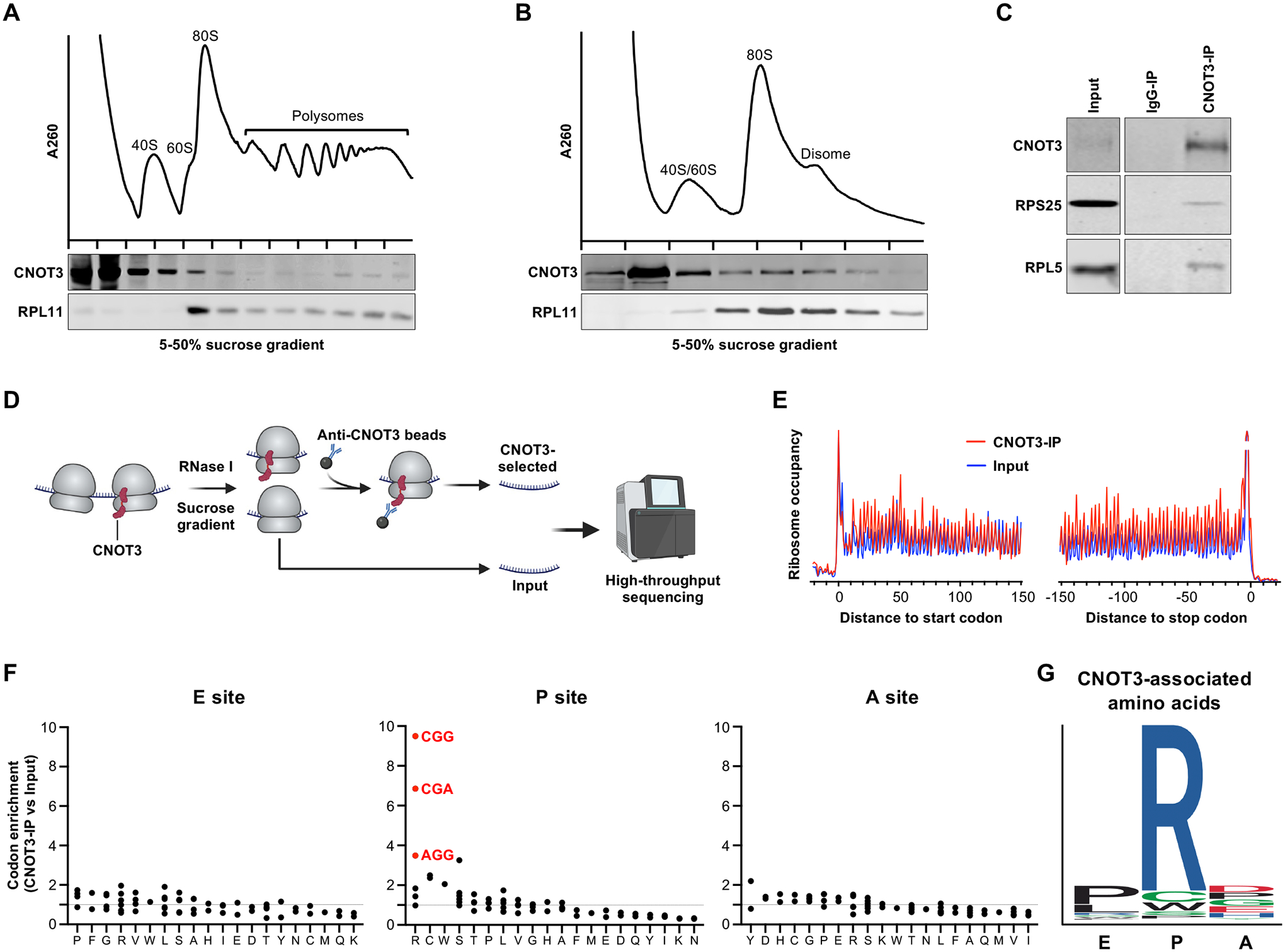
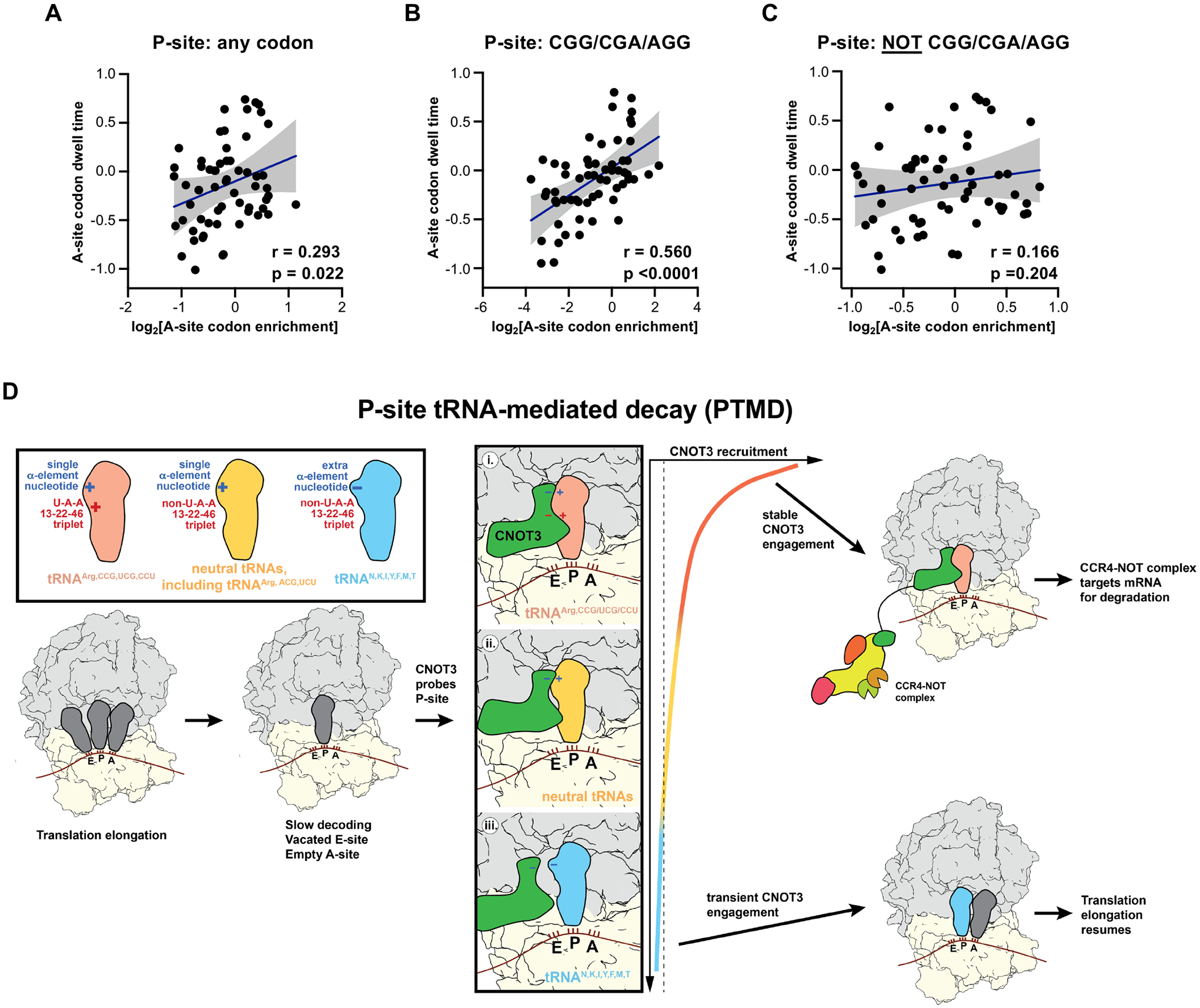
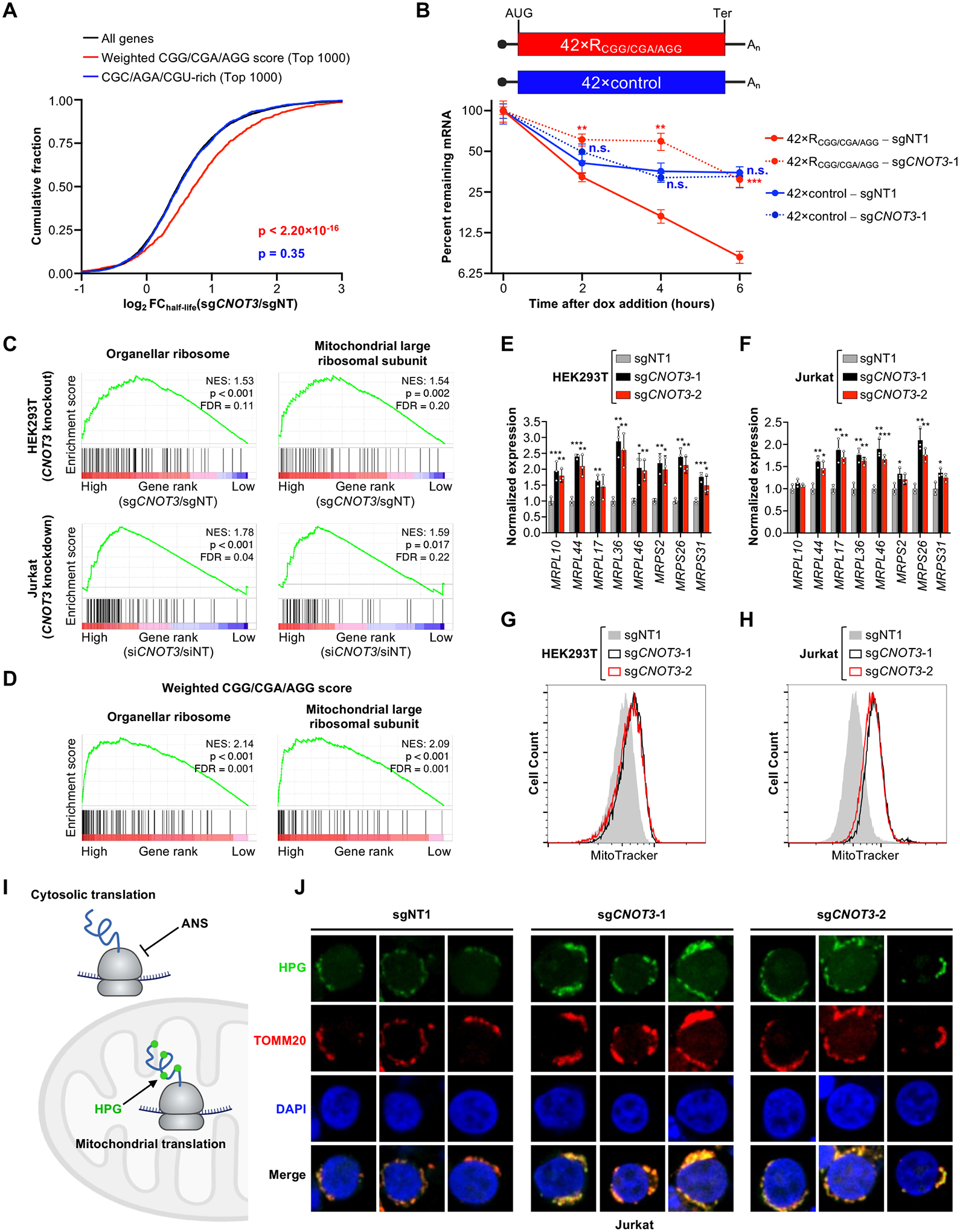
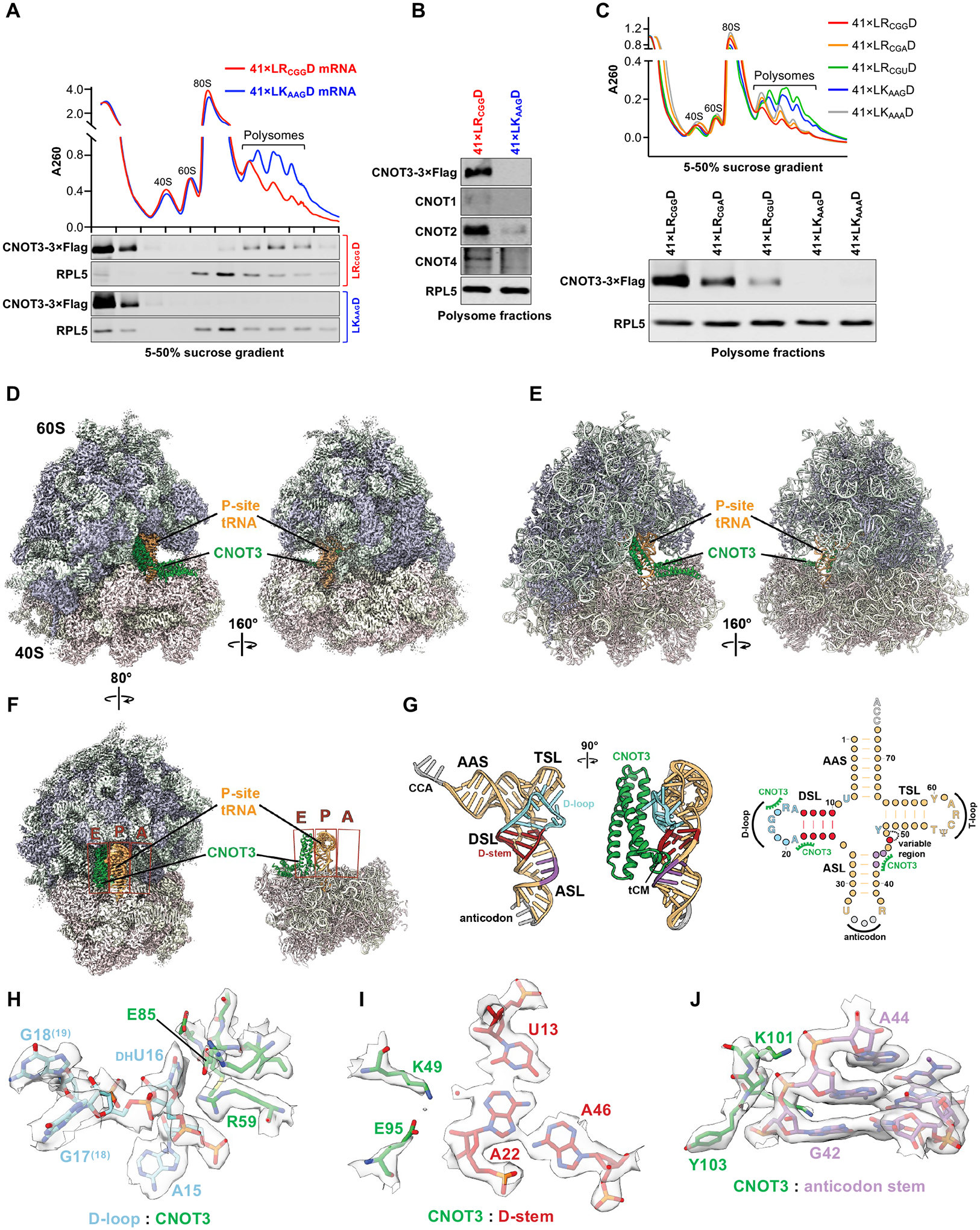
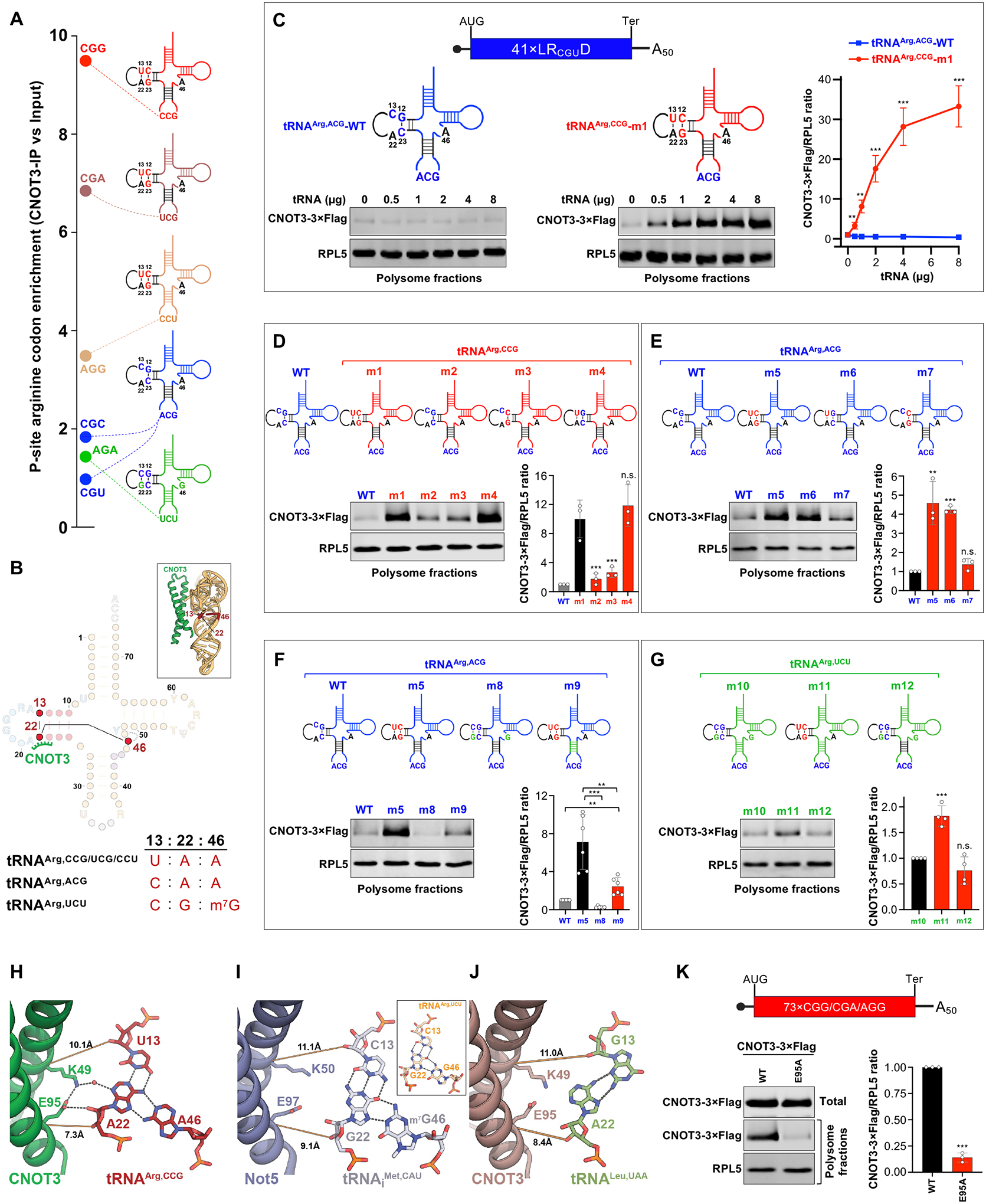
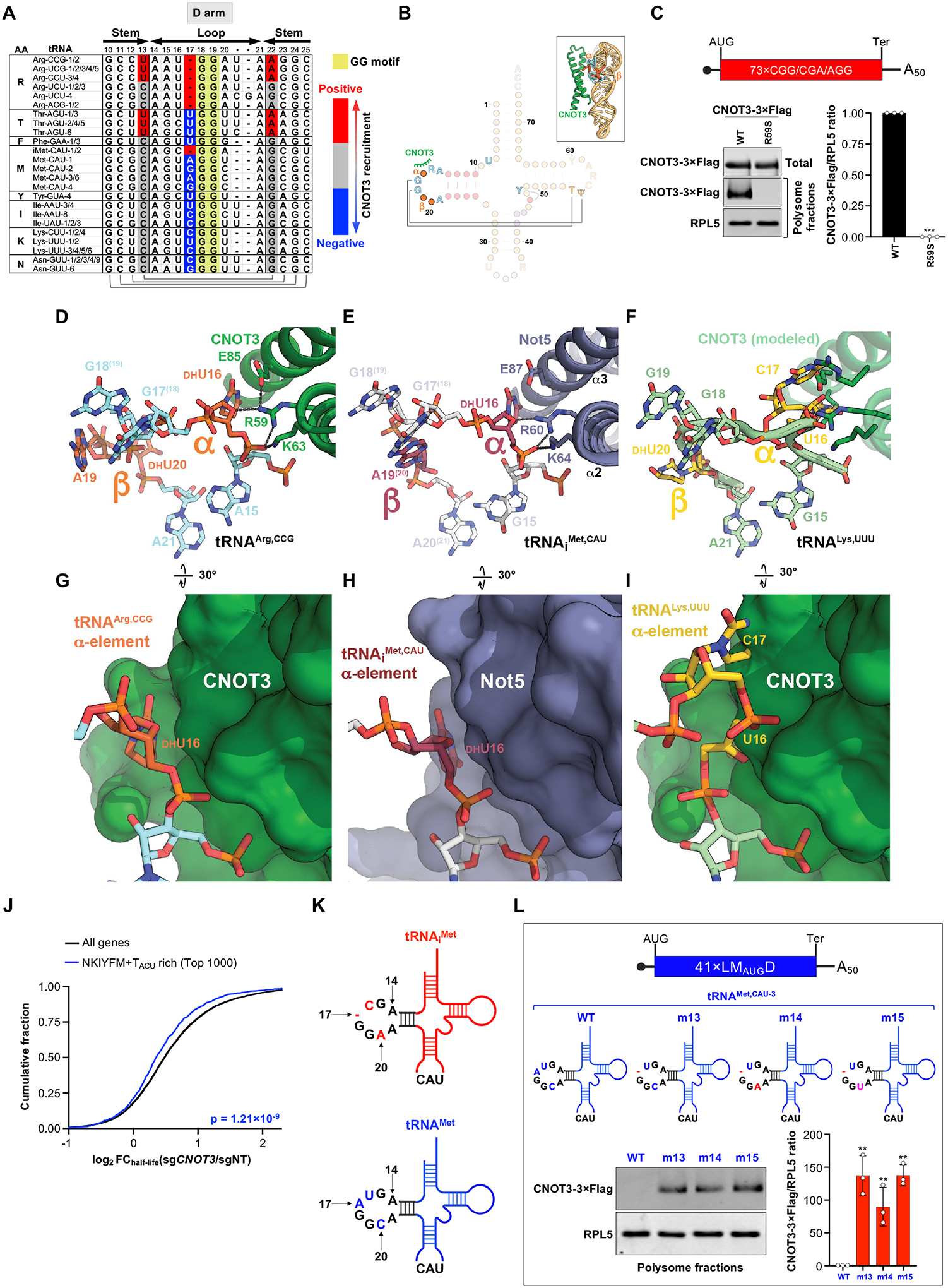
The CCR4-NOT complex is a major regulator of eukaryotic messenger RNA (mRNA) stability. Slow decoding during translation promotes association of CCR4-NOT with ribosomes, accelerating mRNA degradation. We applied selective ribosome profiling to further investigate the determinants of CCR4-NOT recruitment to ribosomes in mammalian cells. This revealed that specific arginine codons in the P-site are strong signals for ribosomal recruitment of human CNOT3, a CCR4-NOT subunit. Cryo-electron microscopy and transfer RNA (tRNA) mutagenesis demonstrated that the D-arms of select arginine tRNAs interact with CNOT3 and promote its recruitment whereas other tRNA D-arms sterically clash with CNOT3. These effects link codon content to mRNA stability. Thus, in addition to their canonical decoding function, tRNAs directly engage regulatory complexes during translation, a mechanism we term P-site tRNA-mediated mRNA decay.
CCR4-NOT 复合物是真核信使 RNA(mRNA)稳定性的主要调节剂。翻译过程中的缓慢解码促进了 CCR4-NOT 与核糖体的结合,从而加速了 mRNA 的降解。我们应用选择性核糖体谱分析进一步研究了在哺乳动物细胞中 CCR4-NOT 招募到核糖体的决定因素。这表明 P 位中的特定精氨酸密码子是人类 CNOT3(CCR4-NOT 亚基)招募核糖体的强信号。冷冻电子显微镜和转移 RNA(tRNA)诱变表明,选择的精氨酸 tRNA 的 D 臂与 CNOT3 相互作用并促进其募集,而其他 tRNA D 臂则与 CNOT3 发生空间冲突。这些影响将密码子含量与 mRNA 稳定性联系起来。因此,除了它们的典型解码功能外,tRNA 在翻译过程中还直接与调节复合物结合,我们将这种机制称为 P 位 tRNA 介导的 mRNA 降解。