CRETUS, Gemap (GI-1243), Departamento de Edafoloxía E Química Agrícola, Facultade de Farmacia, Universidade de Santiago de Compostela, 15782, Santiago de Compostela, Spain.
CRETUS, Departamento de Microbiología y Parasitología, CIBUS-Facultad de Biología, Universidade de Santiago de Compostela, 15782, Santiago de Compostela, Spain.
Microb Ecol. 2024 Nov 22;87(1):147. doi: 10.1007/s00248-024-02465-1.
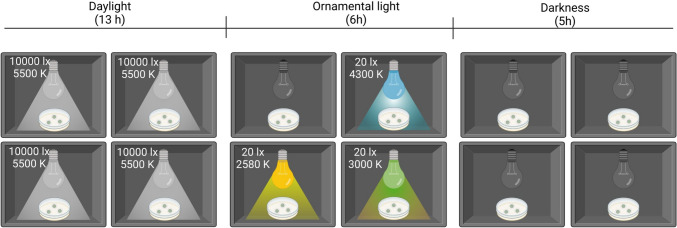
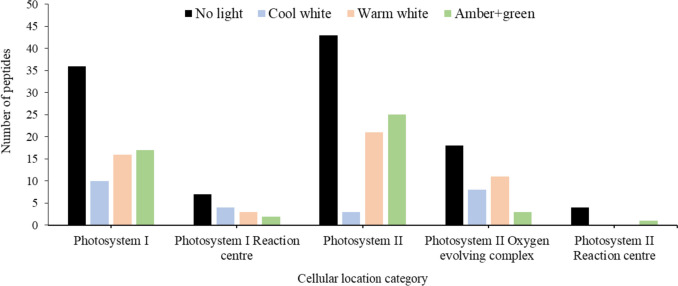
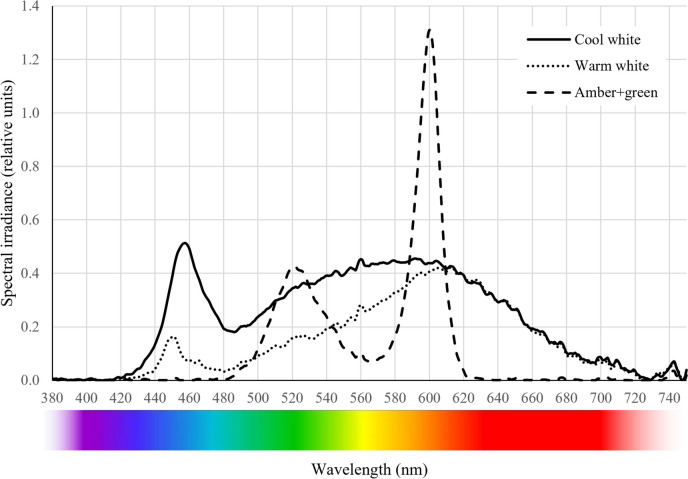
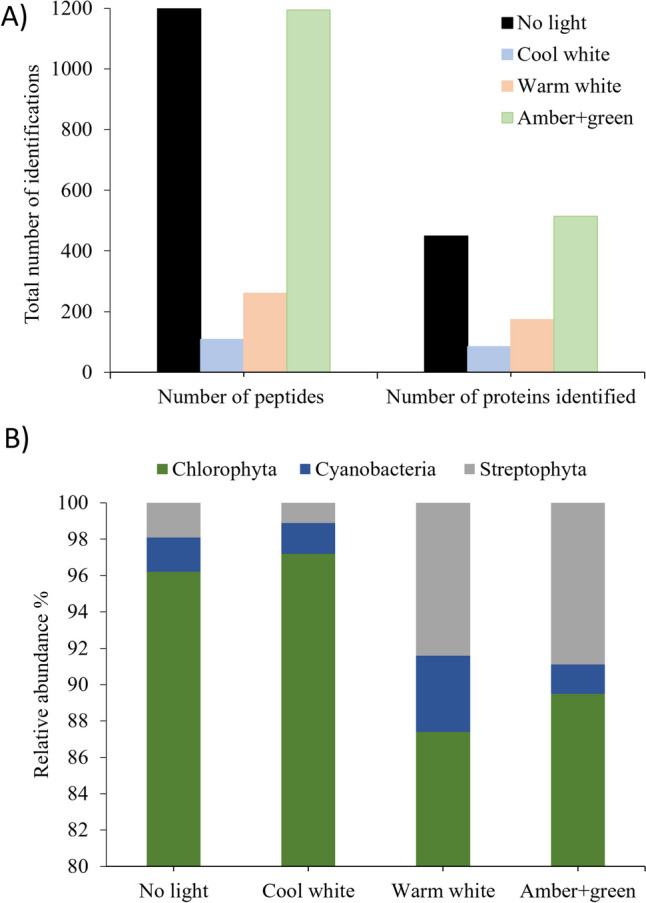
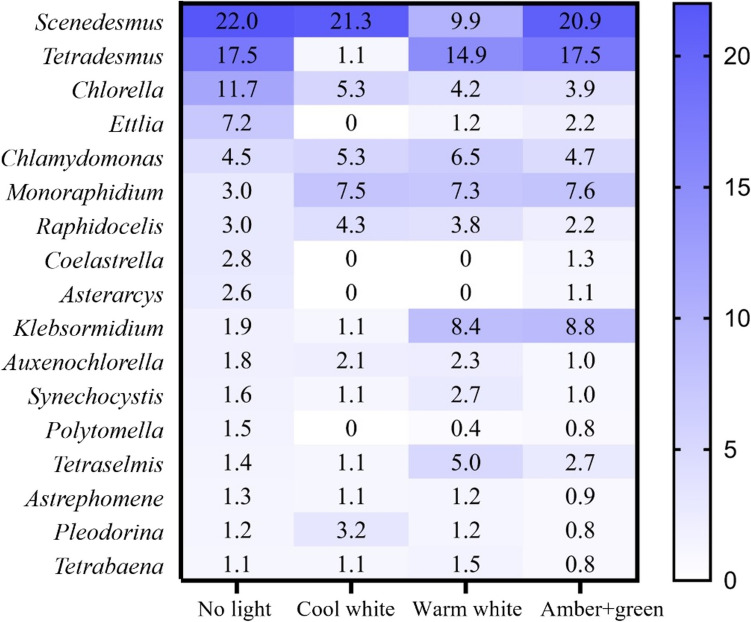
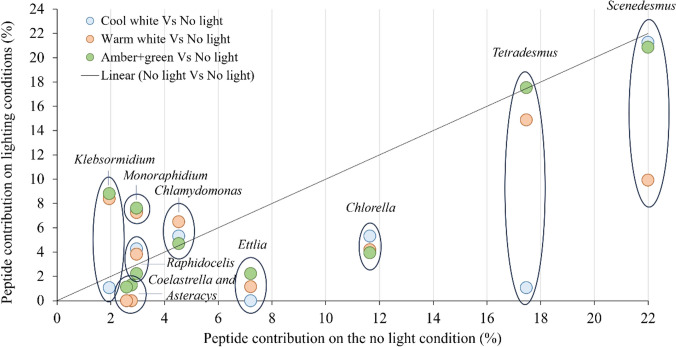
Recent studies are showing that some lights suitable for illuminating the urban fabric (i.e. that do not include the red, green and blue sets of primary colours) may halt biological colonisation on monuments, mainly that caused by phototrophic subaerial biofilms (SABs), which may exacerbate the biodeterioration of substrates. However, the light-triggered mechanisms that cause changes in the growth of the phototrophs remain unknown. Environmental proteomics could be used to provide information about the changes in the SAB metabolism under stress inflicted by nocturnal lighting. Here, laboratory-produced SABs, composed of Chlorophyta, Streptophyta and Cyanobacteriota, were subjected to three types of lighting used for monuments: cool white, warm white and amber + green (potentially with a biostatic effect). A control without light (i.e. darkness) was also included for comparison. The nocturnal lighting impaired the capacity of the SABs to decompose superoxide radicals and thus protect themselves from oxidative stress. Cool white and warm white light both strongly affected the proteomes of the SABs and reduced the total peptide content, with the extent of the reduction depending on the genera of the organisms involved. Analysis of the photo-damaging effect of amber + green light on the biofilm metabolism revealed a negative impact on photosystems I and II and production of photosystem antenna protein-like, as well as a triggering effect on protein metabolism (synthesis, folding and degradation). This research provides, for the first-time, a description of the proteomic changes induced by lighting on SABs colonising illuminated monuments in urban areas.
最近的研究表明,一些适合照明城市结构的灯光(即不包括红色、绿色和蓝色的原色组)可能会阻止生物在纪念碑上的定殖,主要是由光养气生生物膜(SAB)引起的,这可能会加剧基质的生物降解。然而,导致光养生物生长变化的光触发机制仍不清楚。环境蛋白质组学可用于提供有关 SAB 代谢在夜间照明引起的应激下变化的信息。在这里,实验室生产的 SAB 由绿藻、苔藓植物和蓝藻组成,分别暴露于三种用于纪念碑的照明类型:冷白光、暖白光和琥珀色+绿色(可能具有生物抑制作用)。还包括一个没有光(即黑暗)的对照进行比较。夜间照明会损害 SAB 分解超氧自由基的能力,从而使其免受氧化应激的影响。冷白光和暖白光都强烈影响 SAB 的蛋白质组并降低总肽含量,减少的程度取决于所涉及的生物的属。对琥珀色+绿色光对生物膜代谢的光损伤效应的分析表明,它对光合作用 I 和 II 有负面影响,并产生类光合作用天线蛋白,以及对蛋白质代谢(合成、折叠和降解)有触发作用。这项研究首次描述了照明对城市地区照明纪念碑上定殖的 SAB 引起的蛋白质组变化。