Department of Public Health, Finnish Institute for Health and Welfare, Helsinki, Finland.
Division of Clinical Geriatrics, Center for Alzheimer Research, Department of Neurobiology, Care Sciences and Society, Karolinska Institutet, Stockholm, Sweden.
Alzheimers Res Ther. 2024 Nov 21;16(1):252. doi: 10.1186/s13195-024-01615-4.
The Finnish Geriatric Intervention Study to Prevent Cognitive Impairment and Disability (FINGER) multimodal lifestyle intervention yielded cognitive and other health benefits in older adults at risk of cognitive decline. The two-year multinational randomized controlled LETHE trial evaluates the feasibility of a digitally supported, adapted FINGER intervention among at-risk older adults. Technology is used to complement in-person activities, streamline the intervention delivery, personalize recommendations, and collect digital biomarkers.
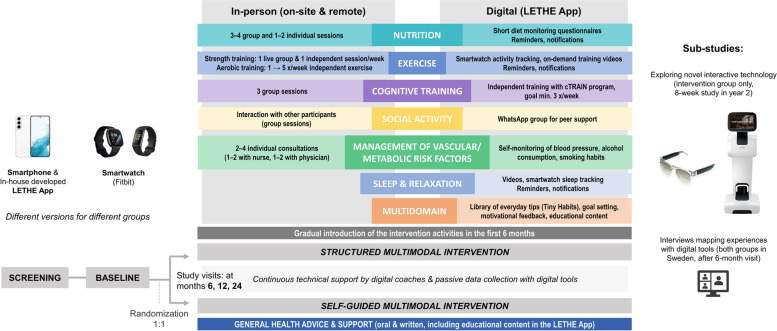
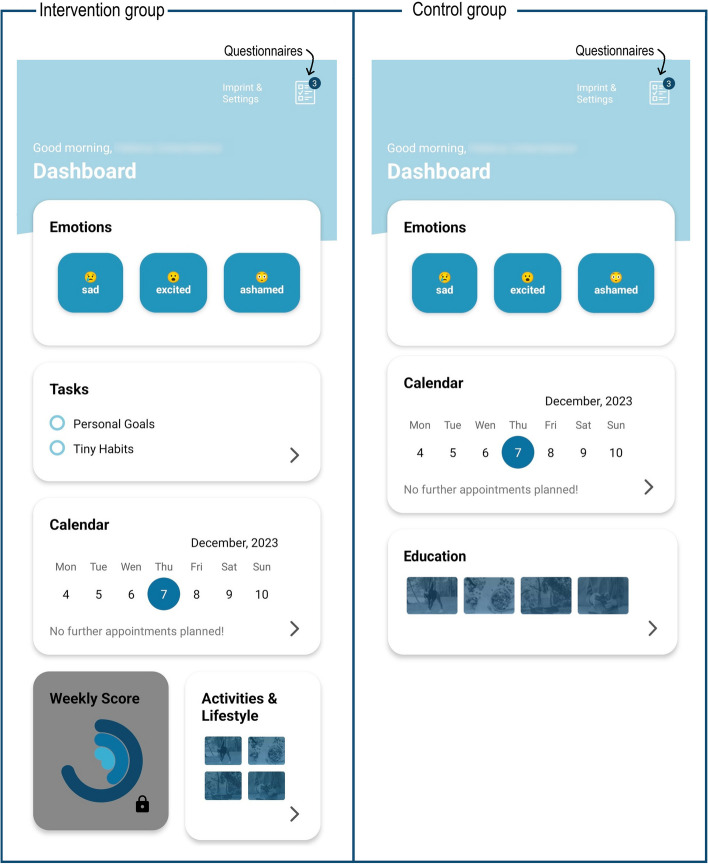
Trial includes older adults (60-77 years) with digital readiness/experience with smart devices and increased dementia risk but without substantial cognitive impairment. Participants are enrolled at four sites (Austria, Finland, Italy, Sweden). At baseline, participants were randomized 1:1 ratio to 1) intervention i.e., structured multimodal lifestyle program (including diet, exercise, cognitive training, vascular/metabolic risk management, social stimulation, sleep/stress management) where in-person activities led by professionals are supported with an Android mobile phone application developed by the consortium (the LETHE App); or 2) control i.e., self-guided program (regular health advice; simplified App with no personalized/interactive content). All participants wear smartwatches to gather passive data (e.g., physical activity, sleep). Primary outcomes are retention, adherence, and change in validated dementia risk scores. Secondary outcomes include changes in lifestyle, cognition, stress, sleep, health-related quality of life, and health literacy. Additional outcomes (exploratory) include e.g. participant experiences and dementia-related biomarkers (Alzheimer's disease blood markers, neuroimaging). A sub-study explores the feasibility of novel interactive technology (audio glasses, social robot).
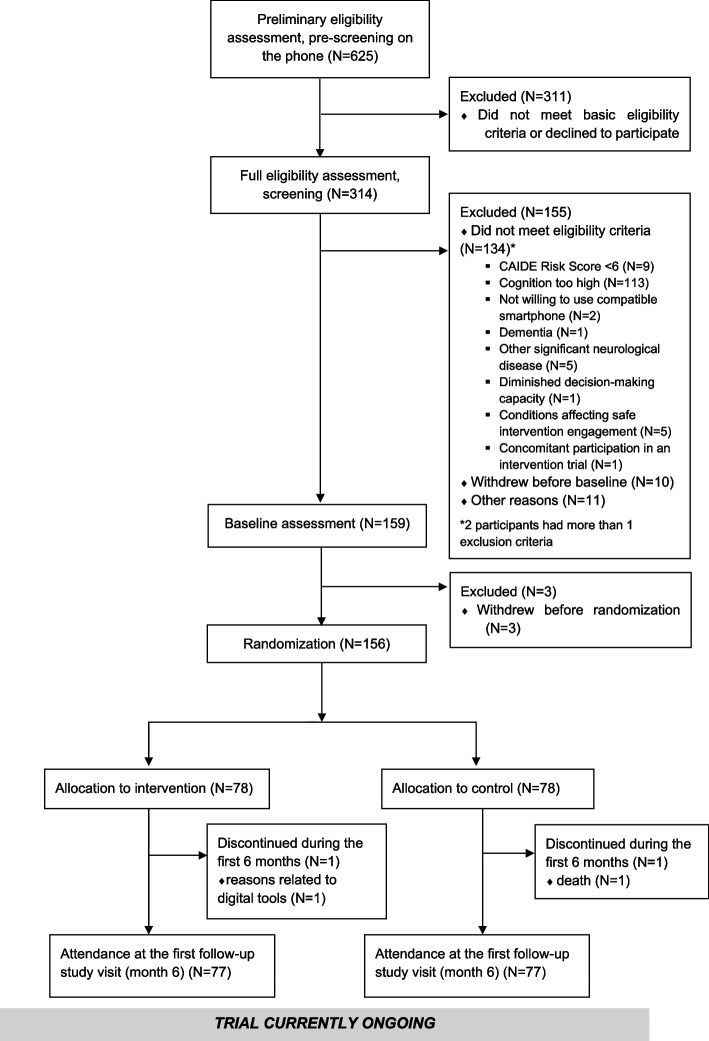
Recruitment began in September 2022, and the last participant was randomized in June 2023. In total, 156 individuals were randomized (mean age 69 years, 65% women; balanced recruitment across the four sites). Vascular and lifestyle risk factors were common (e.g., 65% with hypertension, 69% with hypercholesterolemia, 39% physically inactive), indicating successful recruitment of a population with risk reduction potential. Trial will be completed by summer 2025. Retention until the first post-baseline visit at 6 months is high (n = 2 discontinued, retention 98.7%).
LETHE provides crucial information about the feasibility of technology and a digitally supported FINGER lifestyle program to promote brain health. Digital tools specifically designed for older adults could offer potential for large-scale, cost-effective prevention programs.
ClinicalTrials.gov (NCT05565170).
芬兰认知障碍和残疾预防综合干预研究(FINGER)的多模式生活方式干预在认知能力下降风险较高的老年人中产生了认知和其他健康益处。为期两年的多国随机对照 LETHE 试验评估了针对高危老年人的数字化支持、适应性 FINGER 干预的可行性。该技术用于补充面对面活动、简化干预交付、个性化建议和收集数字生物标志物。
试验包括有数字准备/使用智能设备和增加痴呆风险但没有明显认知障碍的老年人(60-77 岁)。参与者在四个地点(奥地利、芬兰、意大利、瑞典)入组。在基线时,参与者以 1:1 的比例随机分为 1)干预组,即结构化多模式生活方式计划(包括饮食、运动、认知训练、血管/代谢风险管理、社会刺激、睡眠/压力管理),专业人员领导的面对面活动得到由联盟开发的 Android 手机应用程序(即 LETHE 应用程序)的支持;或 2)对照组,即自我指导计划(定期健康咨询;简化应用程序,没有个性化/互动内容)。所有参与者都佩戴智能手表来收集被动数据(例如,身体活动、睡眠)。主要结果是保留率、依从性和经过验证的痴呆风险评分的变化。次要结果包括生活方式、认知、压力、睡眠、健康相关生活质量和健康素养的变化。其他结果(探索性)包括例如参与者体验和与痴呆相关的生物标志物(阿尔茨海默病血液标志物、神经影像学)。子研究探索了新型互动技术(音频眼镜、社交机器人)的可行性。
招募工作于 2022 年 9 月开始,最后一名参与者于 2023 年 6 月随机分组。共有 156 人被随机分组(平均年龄 69 岁,65%为女性;四个地点的招募平衡)。血管和生活方式危险因素很常见(例如,65%患有高血压,69%患有高胆固醇血症,39%不运动),这表明成功招募了具有潜在降低风险的人群。试验将于 2025 年夏季完成。保留率直到 6 个月时的第一次基线后访视很高(n=2 人退出,保留率 98.7%)。
LETHE 提供了有关技术可行性和数字化支持的 FINGER 生活方式计划促进大脑健康的重要信息。专为老年人设计的数字工具可能为大规模、具有成本效益的预防计划提供潜力。
ClinicalTrials.gov(NCT05565170)。