Hilberger Hannes, Buchgraber-Schnalzer Bianca, Huber Simone, Weitlaner Theresa, Bödenler Markus, Abaci Alara, Bruinsma Jeroen, Diaz Ana, Guazzarini Anna Giulia, Lehtisalo Jenni, Lee Seungjune, Loukas Vasileios, Mangialasche Francesca, Mecocci Patrizia, Ngandu Tiia, Rosenberg Anna, Stögmann Elisabeth, Valkonen Konsta, Uhlik Elena, Untersteiner Helena, Kneß Laura, Ahammer Helmut, Hanke Sten
Institute of eHealth, University of Applied Sciences - FH JOANNEUM, Graz, Austria.
Gottfried Schatz Research Center, Division of Medical Physics and Biophysics, Medical University of Graz, Graz, Austria.
JMIR Aging. 2025 Jul 2;8:e66660. doi: 10.2196/66660.
The rising prevalence of dementia is a major concern, with approximately 45% of cases linked to 14 modifiable risk factors. The European project LETHE aims to develop a personalized digital intervention model to delay or prevent cognitive decline through risk factor management.
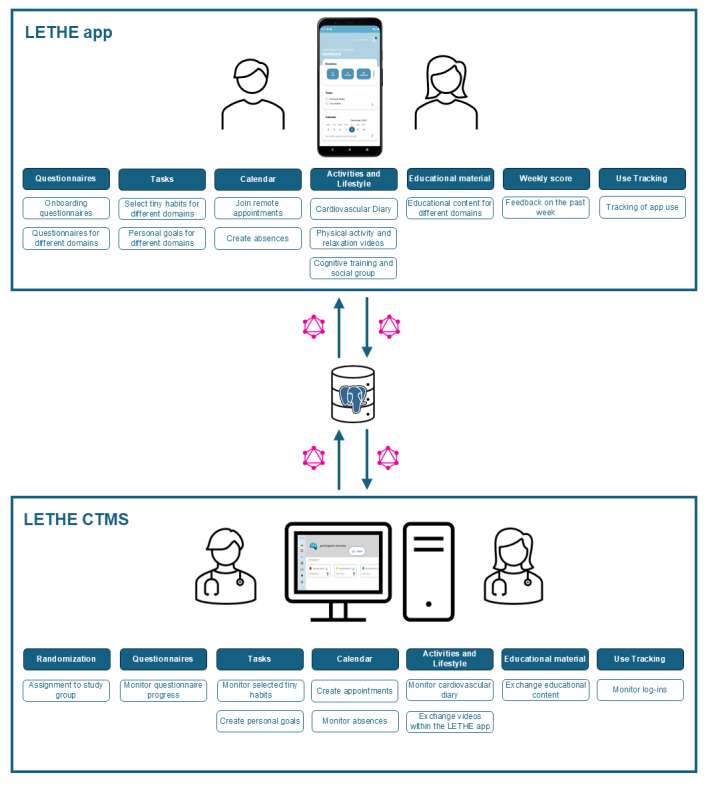
The objective of our study was to design a clinical trial platform for older individuals at risk of cognitive decline, including a mobile app for study participants and a clinical trial management system (CTMS) for health professionals.
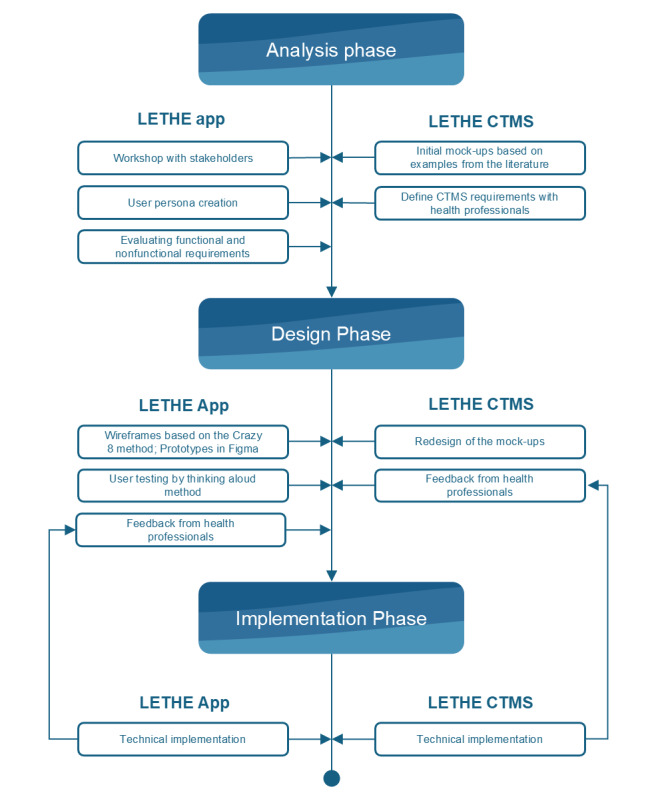
Using a user-centered design approach, workshops and feedback rounds involved potential participants representing the target group and professionals. The LETHE app's usability was assessed among 156 older adults enrolled in a 2-year multinational randomized controlled trial evaluating the feasibility of a digitally supported lifestyle program for dementia risk reduction. The randomized controlled trial is currently ongoing; the System Usability Scale (SUS) was administered 1 month after baseline to map first user experiences. Feedback on the LETHE CTMS was collected from 21 users.
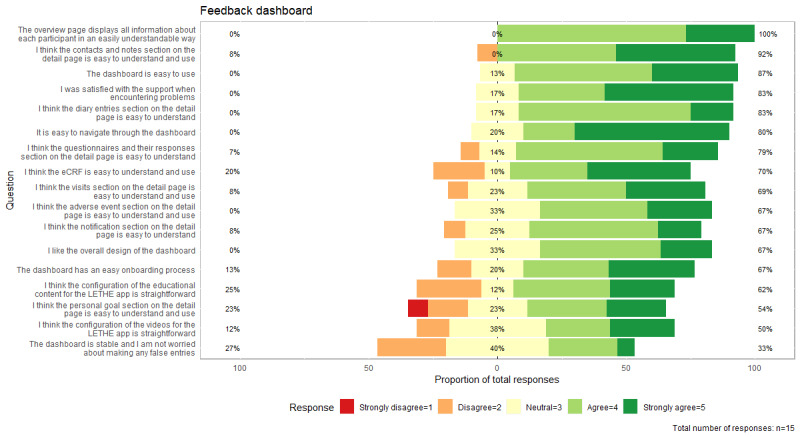
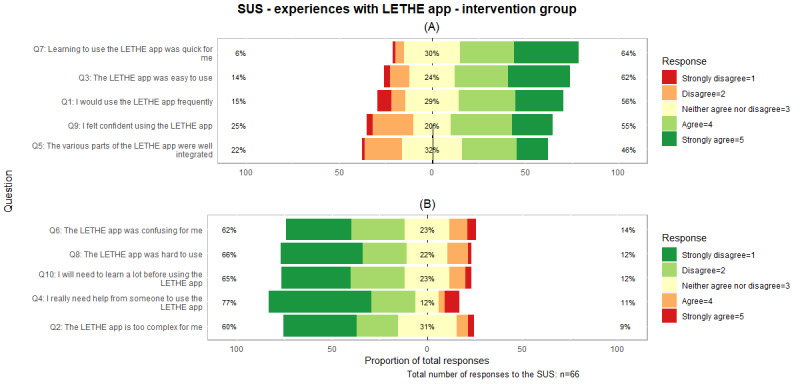
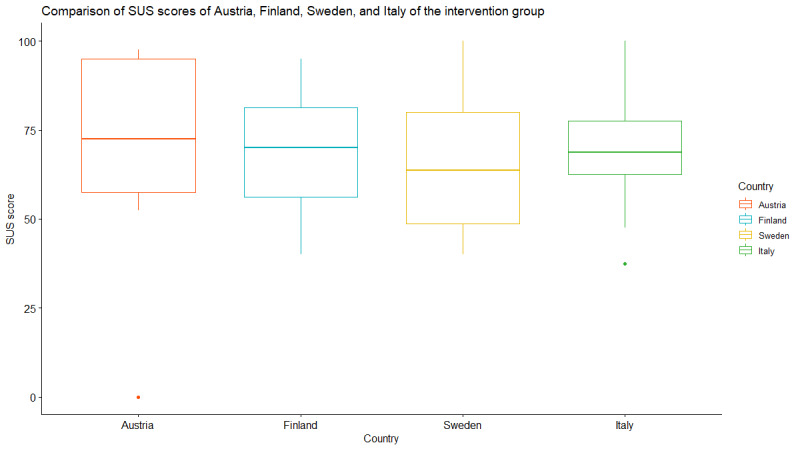
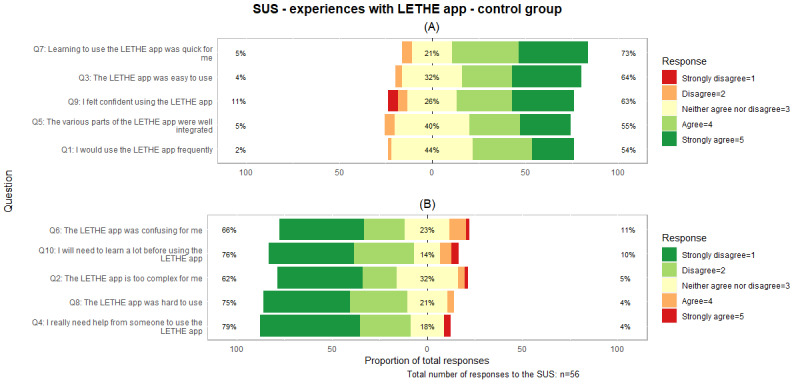
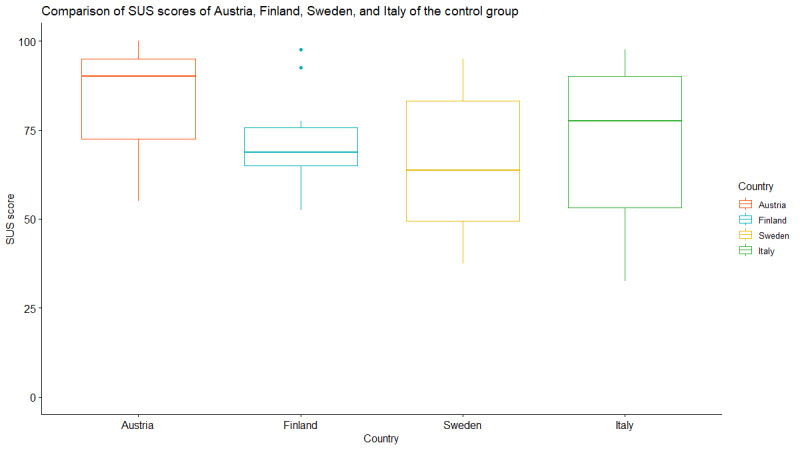
Of the 78 participants in the trial intervention group, 66 (85%) provided responses for the mobile app, with a median SUS score of 70 (IQR 55-82). Within the control group, 73% (57/78) of responses were received, with a median SUS score of 73 (IQR 63-90). For the CTMS, we received 71% (15/21) of responses, and the feedback was mostly positive. A ranking of the features that could be considered beyond state of the art showed that the integration of personalized activities (mean 2.23, SD 1.17) and real-time appointments (mean 2.46, SD 1.51) were considered the most novel ones.
The LETHE app and CTMS were developed to support a personalized digital intervention method within a study involving 156 participants. Limitations include participants having digital literacy and internet access, potentially impacting the generalizability of the findings. Despite these limitations, positive feedback and high usability scores suggest promising potential for the LETHE app and CTMS in supporting personalized interventions to prevent cognitive decline in older adults.
痴呆症患病率不断上升是一个主要问题,约45%的病例与14个可改变的风险因素有关。欧洲的LETHE项目旨在开发一种个性化数字干预模型,通过风险因素管理来延缓或预防认知衰退。
我们研究的目的是为有认知衰退风险的老年人设计一个临床试验平台,包括供研究参与者使用的移动应用程序和供卫生专业人员使用的临床试验管理系统(CTMS)。
采用以用户为中心的设计方法,举办了研讨会并进行了多轮反馈,参与人员包括代表目标群体的潜在参与者和专业人员。在一项为期2年的多国随机对照试验中,对156名老年人进行了LETHE应用程序的可用性评估,该试验旨在评估一项以数字方式支持的降低痴呆风险生活方式计划的可行性。随机对照试验目前正在进行;在基线后1个月使用系统可用性量表(SUS)来了解首次用户体验。从21名用户那里收集了关于LETHE CTMS的反馈。
在试验干预组的78名参与者中,66名(85%)对移动应用程序提供了反馈,SUS评分中位数为70(四分位距55 - 82)。在对照组中,收到了73%(57/78)的反馈,SUS评分中位数为73(四分位距63 - 90)。对于CTMS,我们收到了71%(15/21)的反馈,且反馈大多是积极的。对可能被认为超越现有技术水平的功能进行排名显示,个性化活动(平均2.23,标准差1.17)和实时预约(平均2.46,标准差1.51)的整合被认为是最新颖的功能。
LETHE应用程序和CTMS是为在一项涉及156名参与者的研究中支持个性化数字干预方法而开发的。局限性包括参与者需具备数字素养和互联网接入条件,这可能会影响研究结果的普遍性。尽管有这些局限性,但积极的反馈和高可用性评分表明,LETHE应用程序和CTMS在支持个性化干预以预防老年人认知衰退方面具有可观的潜力。