Norwegian Veterinary Institute, Section for Food Safety and Animal Health Research, Ås, Norway.
Wageningen Bioveterinary Research part of Wageningen University and Research, Department of Bacteriology, Host-Pathogen interactions and Diagnostic Development, Lelystad, The Netherlands.
Euro Surveill. 2024 Nov;29(47). doi: 10.2807/1560-7917.ES.2024.29.47.2400295.
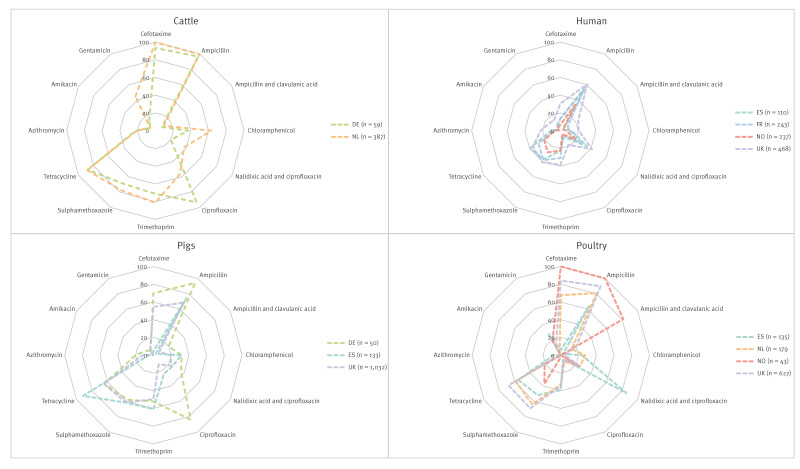
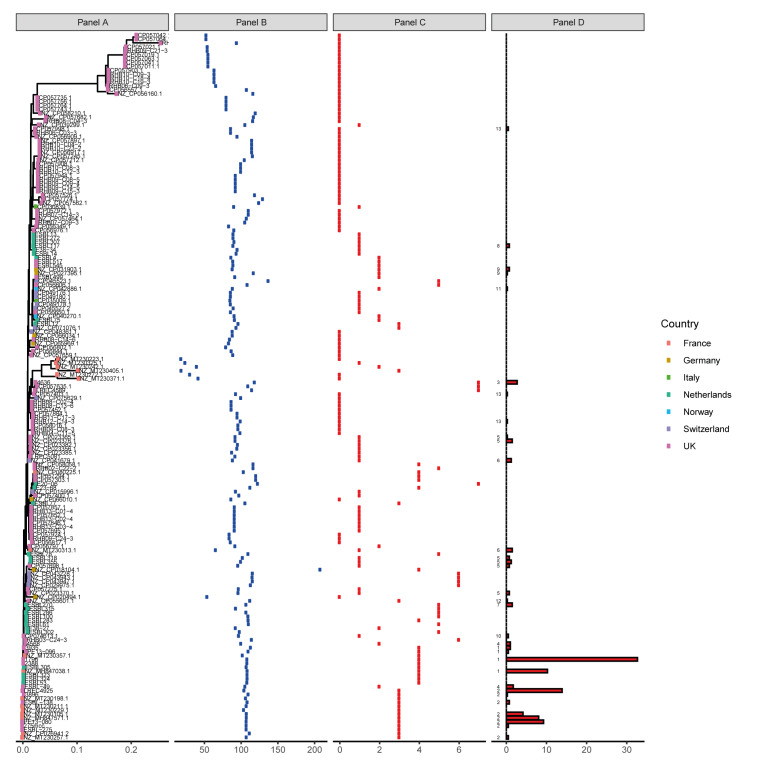
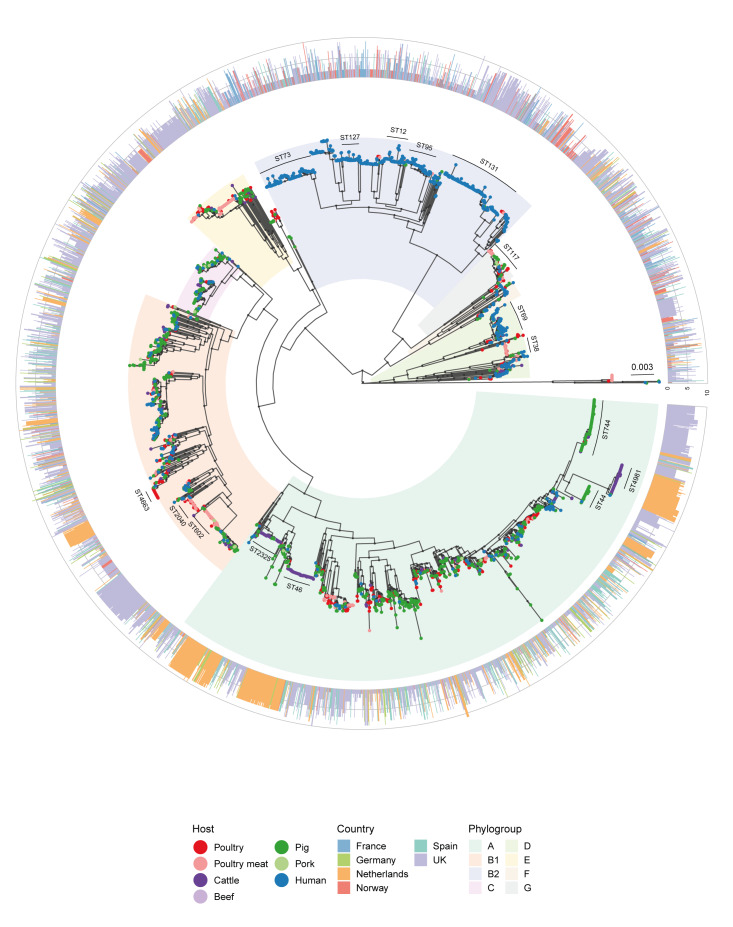
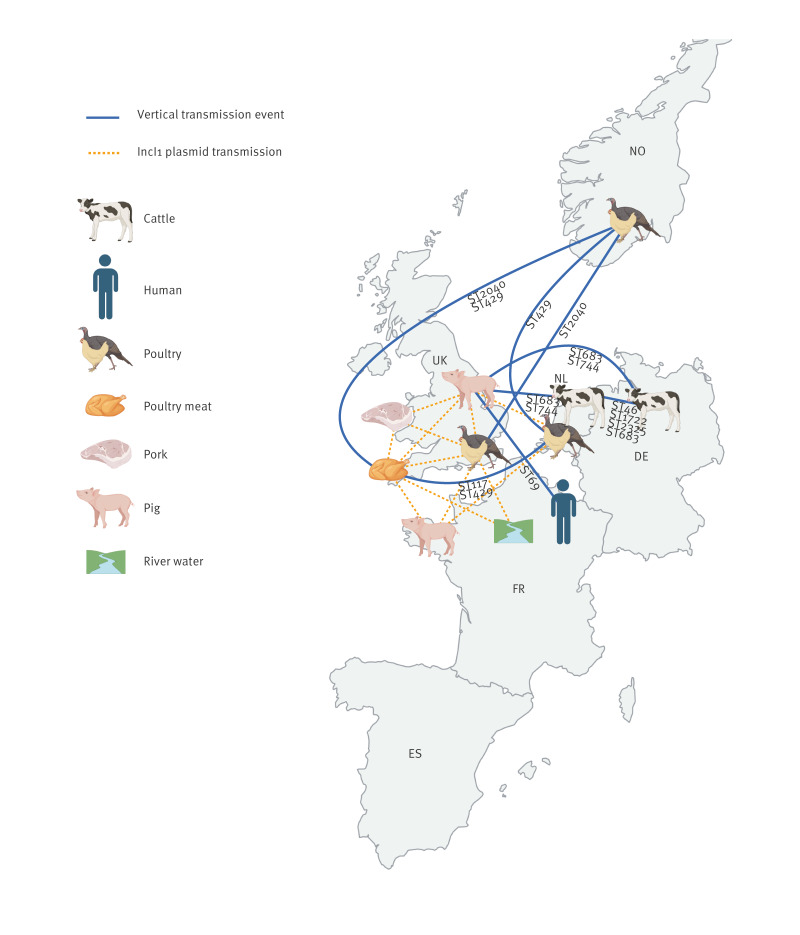
BackgroundAntimicrobial resistance (AMR) is a global threat. Monitoring using an integrated One Health approach is essential to detect changes in AMR occurrence.AimWe aimed to detect AMR genes in pathogenic and commensal collected 2013-2020 within monitoring programmes and research from food animals, food (fresh retail raw meat) and humans in six European countries, to compare vertical and horizontal transmission.MethodsWe whole genome sequenced (WGS) 3,745 isolates detected AMR genes using ResFinder and performed phylogenetic analysis to determine isolate relatedness and transmission. A BLASTn-based bioinformatic method compared draft IncI1 genomes to conserved plasmid references from Europe.ResultsResistance genes to medically important antimicrobials (MIA) such as extended-spectrum cephalosporins (ESC) were widespread but predicted resistance to MIAs authorised for human use (carbapenem, tigecycline) was detected only in two human and three cattle isolates. Phylogenetic analysis clustered according to phylogroups; commensal animal isolates showed greater diversity than those from human patients. Only 18 vertical animal-food and human-animal transmission events of clones were detected. However, IncI1 plasmids from different sources and/or countries carrying resistance to ESCs were conserved and widely distributed, although these variants were rarely detected in human pathogens.ConclusionUsing WGS we demonstrated AMR is driven vertically and horizontally. Human clinical isolates were more closely related, but their IncI1 plasmids were more diverse, while animal or food isolates were less similar with more conserved IncI1 plasmids. These differences likely arose from variations in selective pressure, influencing AMR evolution and transmission.
背景
抗微生物药物耐药性(AMR)是一个全球性威胁。采用综合的“同一健康”方法进行监测对于检测 AMR 发生的变化至关重要。
目的
我们旨在检测 2013 年至 2020 年期间在六个欧洲国家的动物监测计划和研究中收集的致病性和共生 中 AMR 基因,以比较垂直和水平传播。
方法
我们对 3745 株分离株进行了全基因组测序(WGS),使用 ResFinder 检测 AMR 基因,并进行系统发育分析以确定分离株的亲缘关系和传播。基于 BLASTn 的生物信息学方法将草案 IncI1 基因组与欧洲保守质粒参考序列进行比较。
结果
对重要医学抗菌药物(MIA)的耐药基因(如广谱头孢菌素(ESC))广泛存在,但仅在两名人类和三名牛分离株中检测到对人类使用的 MIA(碳青霉烯类、替加环素)的预测耐药性。系统发育分析根据 phylogroups 对 进行聚类;与人类患者相比,共生动物分离株显示出更大的多样性。仅检测到 18 例垂直动物-食品和人类-动物传播事件。然而,不同来源和/或国家的携带 ESC 耐药性的 IncI1 质粒是保守且广泛分布的,尽管这些变体在人类病原体中很少检测到。
结论
我们使用 WGS 证明 AMR 是由垂直和水平传播驱动的。人类临床分离株更密切相关,但它们的 IncI1 质粒更加多样化,而动物或食品分离株则不太相似,IncI1 质粒更加保守。这些差异可能是由于选择压力的变化引起的,这影响了 AMR 的进化和传播。