Hixson Kim K, Meng Qingyan, Moinuddin Syed G A, Kwon Mi, Costa Michael A, Cort John R, Davin Laurence B, Bell Callum J, Lewis Norman G
Institute of Biological Chemistry, Washington State University, Pullman, WA, United States.
Environmental Molecular Sciences Laboratory, Pacific Northwest National Laboratory, Richland, WA, United States.
Front Plant Sci. 2024 Nov 7;15:1349635. doi: 10.3389/fpls.2024.1349635. eCollection 2024.
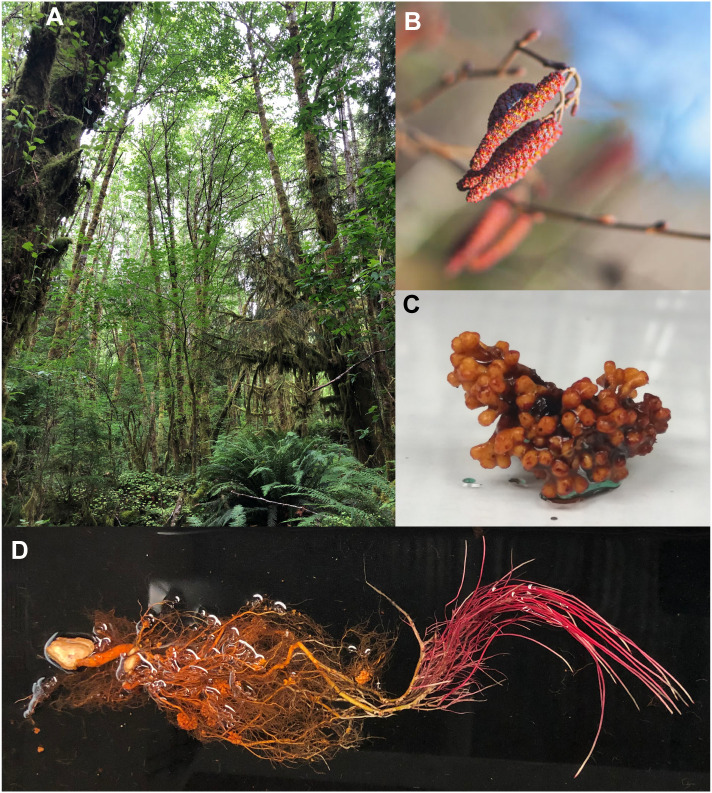
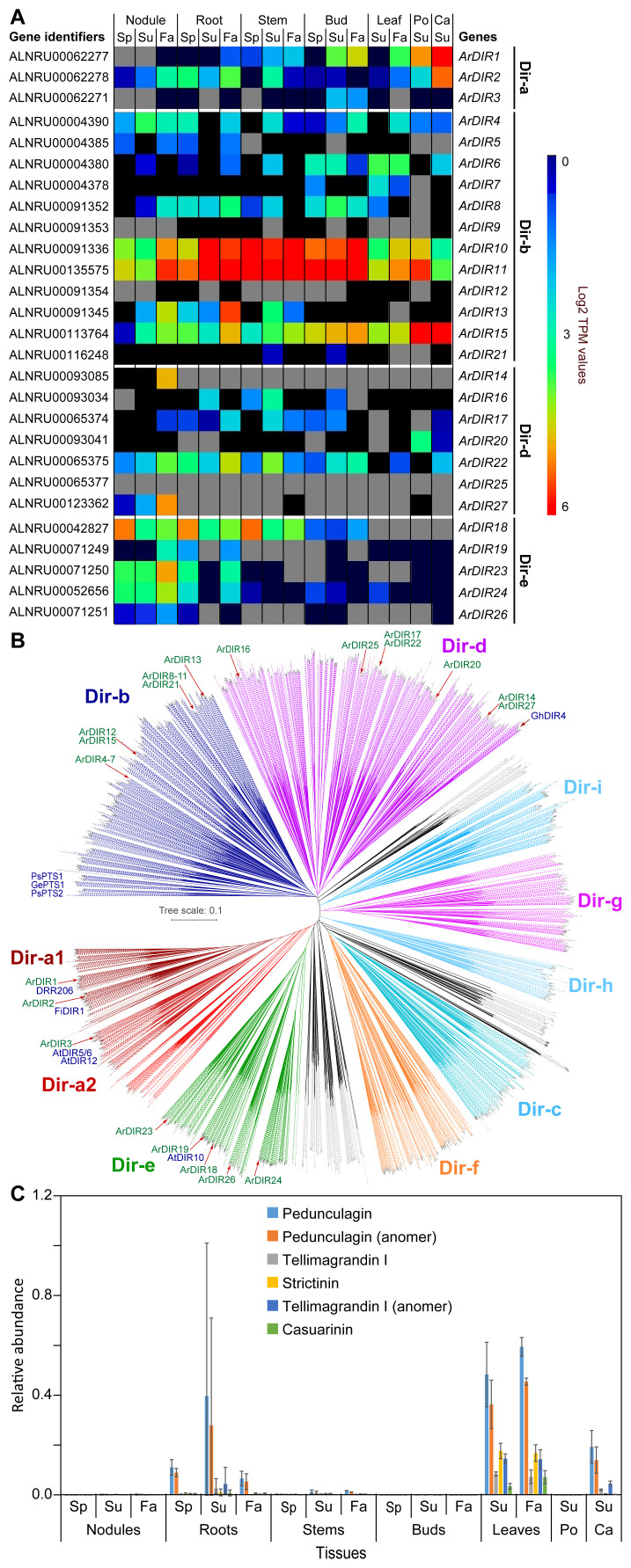
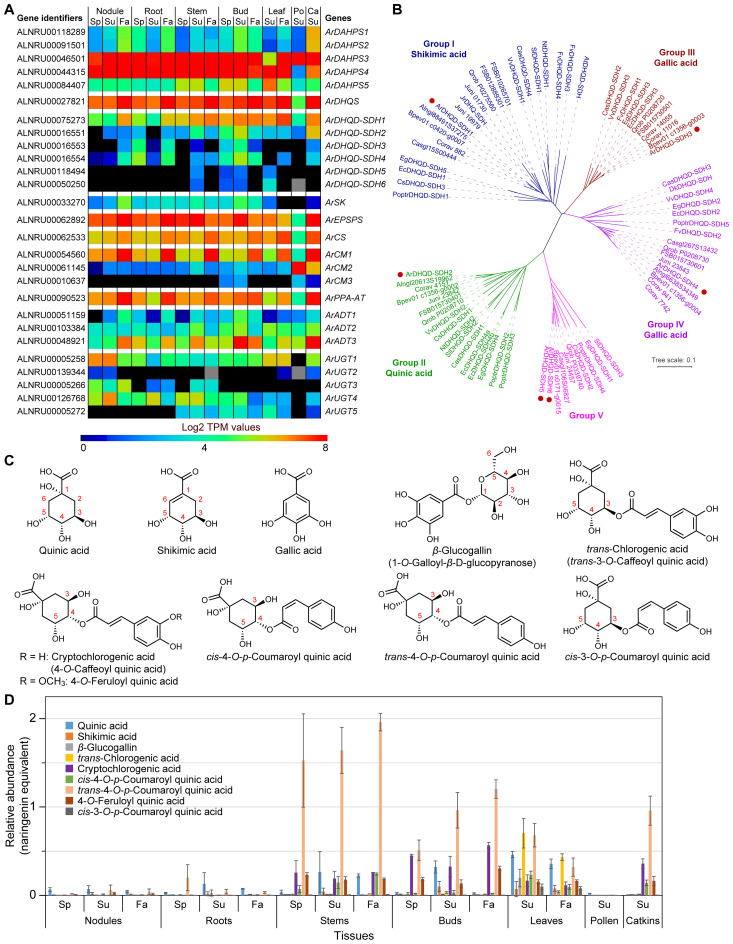
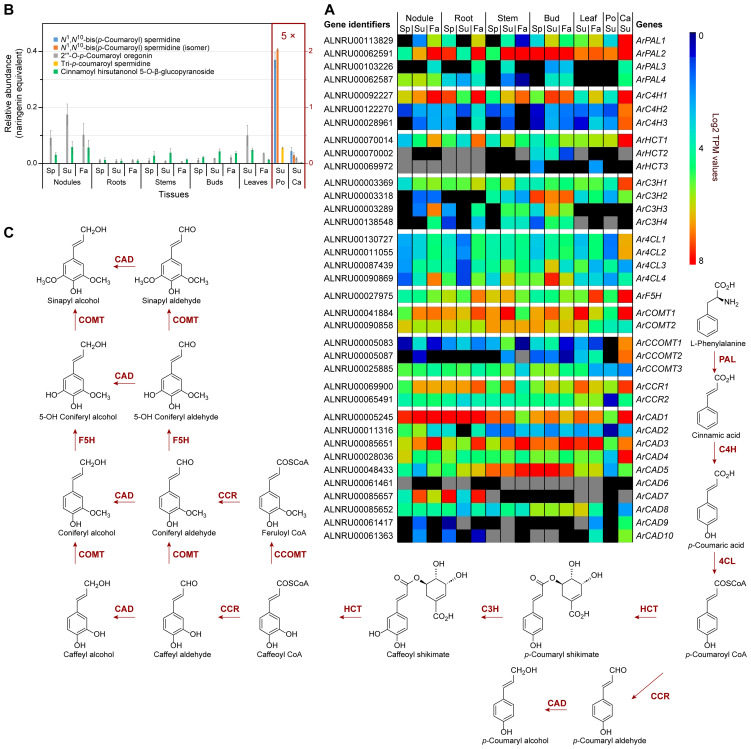
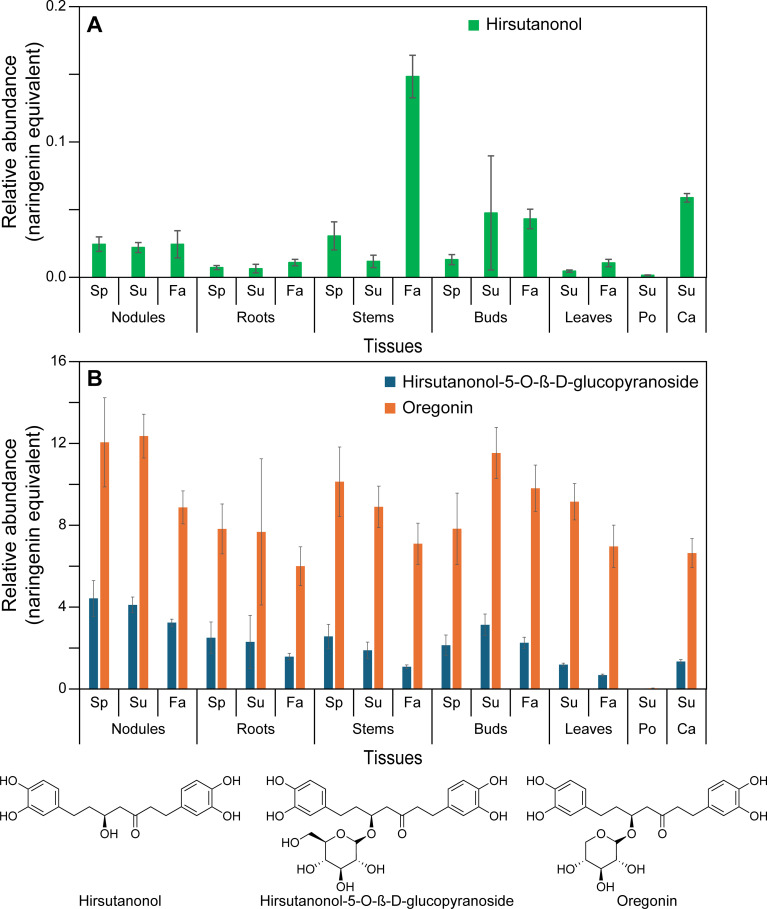
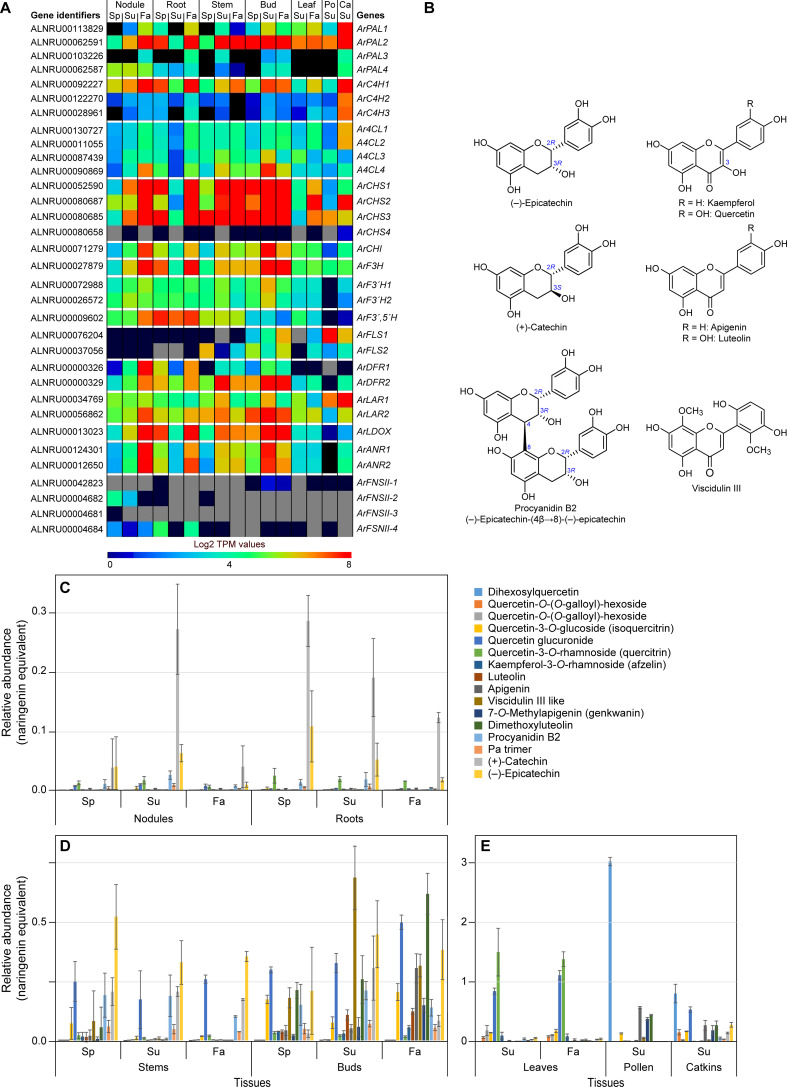
Red alder () has highly desirable wood, dye pigment, and (traditional) medicinal properties which have been capitalized on for thousands of years, including by Pacific West Coast Native Americans. A rapidly growing tree species native to North American western coastal and riparian regions, it undergoes symbiosis with actinobacterium via their nitrogen-fixing root nodules. Red alder's desirable properties are, however, largely attributed to its bioactive plant phenol metabolites, including for plant defense, for its attractive wood and bark coloration, and various beneficial medicinal properties. Integrated transcriptome and metabolome data analyses were carried out using buds, leaves, stems, roots, and root nodules from greenhouse grown red alder saplings with samples collected during different time-points (Spring, Summer, and Fall) of the growing season. Pollen and catkins were collected from field grown mature trees. Overall plant phenol biochemical pathways operative in red alder were determined, with a particular emphasis on potentially identifying candidates for the long unknown gateway entry points to the proanthocyanidin (PA) and ellagitannin metabolic classes, as well as in gaining better understanding of the biochemical basis of diarylheptanoid formation, i.e. that help define red alder's varied medicinal uses, and its extensive wood and dye usage.
红桤木()具有非常理想的木材、染料色素以及(传统)药用特性,数千年来一直被人们利用,包括太平洋西海岸的美洲原住民。它是一种原产于北美西部沿海和河岸地区的速生树种,通过其固氮根瘤与放线菌共生。然而,红桤木理想的特性很大程度上归因于其生物活性植物酚类代谢产物,包括用于植物防御、其具有吸引力的木材和树皮颜色,以及各种有益的药用特性。使用温室种植的红桤木树苗在生长季节不同时间点(春季、夏季和秋季)采集的芽、叶、茎、根和根瘤进行了转录组和代谢组数据的综合分析。花粉和柔荑花序则从野外生长的成熟树木上采集。确定了红桤木中起作用的整体植物酚类生化途径,特别着重于潜在地识别原花青素(PA)和鞣花单宁代谢类别的长期未知的起始进入点的候选物,以及更好地理解二芳基庚烷类形成的生化基础,即有助于定义红桤木多样的药用用途及其广泛的木材和染料用途。