Livingston Isabella G, Gregory Taylor M, Hawkins Eleanor C, Cave Ashley, Loyola Andrea, Vaden Shelly L, Deresienski Diane, Riofrío-Lazo Marjorie, Lewbart Gregory A, Páez-Rosas Diego, Breen Matthew
Department of Molecular Biomedical Sciences, College of Veterinary Medicine North Carolina State University Raleigh North Carolina USA.
Department of Clinical Sciences, College of Veterinary Medicine North Carolina State University Raleigh North Carolina USA.
Ecol Evol. 2024 Nov 25;14(11):e70596. doi: 10.1002/ece3.70596. eCollection 2024 Nov.
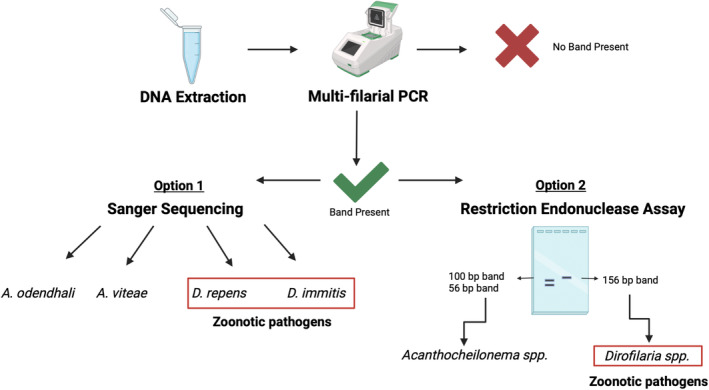
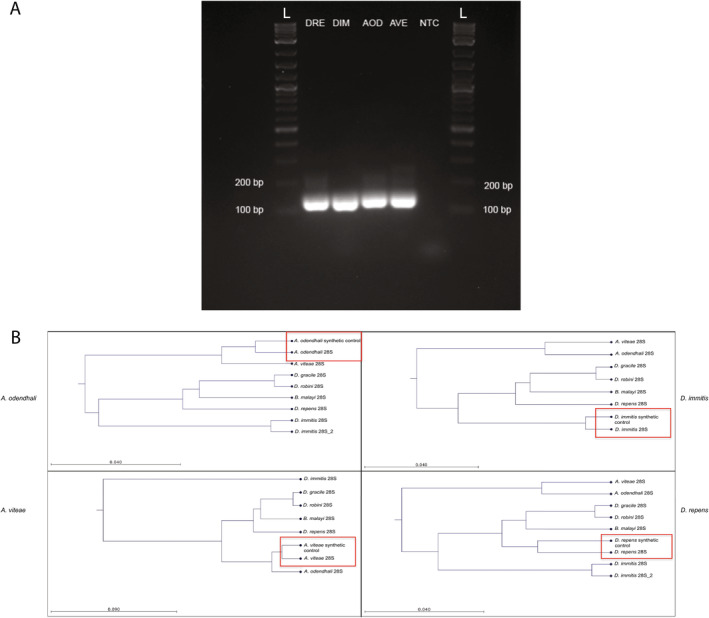
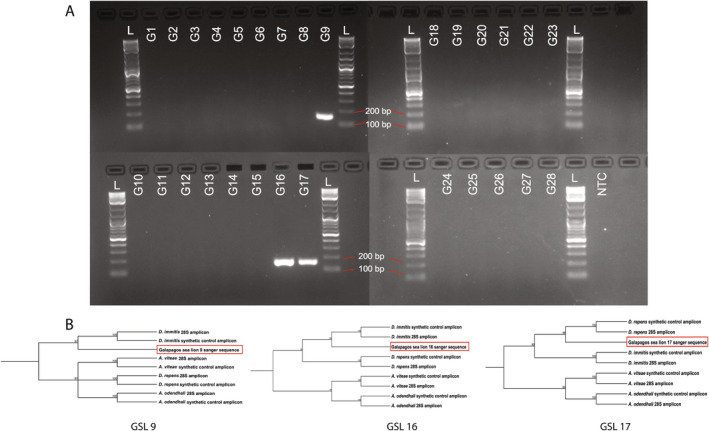
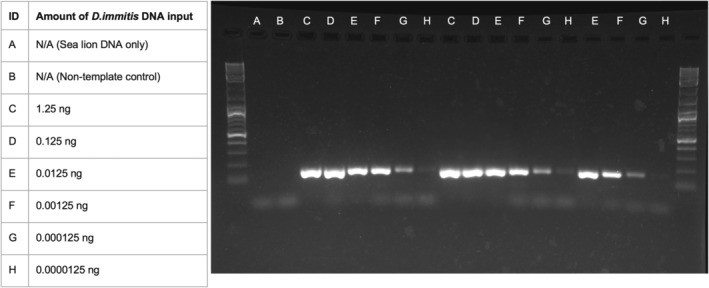
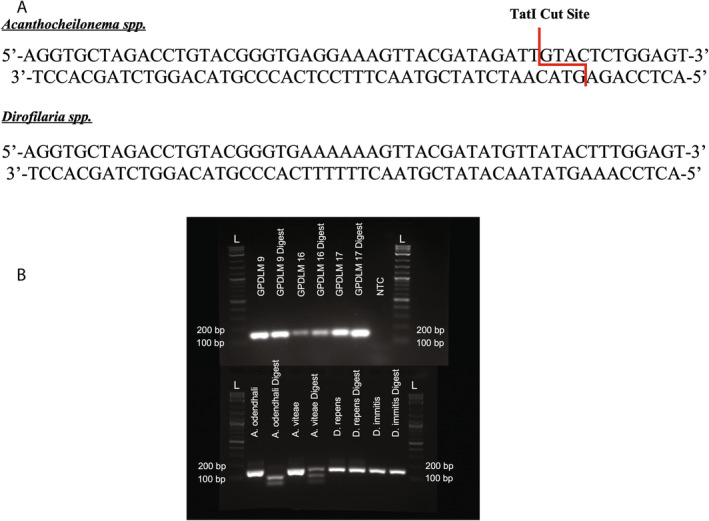
Rapidly changing environments are contributing to the spread of non-native species and their associated pathogens into new and vulnerable ecosystems, such as the Galapagos archipelago. These pathogens represent a significant threat to emblematic species. The Galapagos sea lion () (GSL) is an endangered and endemic pinniped that is increasingly at risk of acquiring infectious diseases due to interactions with introduced companion animals. Previously, we reported the first detection of antigens from , the parasite that causes canine heartworm disease, in the GSL. To investigate further, we developed a multifilarial PCR assay and successfully detected DNA from and the closely related in 10.7% of our sample cohort of juvenile GSLs. This assay, based on a conserved region in the filarial 28S gene, can be used in conjunction with restriction endonuclease digestion or Sanger sequencing to identify the species of the causative nematode. Our method proved effective without nonspecific amplification in a wide host range, and highly sensitive, detecting as little as one parasite. Further, this assay can be used in cases of immature, low-worm burden, or all-male infections. Our molecular approach offers a sensitive and specific method for detecting filarial parasites in wild animals. Further investigations are necessary to confirm the pathology of filarial nematodes in the GSL and their prevalence in the general population. Our identification of Dirofilarial species in the GSL underscores the urgent need for measures to manage the risk of pathogen transmission from introduced species to native wildlife.
快速变化的环境正促使非本地物种及其相关病原体扩散到新的脆弱生态系统中,如加拉帕戈斯群岛。这些病原体对标志性物种构成了重大威胁。加拉帕戈斯海狮()是一种濒危的本地鳍足类动物,由于与引入的伴侣动物相互作用,感染传染病的风险越来越高。此前,我们报告了在加拉帕戈斯海狮中首次检测到引起犬心丝虫病的寄生虫的抗原。为了进一步调查,我们开发了一种多重丝虫PCR检测方法,并在我们的幼年加拉帕戈斯海狮样本队列中,成功地在10.7%的样本中检测到了和密切相关的的DNA。该检测方法基于丝虫28S基因的保守区域,可与限制性内切酶消化或桑格测序结合使用,以鉴定致病线虫的种类。我们的方法在广泛的宿主范围内无非特异性扩增,证明是有效的,并且高度灵敏,能检测到低至一条寄生虫。此外,该检测方法可用于未成熟、低虫负荷或全雄感染的情况。我们的分子方法为检测野生动物中的丝虫寄生虫提供了一种灵敏且特异的方法。有必要进一步调查,以确认加拉帕戈斯海狮中丝虫线虫的病理学及其在一般种群中的流行情况。我们在加拉帕戈斯海狮中鉴定出恶丝虫属物种,凸显了采取措施管理病原体从引入物种传播到本地野生动物风险的迫切需要。