Tang Shubing, Zhao Chen, Zhu Xianchao
Shanghai Reinovax Biologics Co., Ltd., Pudong New District, Shanghai 200135, China.
Shanghai Public Health Clinical Center, Fudan University, Shanghai 201058, China.
Vaccines (Basel). 2024 Nov 18;12(11):1287. doi: 10.3390/vaccines12111287.
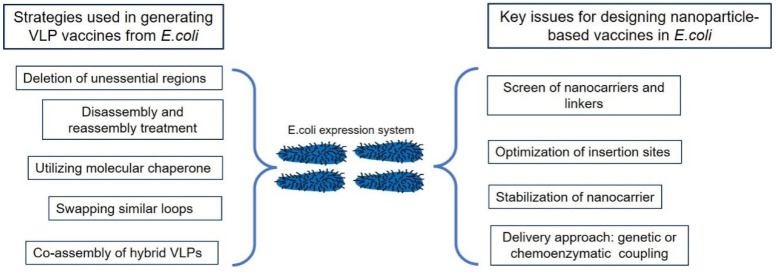
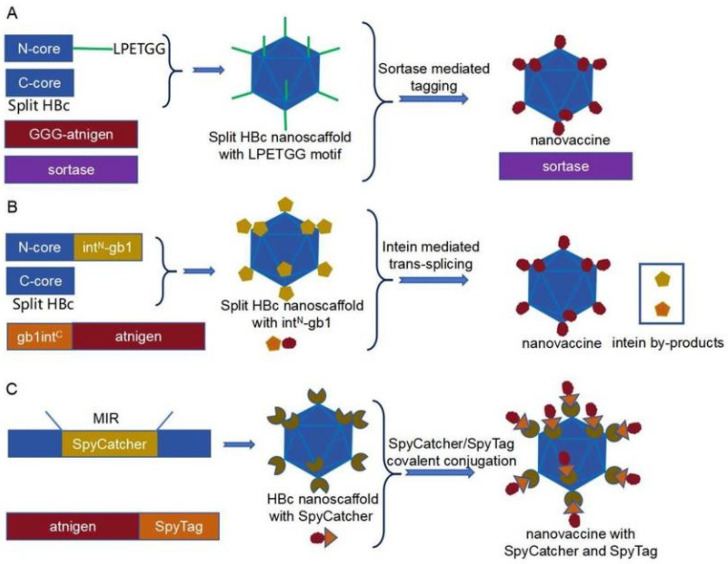
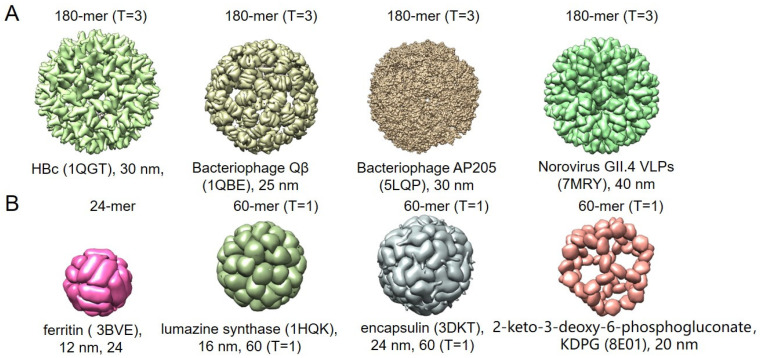
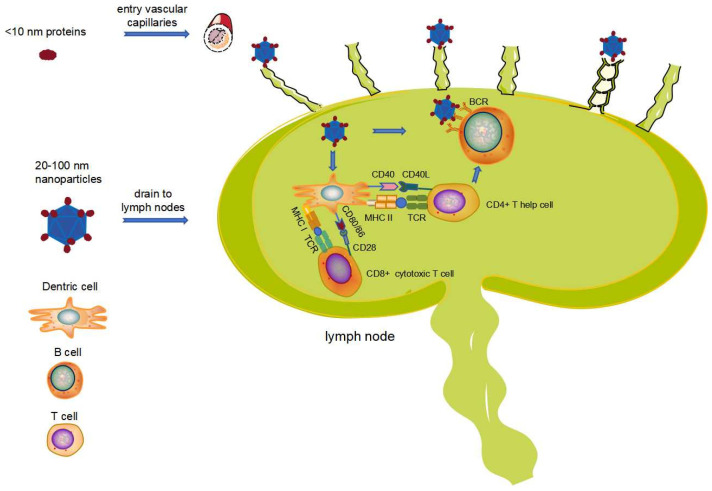
The development of effective vaccines necessitates a delicate balance between maximizing immunogenicity and minimizing safety concerns. Subunit vaccines, while generally considered safe, often fail to elicit robust and durable immune responses. Nanotechnology presents a promising approach to address this dilemma, enabling subunit antigens to mimic critical aspects of native pathogens, such as nanoscale dimensions, geometry, and highly repetitive antigen display. Various expression systems, including (), yeast, baculovirus/insect cells, and Chinese hamster ovary (CHO) cells, have been explored for the production of nanoparticle vaccines. Among these, stands out due to its cost-effectiveness, scalability, rapid production cycle, and high yields. However, the manufacturing platform faces challenges related to its unfavorable redox environment for disulfide bond formation, lack of post-translational modifications, and difficulties in achieving proper protein folding. This review focuses on molecular and protein engineering strategies to enhance protein solubility in and facilitate the in vitro reassembly of virus-like particles (VLPs). We also discuss approaches for antigen display on nanocarrier surfaces and methods to stabilize these carriers. These bioengineering approaches, in combination with advanced nanocarrier design, hold significant potential for developing highly effective and affordable -derived nanovaccines, paving the way for improved protection against a wide range of infectious diseases.
有效疫苗的研发需要在最大化免疫原性和最小化安全问题之间取得微妙的平衡。亚单位疫苗虽然通常被认为是安全的,但往往无法引发强大而持久的免疫反应。纳米技术提供了一种有前景的方法来解决这一困境,使亚单位抗原能够模拟天然病原体的关键特征,如纳米级尺寸、几何形状和高度重复的抗原展示。人们已经探索了各种表达系统,包括()、酵母、杆状病毒/昆虫细胞和中国仓鼠卵巢(CHO)细胞,用于生产纳米颗粒疫苗。其中,()因其成本效益、可扩展性、快速生产周期和高产量而脱颖而出。然而,()制造平台面临着与二硫键形成的不利氧化还原环境、缺乏翻译后修饰以及实现正确蛋白质折叠的困难相关的挑战。本综述重点关注分子和蛋白质工程策略,以提高蛋白质在()中的溶解度,并促进病毒样颗粒(VLP)的体外重新组装。我们还讨论了在纳米载体表面展示抗原的方法以及稳定这些载体的方法。这些生物工程方法与先进的纳米载体设计相结合,在开发高效且经济实惠的()衍生纳米疫苗方面具有巨大潜力,为改善对多种传染病的防护铺平了道路。