Interdisciplinary Faculty of Toxicology, Texas A&M University, College Station, TX 77843, USA.
Department of Veterinary Physiology and Pharmacology, College of Veterinary Medicine & Biomedical Sciences, Texas A&M University, College Station, TX 77843, USA.
Toxins (Basel). 2024 Nov 6;16(11):479. doi: 10.3390/toxins16110479.
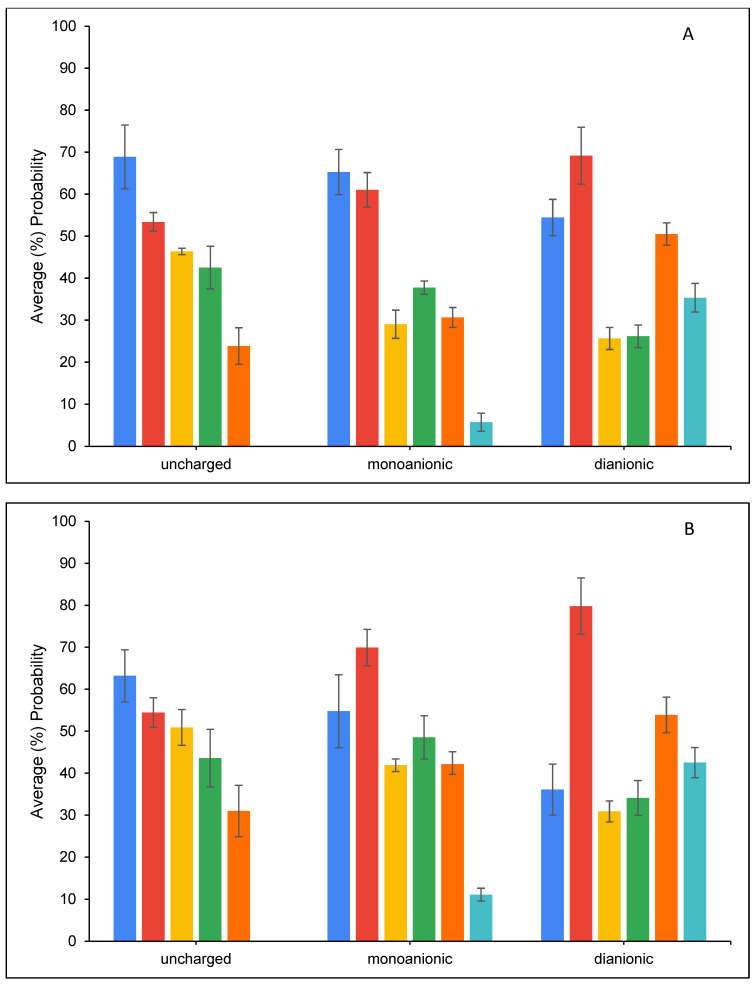
Climate change has been associated with outbreaks of mycotoxicosis following periods of drought, enhanced fungal growth, and increased exposure to mycotoxins. For detoxification, the inclusion of clay-based materials in food and drinking water has resulted in a very promising strategy to reduce mycotoxin exposure. In this strategy, mycotoxins are tightly sorbed to high-affinity clay particles in the gastrointestinal tract, thus decreasing bioavailability, uptake to blood, and potential toxicity. This study investigated the ability of chlorophyll and chlorophyllin-amended montmorillonite clays to decrease the toxicity of ochratoxin A (OTA). The sorption mechanisms of OTA binding to surfaces of sorbents, as well as binding parameters such as capacity, affinity, enthalpy, and free energy, were examined. Chlorophyll-amended organoclay (CMCH) demonstrated the highest binding (72%) and was better than the chlorophyllin-amended hydrophilic clay (59%), possibly due to the hydrophobicity of OTA (LogP 4.7). In silico studies using molecular dynamics simulations showed that CMCH improves OTA binding in comparison to parent clay in line with experiments. Simulations depicted that chlorophyll amendments on clay facilitated OTA molecules binding both directly, through enhancing OTA binding on the clay, or predominantly indirectly, through OTA molecules interacting with bound chlorophyll amendments. Simulations uncovered the key role of calcium ions in OTA binding, particularly in neutral conditions, and demonstrated that CMCH binding to OTA is enhanced under both neutral and acidic conditions. Furthermore, the protection of various sorbents against OTA-induced toxicity was carried out using two living organisms ( and ) which are susceptible to OTA toxicity. This study showed the significant detoxification of OTA (33% to 100%) by inclusion of sorbents. Organoclay (CMCH) at 0.5% offered complete protection. These findings suggest that the chlorophyll-amended organoclays described in this study could be included in food and feed as OTA binders and as potential filter materials for water and beverages to protect against OTA contaminants during outbreaks and emergencies.
气候变化与干旱后真菌生长增强和接触霉菌毒素增加有关,导致霉菌毒素中毒爆发。为了解毒,在食物和饮用水中添加黏土类物质是一种很有前途的减少霉菌毒素暴露的策略。在此策略中,霉菌毒素在胃肠道中被紧密吸附到高亲和力的黏土颗粒上,从而降低了生物利用度、向血液中的摄取量和潜在毒性。本研究调查了添加叶绿素和叶绿酸的蒙脱石黏土降低赭曲霉毒素 A (OTA)毒性的能力。研究了 OTA 与吸附剂表面结合的吸附机制,以及结合参数,如容量、亲和力、焓和自由能。结果表明,添加叶绿素的有机黏土(CMCH)表现出最高的结合(72%),优于添加叶绿酸的亲水性黏土(59%),这可能是由于 OTA 的疏水性(LogP 4.7)。使用分子动力学模拟的计算机研究表明,CMCH 改善了 OTA 的结合,与实验结果一致。模拟表明,与母体黏土相比,CMCH 上的叶绿素修饰剂促进了 OTA 分子的结合,这既可以直接进行,也可以主要通过间接方式进行,即 OTA 分子与结合的叶绿素修饰剂相互作用。模拟揭示了钙离子在 OTA 结合中的关键作用,特别是在中性条件下,并且表明 CMCH 与 OTA 的结合在中性和酸性条件下都得到增强。此外,还使用两种易受 OTA 毒性影响的生物体( 和 )进行了各种吸附剂对 OTA 诱导毒性的保护作用研究。结果表明,通过添加吸附剂,OTA 的脱毒率显著(33%至 100%)。添加 0.5%的有机黏土(CMCH)可完全保护。这些发现表明,本研究中描述的添加叶绿素的有机黏土可以作为 OTA 结合物添加到食品和饲料中,也可以作为水和饮料的潜在过滤材料,在爆发和紧急情况下防止 OTA 污染物。