Wellcome Sanger Institute, Wellcome Genome Campus, Hinxton, UK.
Department of Computer Science, University of Tartu, Tartu, Estonia.
Nat Commun. 2024 Nov 27;15(1):10271. doi: 10.1038/s41467-024-54566-7.
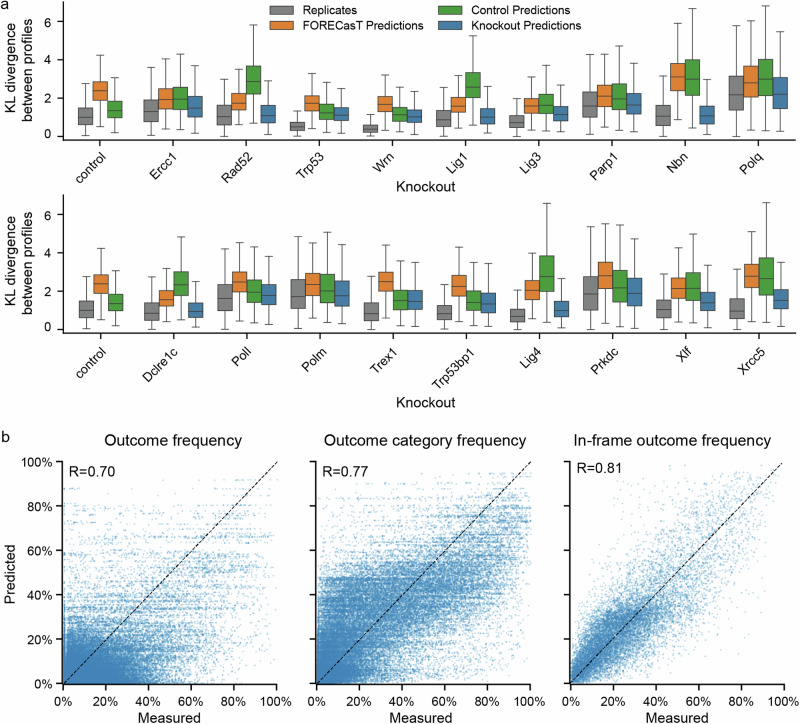
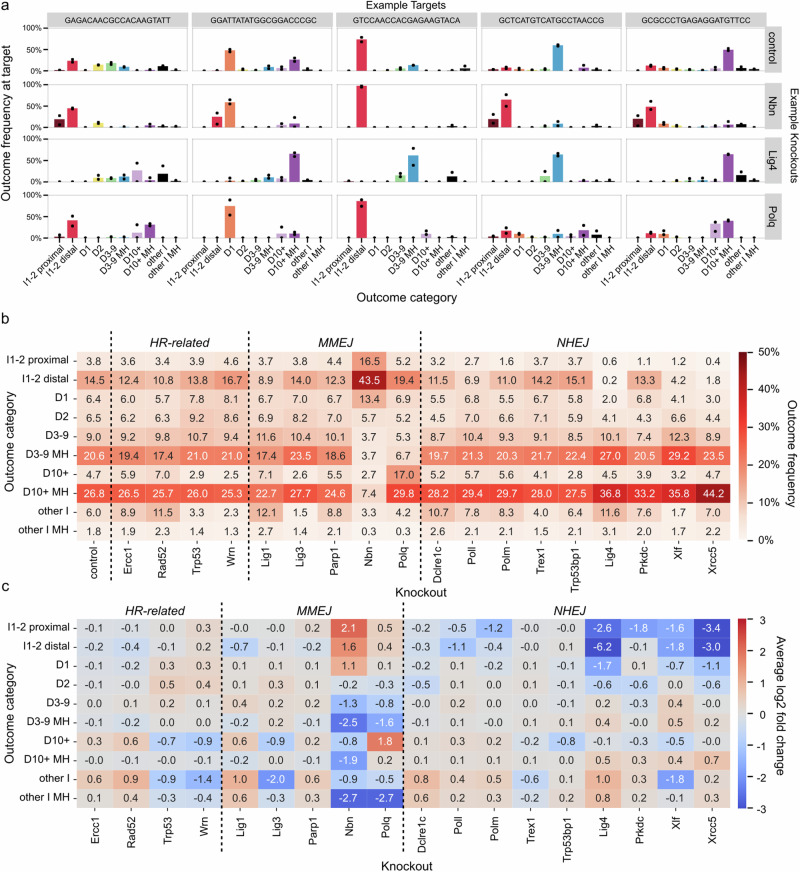
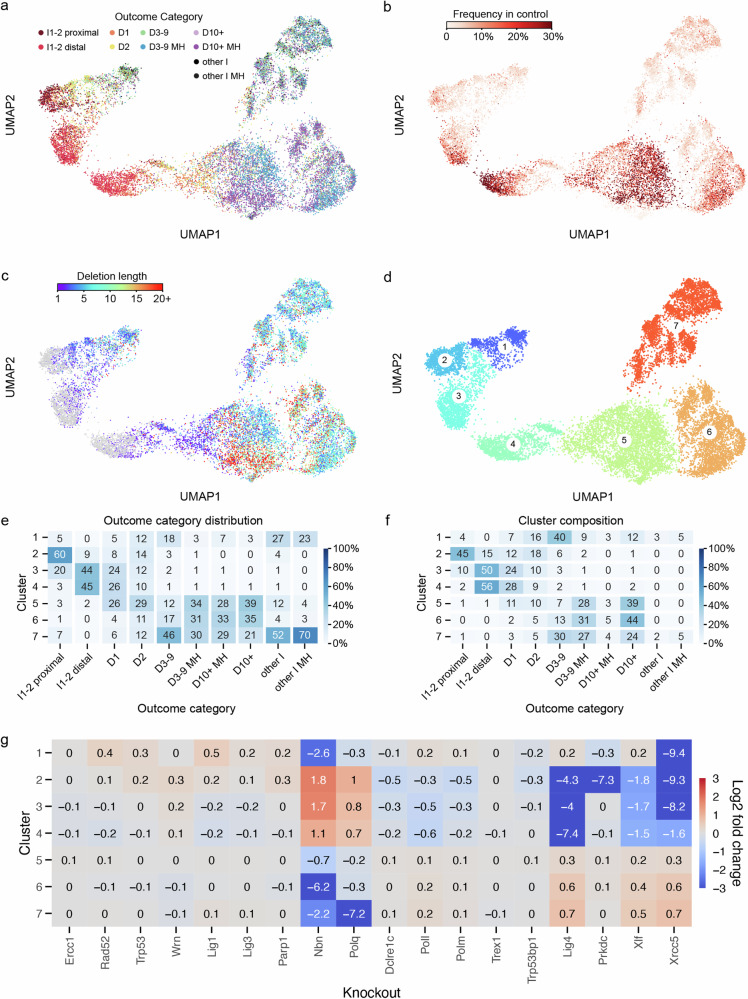
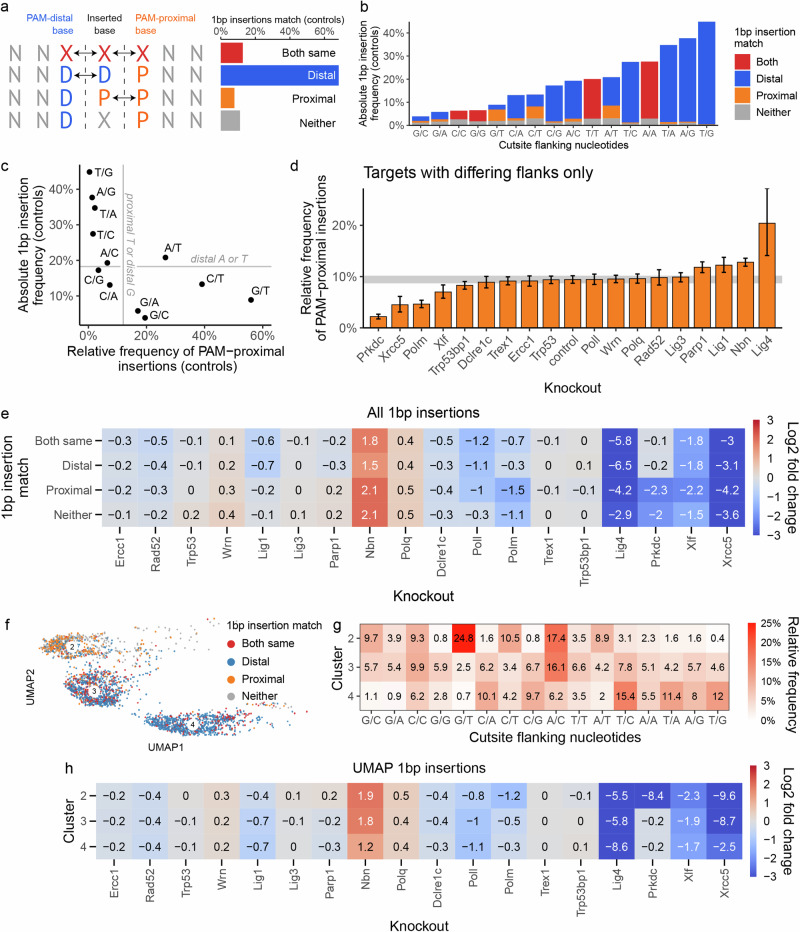
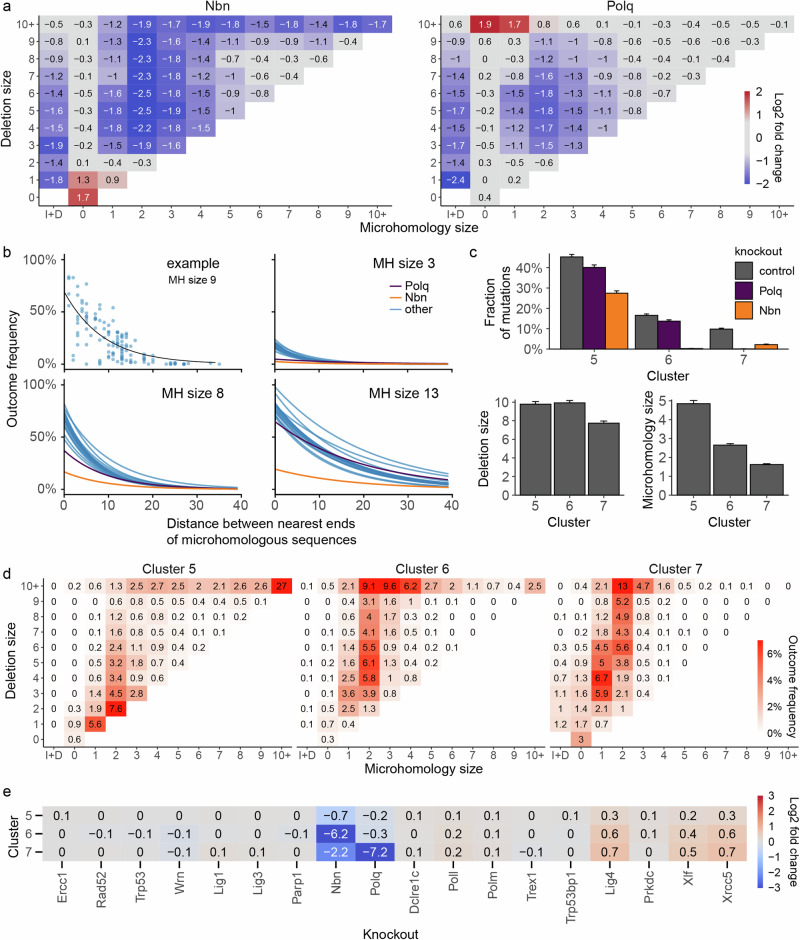
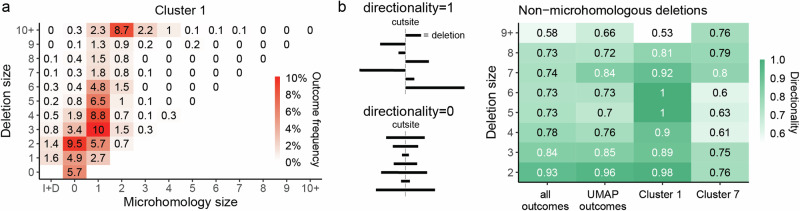
Repair of double-stranded breaks generated by CRISPR/Cas9 is highly dependent on the flanking DNA sequence. To learn about interactions between DNA repair and target sequence, we measure frequencies of over 236,000 distinct Cas9-generated mutational outcomes at over 2800 synthetic target sequences in 18 DNA repair deficient mouse embryonic stem cells lines. We classify the outcomes in an unbiased way, finding a specialised role for Prkdc (DNA-PKcs protein) and Polm in creating 1 bp insertions matching the nucleotide on the protospacer-adjacent motif side of the break, a variable involvement of Nbn and Polq in the creation of different deletion outcomes, and uni-directional deletions dependent on both end-protection and end-resection. Using our dataset, we build predictive models of the mutagenic outcomes of Cas9 scission that outperform the current standards. This work improves our understanding of DNA repair gene function, and provides avenues for more precise modulation of Cas9-generated mutations.
CRISPR/Cas9 产生的双链断裂的修复高度依赖于侧翼 DNA 序列。为了了解 DNA 修复与靶序列之间的相互作用,我们在 18 种 DNA 修复缺陷型小鼠胚胎干细胞系中,测量了超过 2800 个合成靶序列中超过 236000 个独特的 Cas9 产生的突变结果的频率。我们以一种无偏的方式对这些结果进行分类,发现 Prkdc(DNA-PKcs 蛋白)和 Polm 在产生与断裂侧翼原间隔基序核苷酸匹配的 1bp 插入方面具有专门作用,Nbn 和 Polq 在产生不同缺失结果方面的参与程度不同,以及依赖于末端保护和末端切除的单向缺失。利用我们的数据集,我们构建了 Cas9 切割的诱变结果的预测模型,这些模型优于当前的标准。这项工作提高了我们对 DNA 修复基因功能的理解,并为更精确地调节 Cas9 产生的突变提供了途径。