Department of Oncology, Karmanos Cancer Institute, Wayne State University, Detroit, MI 48201, USA.
Cells. 2024 Nov 20;13(22):1924. doi: 10.3390/cells13221924.
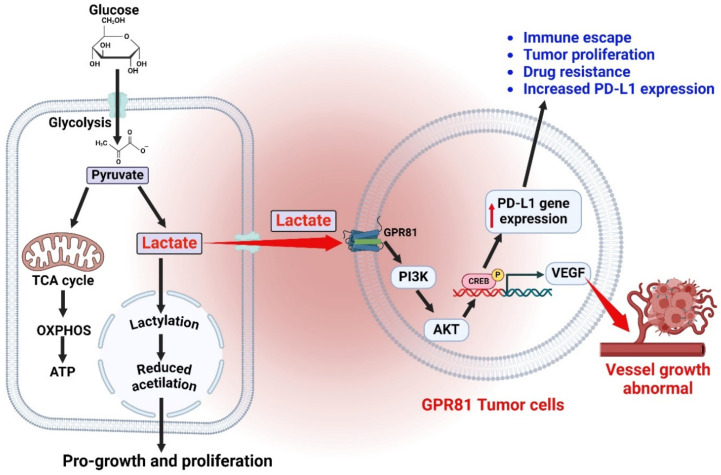
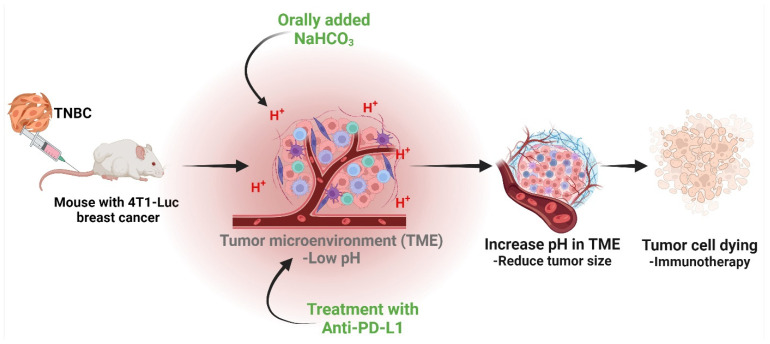
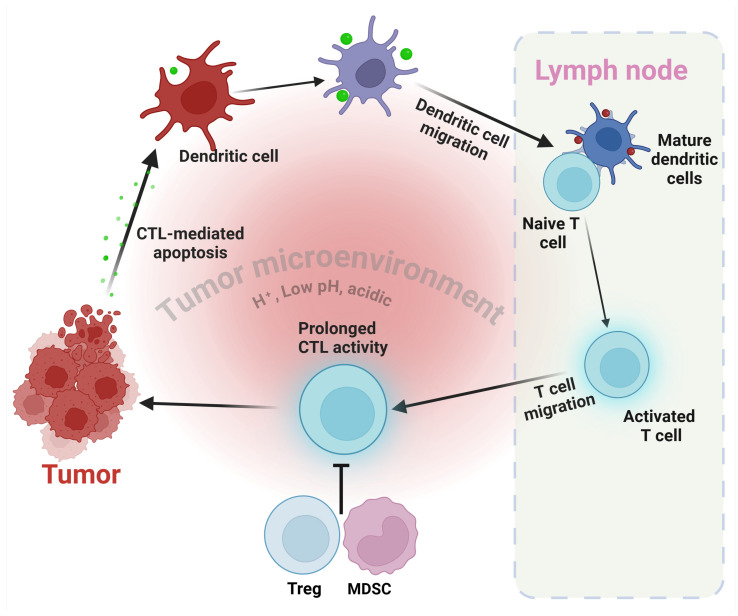
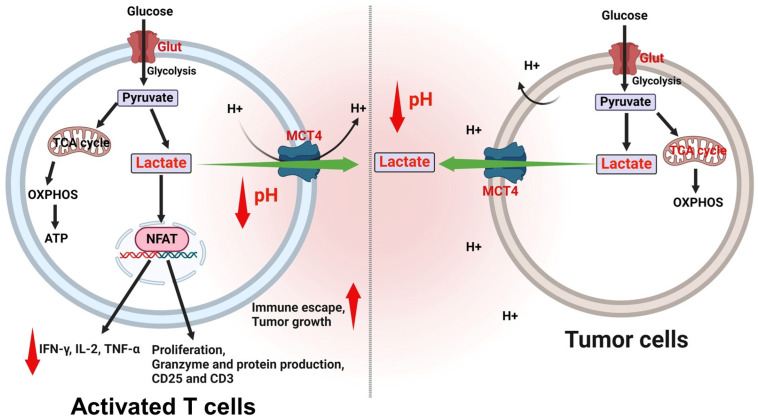
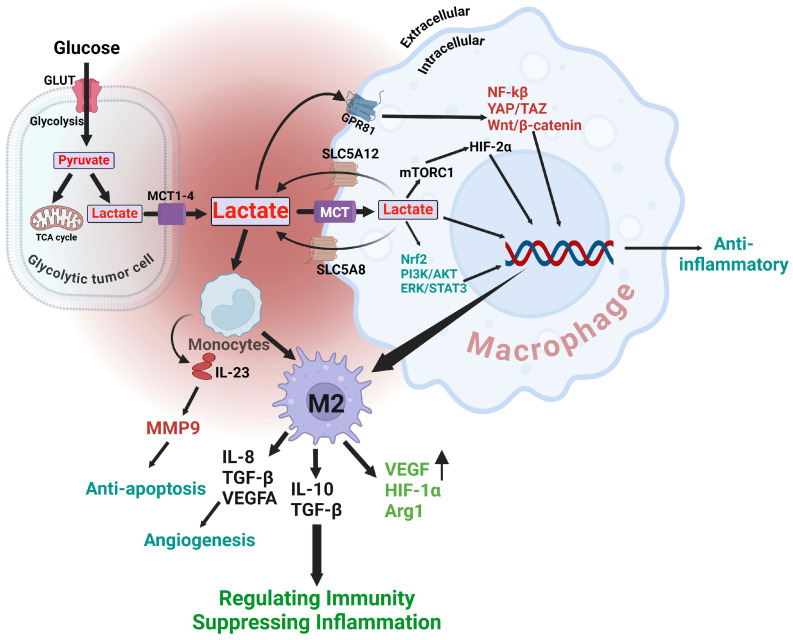
Identifying definitive biomarkers that predict clinical response and resistance to immunotherapy remains a critical challenge. One emerging factor is extracellular acidosis in the tumor microenvironment (TME), which significantly impairs immune cell function and contributes to immunotherapy failure. However, acidic conditions in the TME disrupt the interaction between cancer and immune cells, driving tumor-infiltrating T cells and NK cells into an inactivated, anergic state. Simultaneously, acidosis promotes the recruitment and activation of immunosuppressive cells, such as myeloid-derived suppressor cells and regulatory T cells (Tregs). Notably, tumor acidity enhances exosome release from Tregs, further amplifying immunosuppression. Tumor acidity thus acts as a "protective shield," neutralizing anti-tumor immune responses and transforming immune cells into pro-tumor allies. Therefore, targeting lactate metabolism has emerged as a promising strategy to overcome this barrier, with approaches including buffer agents to neutralize acidic pH and inhibitors to block lactate production or transport, thereby restoring immune cell efficacy in the TME. Recent discoveries have identified genes involved in extracellular pH (pHe) regulation, presenting new therapeutic targets. Moreover, ongoing research aims to elucidate the molecular mechanisms driving extracellular acidification and to develop treatments that modulate pH levels to enhance immunotherapy outcomes. Additionally, future clinical studies are crucial to validate the safety and efficacy of pHe-targeted therapies in cancer patients. Thus, this review explores the regulation of pHe in the TME and its potential role in improving cancer immunotherapy.
确定能够预测免疫治疗临床反应和耐药性的明确生物标志物仍然是一个关键挑战。一个新兴因素是肿瘤微环境(TME)中的细胞外酸中毒,它严重损害免疫细胞功能,并导致免疫治疗失败。然而,TME 中的酸性条件破坏了癌细胞与免疫细胞之间的相互作用,使肿瘤浸润的 T 细胞和 NK 细胞进入失活、无能状态。同时,酸中毒促进了免疫抑制细胞的募集和激活,如髓源性抑制细胞和调节性 T 细胞(Tregs)。值得注意的是,肿瘤酸度增强了 Tregs 来源的外泌体的释放,进一步放大了免疫抑制作用。因此,肿瘤酸度充当了“保护盾”,中和了抗肿瘤免疫反应,并将免疫细胞转化为促肿瘤盟友。因此,靶向乳酸代谢已成为克服这一障碍的有前途的策略,包括缓冲剂来中和酸性 pH 值和抑制剂来阻断乳酸的产生或运输,从而恢复 TME 中免疫细胞的功效。最近的发现确定了参与细胞外 pH(pHe)调节的基因,为新的治疗靶点提供了依据。此外,正在进行的研究旨在阐明驱动细胞外酸化的分子机制,并开发调节 pH 值的治疗方法,以增强免疫治疗效果。此外,未来的临床研究对于验证针对 pHe 的治疗在癌症患者中的安全性和有效性至关重要。因此,本综述探讨了 TME 中 pHe 的调节及其在改善癌症免疫治疗中的潜在作用。