CEA, CNRS, Institute for Integrative Biology of the Cell (I2BC), Université Paris-Saclay, 91198 Gif-sur-Yvette, France.
Biomolecules. 2024 Nov 6;14(11):1413. doi: 10.3390/biom14111413.
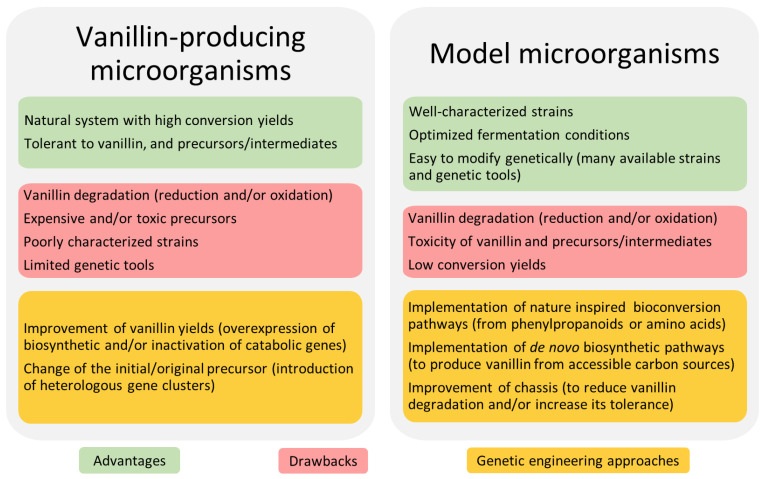
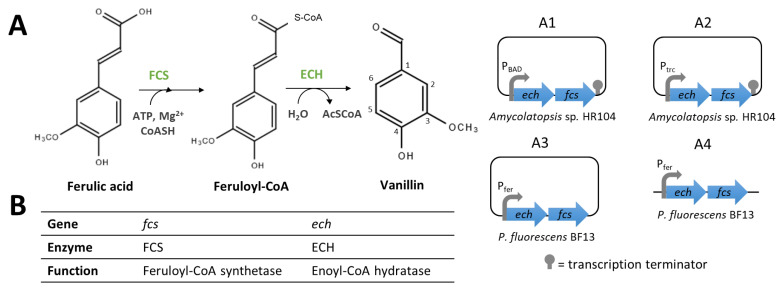
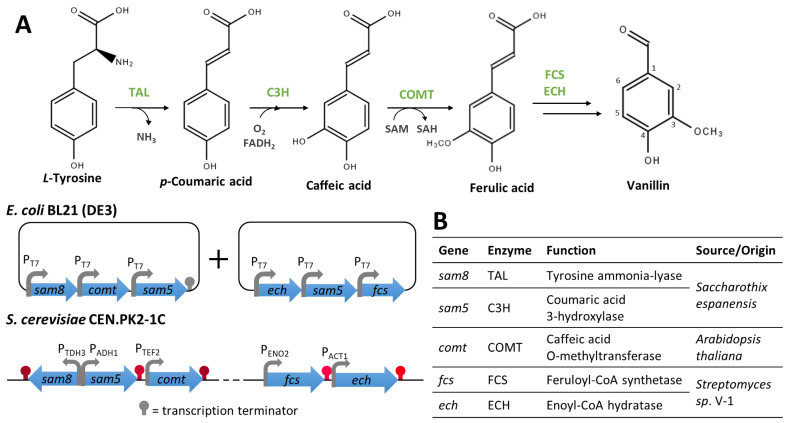
Vanilla flavour is widely used in various industries and is the most broadly used flavouring agent in the food industry. The demand for this flavour is, therefore, extremely high, yet vanilla bean extracts can only meet about 1% of the overall demand. Vanillin, the main constituent of vanilla flavour, can easily be obtained through chemical synthesis. Nonetheless, consumer demands for natural products and environmentally friendly industrial processes drive the development of biotechnological approaches for its production. Some microorganisms can naturally produce vanillin when fed with various substrates, including eugenol, isoeugenol, and ferulic acid. The characterisation of the genes and enzymes involved in these bioconversion pathways, as well as progress in the understanding of vanillin biosynthesis in orchids, allowed the development of genetic engineering and synthetic biology approaches to increase vanillin production in naturally vanillin-producing microorganisms, or to implement novel vanillin biosynthetic pathways in microbial chassis. This review summarises and discusses these genetic engineering and synthetic biology approaches for the microbial production of vanillin.
香草味广泛应用于各个行业,是食品工业中使用最广泛的香料。因此,对这种香料的需求极高,但香草豆提取物只能满足总需求的约 1%。香草醛是香草味的主要成分,可以通过化学合成轻松获得。然而,消费者对天然产品和环保工业过程的需求推动了生物技术方法的发展,以生产香草醛。当某些微生物以各种底物(包括丁香酚、异丁香酚和阿魏酸)为食时,它们可以自然产生香草醛。参与这些生物转化途径的基因和酶的特性,以及对兰花中香草醛生物合成的理解的进展,使得在天然产香草醛的微生物中增加香草醛产量的基因工程和合成生物学方法得以发展,或者在微生物底盘中实施新的香草醛生物合成途径。本文总结并讨论了这些用于微生物生产香草醛的基因工程和合成生物学方法。