Department of Molecular Medicine and Medical Biotechnologies, Federico II University, Via Sergio Pansini 5, 80131 Napoli, Italy.
Department of Human Exercise and Health Sciences, University of Rome "Foro Italico" Piazza L. de Bosis 6, 00135 Rome, Italy.
Biomolecules. 2024 Nov 7;14(11):1418. doi: 10.3390/biom14111418.
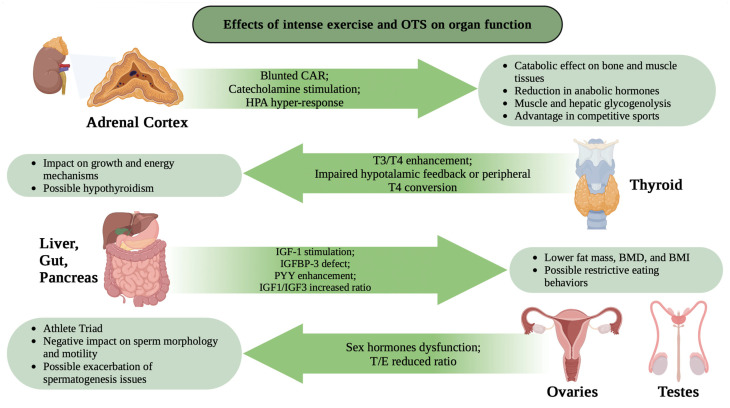
Physical activity highly impacts the neuroendocrine system and hormonal secretion. Numerous variables, both those related to the individual, including genetics, age, sex, biological rhythms, nutritional status, level of training, intake of drugs or supplements, and previous or current pathologies, and those related to the physical activity in terms of type, intensity, and duration of exercise, or environmental conditions can shape the hormonal response to physical exercise. The aim of this review is to provide an overview of the effects of physical exercise on hormonal levels in the human body, focusing on changes in concentrations of hormones such as cortisol, testosterone, and insulin in response to different types and intensities of physical activity. Regular monitoring of hormonal responses in athletes could be a potential tool to design individual training programs and prevent overtraining syndrome.
体育活动对神经内分泌系统和激素分泌有很大影响。许多因素都会影响激素对体育活动的反应,包括个体相关因素,如遗传、年龄、性别、生物节律、营养状况、训练水平、药物或补充剂的摄入,以及既往或现有的疾病,以及与体育活动相关的因素,如运动类型、强度和持续时间,或环境条件。本综述的目的是概述体育锻炼对人体激素水平的影响,重点关注皮质醇、睾酮和胰岛素等激素浓度的变化,以应对不同类型和强度的体育活动。定期监测运动员的激素反应可能是设计个体化训练计划和预防过度训练综合征的潜在工具。