Institute for Data Science and Informatics, University of Missouri, Columbia, MO 65211, USA.
Department of Health Management and Informatics, University of Missouri, Columbia, MO 65211, USA.
Int J Environ Res Public Health. 2024 Nov 19;21(11):1534. doi: 10.3390/ijerph21111534.
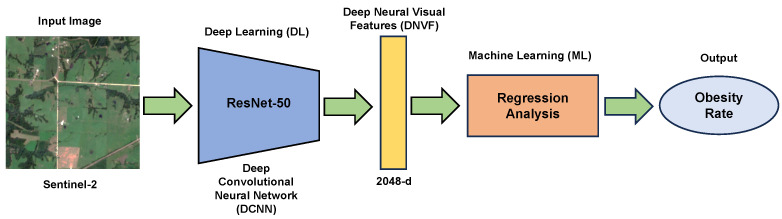
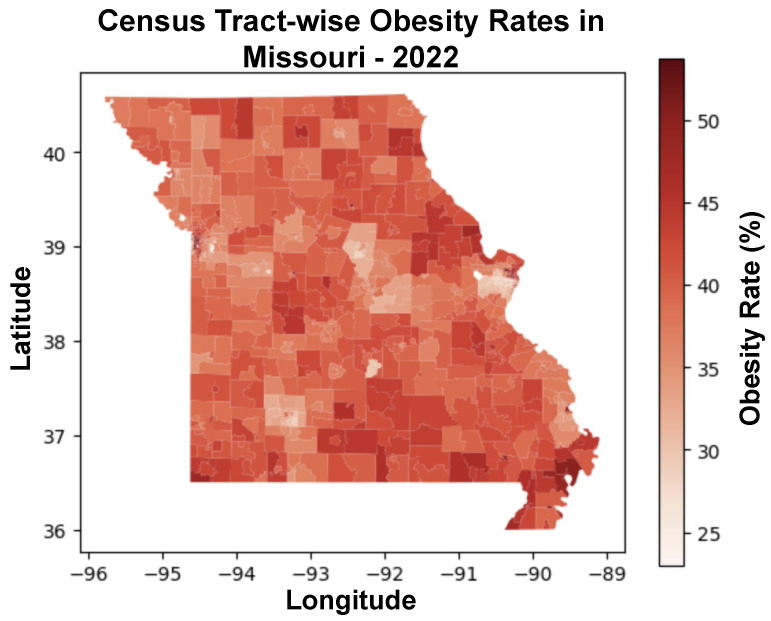
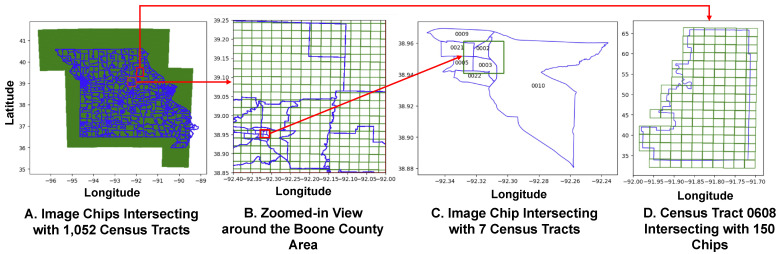
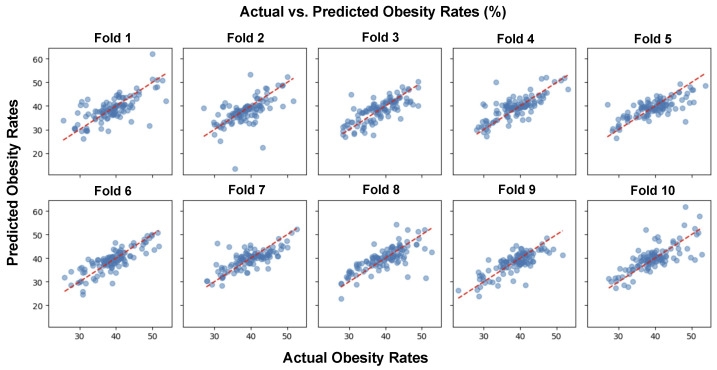
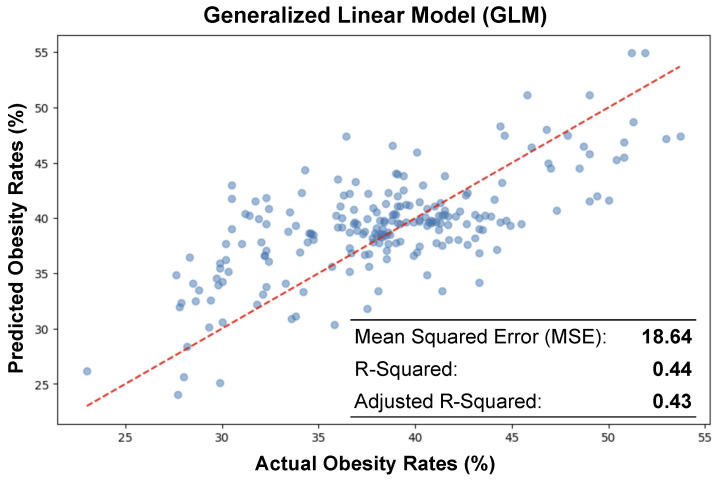
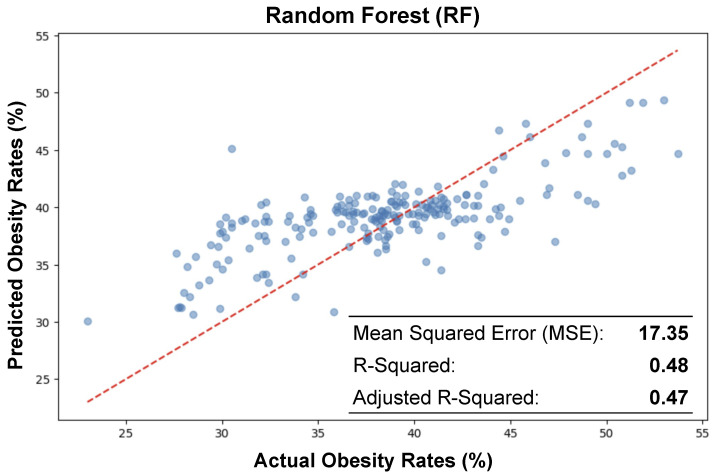
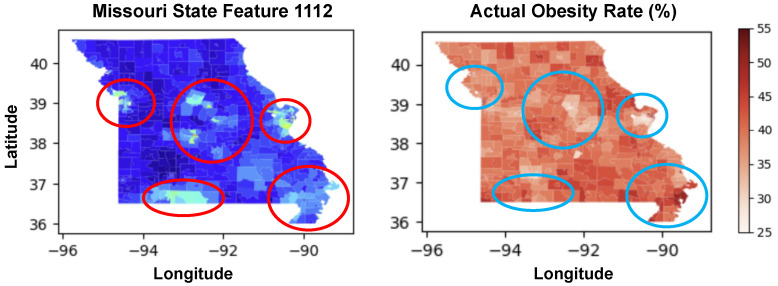
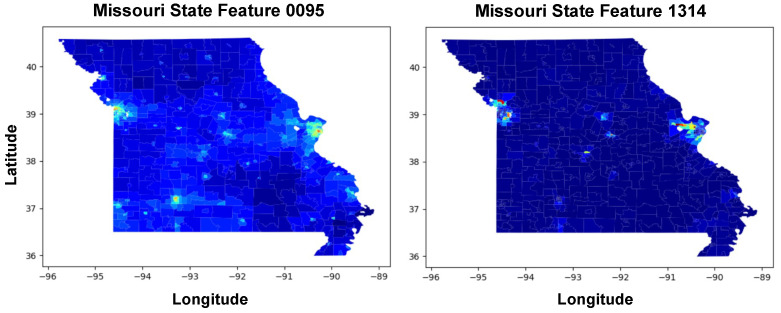
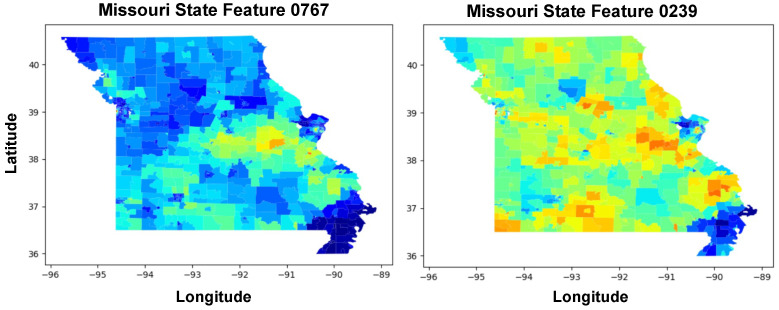
This research study investigates and predicts the obesity prevalence in Missouri, utilizing deep neural visual features extracted from medium-resolution satellite imagery (Sentinel-2). By applying a deep convolutional neural network (DCNN), the study aims to predict the obesity rate of census tracts based on visual features in the satellite imagery that covers each tract. The study utilizes Sentinel-2 satellite images, processed using the ResNet-50 DCNN, to extract deep neural visual features (DNVF). Obesity prevalence data, sourced from the CDC's 2022 estimates, is analyzed at the census tract level. The datasets were integrated to apply a machine learning model to predict the obesity rates in 1052 different census tracts in Missouri. The analysis reveals significant associations between DNVF and obesity prevalence. The predictive models show moderate success in estimating and predicting obesity rates in various census tracts within Missouri. The study emphasizes the potential of using satellite imagery and advanced machine learning in public health research. It points to environmental factors as significant determinants of obesity, suggesting the need for targeted health interventions. Employing DNVF to explore and predict obesity rates offers valuable insights for public health strategies and calls for expanded research in diverse geographical contexts.
本研究利用从中分辨率卫星图像(Sentinel-2)提取的深度神经视觉特征来调查和预测密苏里州的肥胖流行情况。通过应用深度卷积神经网络(DCNN),该研究旨在根据覆盖每个普查区的卫星图像中的视觉特征预测普查区的肥胖率。该研究利用 Sentinel-2 卫星图像,使用 ResNet-50 DCNN 进行处理,提取深度神经视觉特征(DNVF)。肥胖流行数据来自疾病预防控制中心 2022 年的估计,在普查区层面进行分析。数据集被整合在一起,以应用机器学习模型来预测密苏里州 1052 个不同普查区的肥胖率。分析表明 DNVF 与肥胖流行之间存在显著关联。预测模型在估计和预测密苏里州不同普查区的肥胖率方面取得了一定的成功。该研究强调了在公共卫生研究中使用卫星图像和先进的机器学习的潜力。它指出环境因素是肥胖的重要决定因素,这表明需要针对特定人群进行健康干预。利用 DNVF 探索和预测肥胖率为公共卫生策略提供了有价值的见解,并呼吁在不同的地理背景下进行更多的研究。