Yilmaz Gokhan, Chan Maria, Lau Calvin Ho-Fung, Capitani Sabrina, Kang Mingsong, Charron Philippe, Hoover Emily, Topp Edward, Guan Jiewen
Ottawa Laboratory-Fallowfield, Canadian Food Inspection Agency, Ottawa, ON K2J 4S1, Canada.
Ottawa Laboratory-Carling, Canadian Food Inspection Agency, Ottawa, ON K1A 0Z, Canada.
Microorganisms. 2024 Oct 25;12(11):2148. doi: 10.3390/microorganisms12112148.
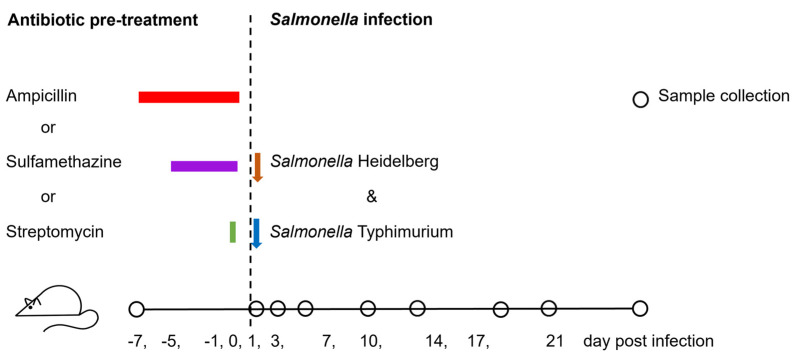
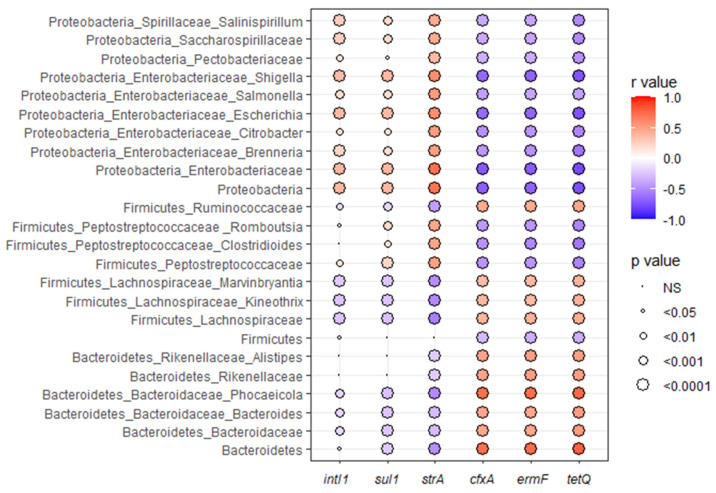
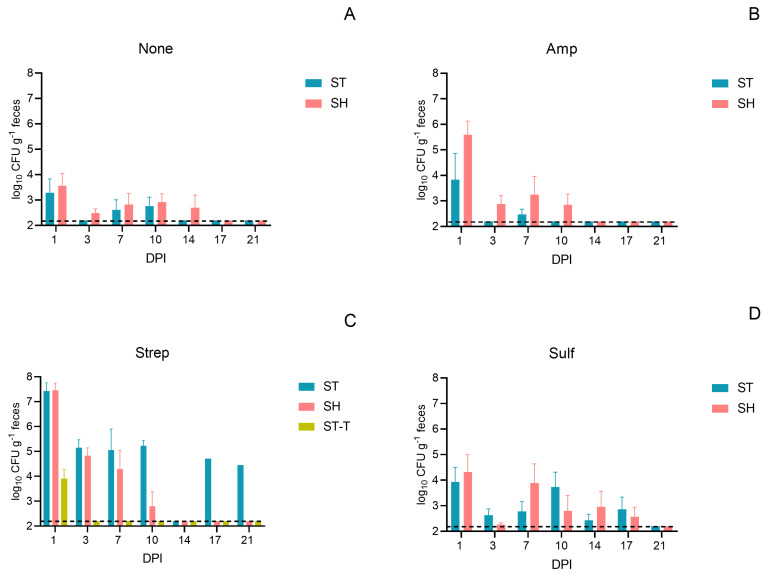
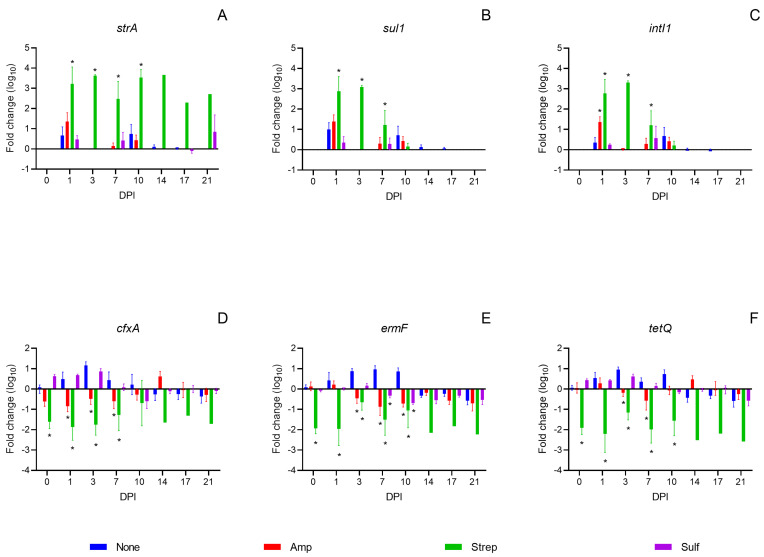
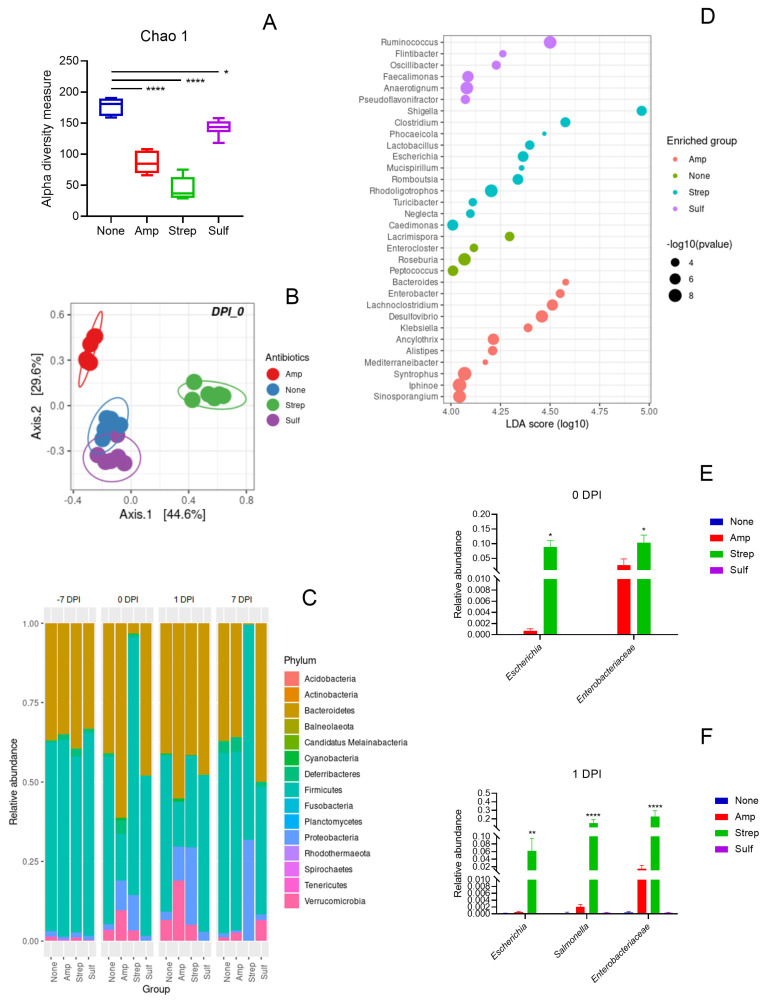
The global spread of antimicrobial resistance genes (ARGs) poses a significant threat to public health. While antibiotics effectively treat bacterial infections, they can also induce gut dysbiosis, the severity of which varies depending on the specific antibiotic treatment used. However, it remains unclear how gut dysbiosis affects the mobility and dynamics of ARGs. To address this, mice were pre-treated with streptomycin, ampicillin, or sulfamethazine, and then orally inoculated with enterica serovar Typhimurium and . Heidelberg carrying a multi-drug resistance IncA/C plasmid. The streptomycin pre-treatment caused severe microbiome perturbation, promoting the high-density colonization of . Heidelberg and . Typhimurium, and enabling an IncA/C transfer from . Heidelberg to . Typhimurium and a commensal . The ampicillin pre-treatment induced moderate microbiome perturbation, supporting only . Heidelberg colonization and the IncA/C transfer to commensal . The sulfamethazine pre-treatment led to mild microbiome perturbation, favoring neither spp. colonization nor a conjugative plasmid transfer. The degree of gut dysbiosis also influenced the enrichment or depletion of the ARGs associated with mobile plasmids or core commensal bacteria, respectively. These findings underscore the significance of pre-existing gut dysbiosis induced by various antibiotic treatments on ARG dissemination and may inform prudent antibiotic use practices.
抗菌耐药基因(ARGs)的全球传播对公众健康构成了重大威胁。虽然抗生素能有效治疗细菌感染,但它们也会引发肠道微生物群失调,其严重程度因所使用的特定抗生素治疗而异。然而,目前尚不清楚肠道微生物群失调如何影响ARGs的移动性和动态变化。为了解决这个问题,对小鼠进行链霉素、氨苄青霉素或磺胺二甲嘧啶预处理,然后口服接种携带多药耐药IncA/C质粒的鼠伤寒沙门氏菌血清型和海德堡沙门氏菌。链霉素预处理导致严重的微生物群扰动,促进了海德堡沙门氏菌和鼠伤寒沙门氏菌的高密度定植,并使IncA/C从海德堡沙门氏菌转移到鼠伤寒沙门氏菌和一种共生菌。氨苄青霉素预处理引起中度微生物群扰动,仅支持海德堡沙门氏菌定植以及IncA/C向共生菌的转移。磺胺二甲嘧啶预处理导致轻度微生物群扰动,既不有利于沙门氏菌属定植,也不有利于接合质粒转移。肠道微生物群失调的程度还分别影响了与可移动质粒或核心共生细菌相关的ARGs的富集或消耗。这些发现强调了各种抗生素治疗引起的预先存在的肠道微生物群失调对ARGs传播的重要性,并可能为谨慎使用抗生素的做法提供参考。