Dragendorf Eric, Bültmann Eva, Wolff Dominik
Peter L. Reichertz Institute for Medical Informatics of TU Braunschweig, Hannover Medical School, Hannover, Germany.
Institute of Diagnostic and Interventional Neuroradiology, Hannover Medical School, Hannover, Germany.
Front Neuroinform. 2024 Nov 12;18:1496143. doi: 10.3389/fninf.2024.1496143. eCollection 2024.
Over the past few decades, numerous researchers have explored the application of machine learning for assessing children's neurological development. Developmental changes in the brain could be utilized to gauge the alignment of its maturation status with the child's chronological age. AI is trained to analyze changes in different modalities and estimate the brain age of subjects. Disparities between the predicted and chronological age can be viewed as a biomarker for a pathological condition. This literature review aims to illuminate research studies that have employed AI to predict children's brain age.
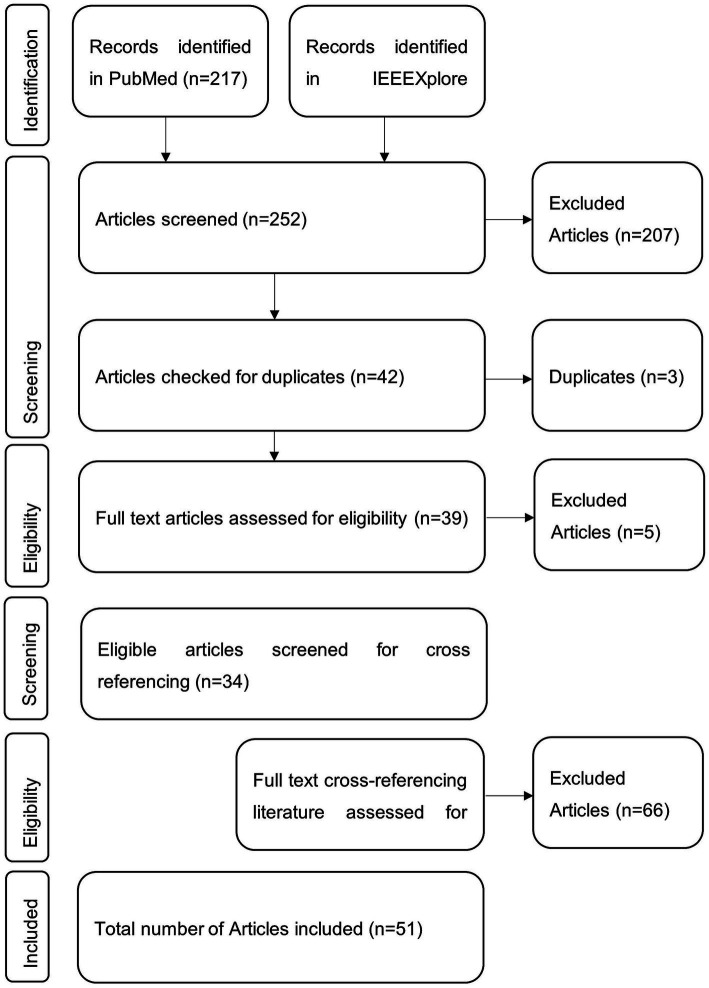
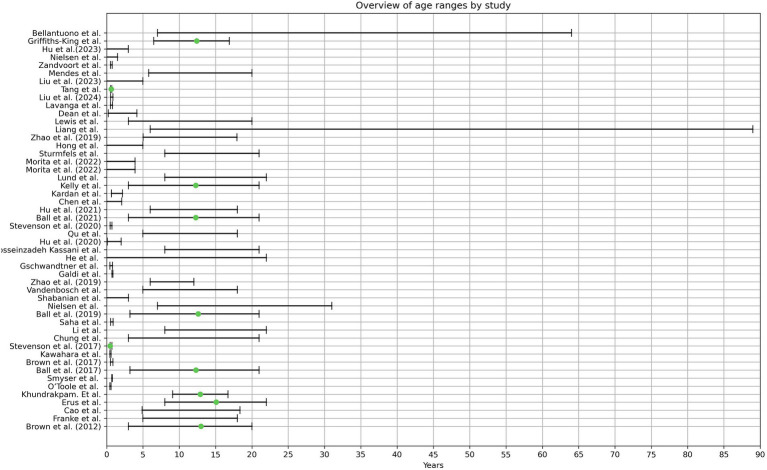
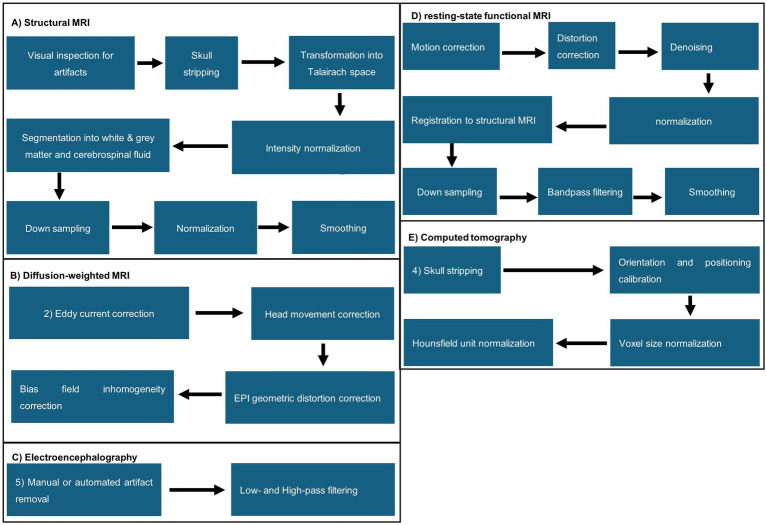
The inclusion criteria for this study were predicting brain age via AI in healthy children up to 12 years. The search term was centered around the keywords "pediatric," "artificial intelligence," and "brain age" and was utilized in PubMed and IEEEXplore. The selected literature was then examined for information on data acquisition methods, the age range of the study population, pre-processing, methods and AI techniques utilized, the quality of the respective techniques, model explanation, and clinical applications.
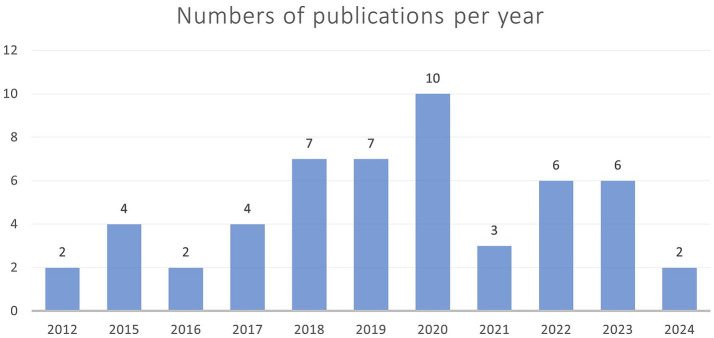
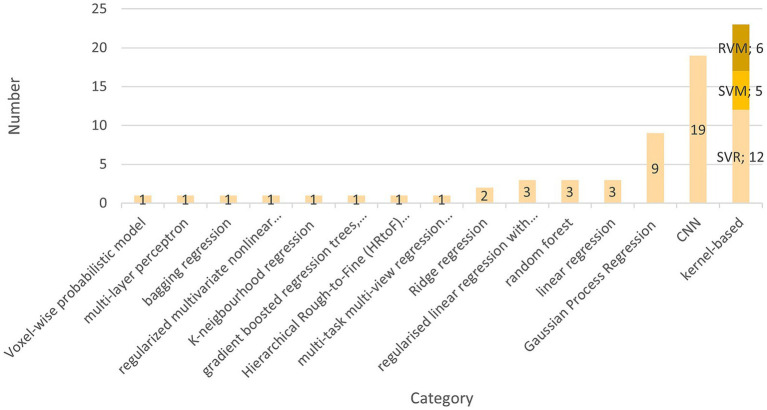
Fifty one publications from 2012 to 2024 were included in the analysis. The primary modality of data acquisition was MRI, followed by EEG. Structural and functional MRI-based studies commonly used publicly available datasets, while EEG-based studies typically relied on self-recruitment. Many studies utilized pre-processing pipelines provided by toolkit suites, particularly in MRI-based research. The most frequently used model type was kernel-based learning algorithms, followed by convolutional neural networks. Overall, prediction accuracy may improve when multiple acquisition modalities are used, but comparing studies is challenging. In EEG, the prediction error decreases as the number of electrodes increases. Approximately one-third of the studies used explainable artificial intelligence methods to explain the model and chosen parameters. However, there is a significant clinical translation gap as no study has tested their model in a clinical routine setting.
Further research should test on external datasets and include low-quality routine images for MRI. T2-weighted MRI was underrepresented. Furthermore, different kernel types should be compared on the same dataset. Implementing modern model architectures, such as convolutional neural networks, should be the next step in EEG-based research studies.
在过去几十年中,众多研究人员探索了机器学习在评估儿童神经发育方面的应用。大脑的发育变化可用于衡量其成熟状态与儿童实际年龄的匹配程度。人工智能经过训练,可分析不同模态的变化并估计受试者的脑龄。预测脑龄与实际年龄之间的差异可被视为病理状况的生物标志物。这篇文献综述旨在阐明采用人工智能预测儿童脑龄的研究。
本研究的纳入标准是通过人工智能预测12岁及以下健康儿童的脑龄。检索词围绕关键词“儿科”“人工智能”和“脑龄”,并在PubMed和IEEEXplore中使用。然后对所选文献进行审查,以获取有关数据采集方法、研究人群年龄范围、预处理、所使用的方法和人工智能技术、各自技术的质量、模型解释以及临床应用等信息。
分析纳入了2012年至2024年的51篇出版物。数据采集的主要模态是磁共振成像(MRI),其次是脑电图(EEG)。基于结构和功能MRI的研究通常使用公开可用的数据集,而基于EEG的研究通常依赖于自行招募。许多研究使用工具包提供的预处理管道,特别是在基于MRI的研究中。最常用的模型类型是基于核的学习算法,其次是卷积神经网络。总体而言,使用多种采集模态时预测准确性可能会提高,但比较研究具有挑战性。在EEG中,随着电极数量的增加,预测误差会减小。大约三分之一的研究使用可解释人工智能方法来解释模型和所选参数。然而,存在显著的临床转化差距,因为没有研究在临床常规环境中测试其模型。
进一步的研究应在外部数据集上进行测试,并纳入低质量的MRI常规图像。T2加权MRI的代表性不足。此外,应在同一数据集上比较不同的核类型。实施现代模型架构,如卷积神经网络,应是基于EEG的研究的下一步。