Department of Microbiology, Faculty of Science, Ain Shams University, Cairo, Egypt.
Department of Botany, Faculty of Science, Ain Shams University, Cairo, Egypt.
Appl Microbiol Biotechnol. 2024 Nov 27;108(1):524. doi: 10.1007/s00253-024-13344-7.
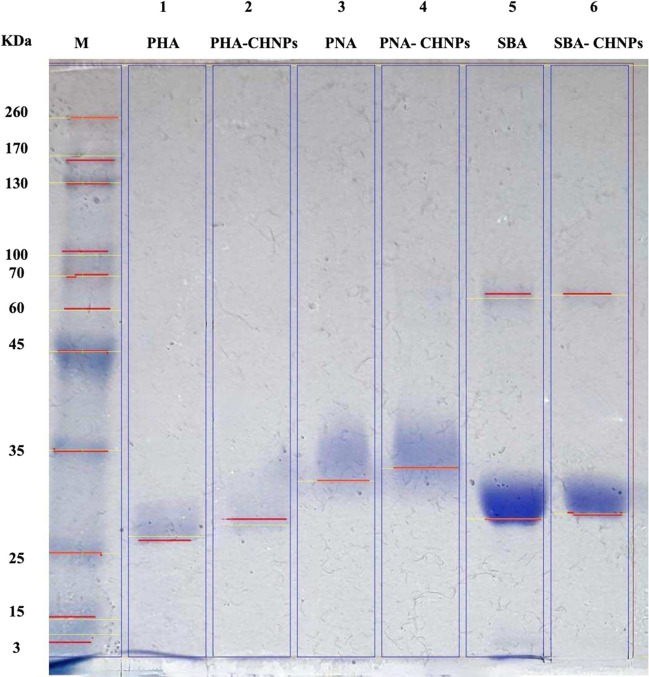
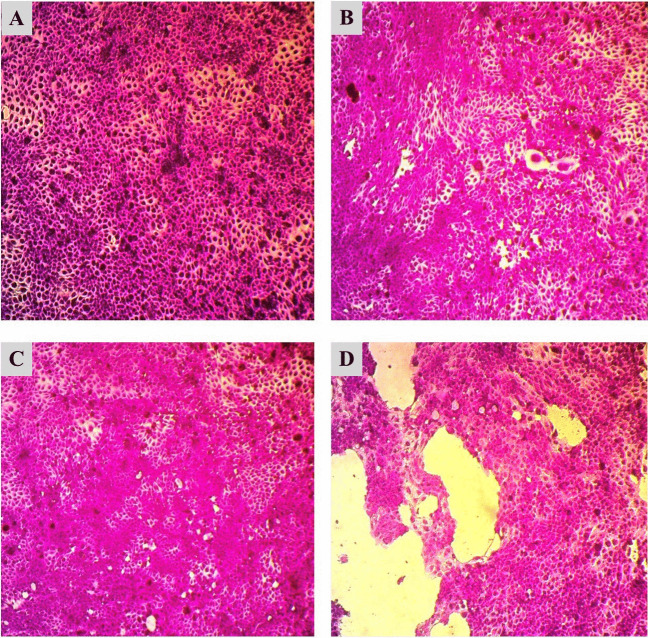
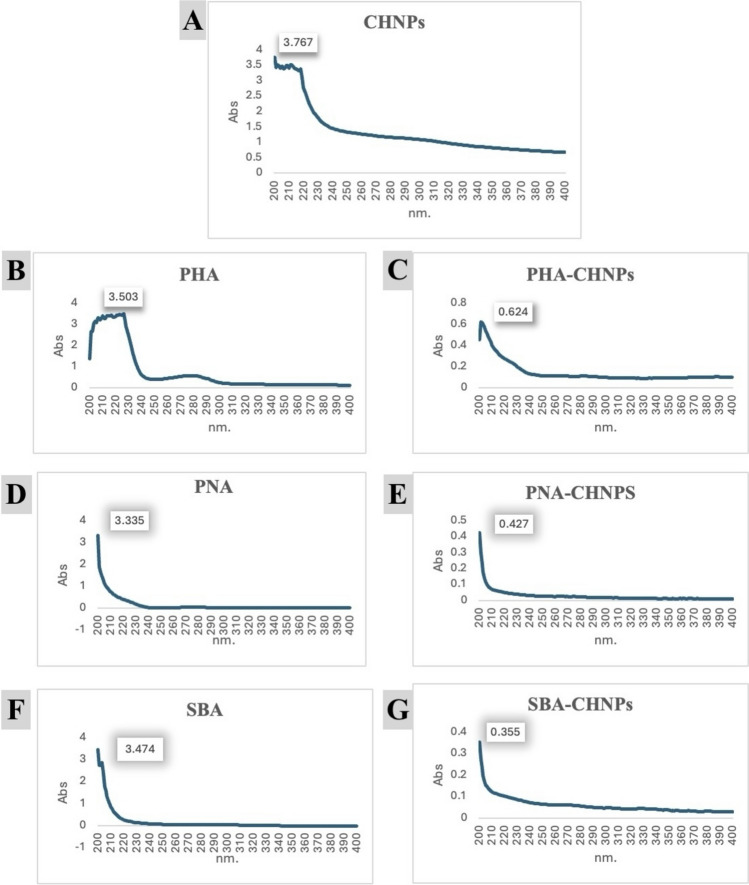
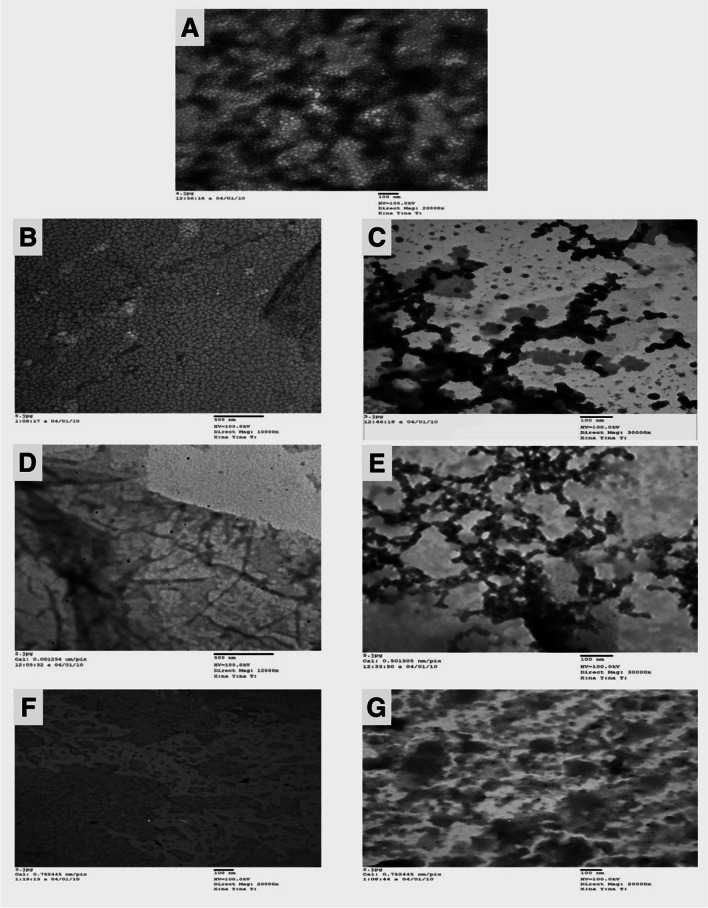
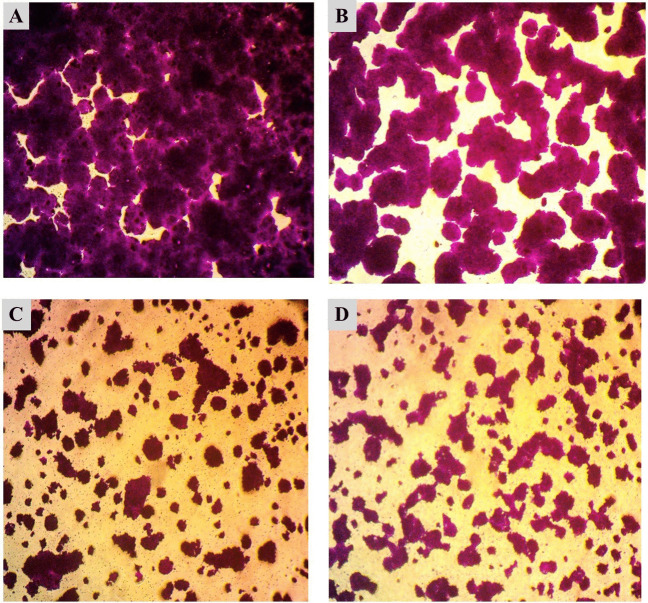
To the best of our knowledge, this is the first attempt to synthesize, characterize, and determine the antibacterial and anticancer effects of three novel conjugates of plant lectins: phytohemagglutinin lectin (PHA), soybean agglutinin (SBA), and peanut agglutinin (PNA) with chitosan nanoparticles (CHNPs). The lectin concentration within prepared conjugates was estimated using nannodrop, and the highest concentration was 0.96 mg/ml in PHA-CHNPs. SDS-PAGE showed the molecular weights of conjugates ranged from 26.9 to 63.9 kDa. UV spectrophotometer recorded the absorbance peaks of conjugates somewhere between 200 and 230 nm. Hemagglutination analysis verified the presence of actively binding lectins. The three conjugates showed strong antibacterial activity against Gram-positive and Gram-negative bacteria compared to pure lectins and chitosan nanoparticles. The highest inhibition zone was 55.67 ± 4.04, 38.67 ± 5.51, and 37.33 ± 2.52 for PHA-CHNPs against Enterococcus faecalis, Salmonella typhimurium, and Shigella sonnei, respectively, followed by 36.3 ± 0.15 for PNA-CHNPs against Staphylococcus aureus. The lowest MIC was 1.5 µg/ml for PHA-CHNPs against Enterococcus faecalis, followed by 12 µg/ml for PNA-CHNPs and SBA-CHNPs against Salmonella typhimurium and Enterococcus faecalis, respectively. TEM microphotographs show the conjugation pattern between lectins and chitosan nanoparticles and the morphological differences between control, treated bacteria, and cancer cells. Moreover, 100 μg/ml of PHA-CHNPs affect tongue carcinoma (HNO-97), colorectal cancer (HT-29), and human melanoma (A375) cancer cell lines, reducing cell viability by 38.78 ± 1.85%, 49.88 ± 1.11%, and 66.92 ± 3.60%, respectively. This study develops three innovative conjugates of lectin chitosan nanoparticles that need to be tested as potential antibacterial and anticancer agents for medical and cancer therapy applications. KEY POINTS: • Lectin-conjugated chitosan nanoparticles exhibit antibacterial activity. • All conjugates are safe for oral epithelial cells and human skin fibroblasts. • The PHA-CHNP conjugates have anticancer activity against HNO-97, HT-29, and A375.
据我们所知,这是首次尝试合成、表征并测定三种新型植物凝集素(PHA、SBA 和 PNA)与壳聚糖纳米粒子(CHNP)缀合物的抗菌和抗癌作用。采用纳米滴定量法测定缀合物中凝集素的浓度,最高浓度为 PHA-CHNP 中的 0.96mg/ml。SDS-PAGE 显示缀合物的分子量范围为 26.9 至 63.9kDa。紫外分光光度计记录的缀合物的吸收峰在 200 至 230nm 之间。血凝分析证实了具有活性结合的凝集素的存在。与纯凝集素和壳聚糖纳米粒子相比,三种缀合物对革兰氏阳性和革兰氏阴性菌均表现出较强的抗菌活性。PHA-CHNP 对粪肠球菌、鼠伤寒沙门氏菌和宋内志贺氏菌的抑菌圈最大,分别为 55.67±4.04、38.67±5.51 和 37.33±2.52,其次是 PNA-CHNP 对金黄色葡萄球菌的抑菌圈为 36.3±0.15。PHA-CHNP 对粪肠球菌的最低 MIC 为 1.5μg/ml,其次是 PNA-CHNP 和 SBA-CHNP 对鼠伤寒沙门氏菌和粪肠球菌的 MIC 分别为 12μg/ml 和 12μg/ml。TEM 显微照片显示了凝集素与壳聚糖纳米粒子的缀合模式以及对照、处理细菌和癌细胞之间的形态差异。此外,PHA-CHNP 的浓度为 100μg/ml 时,可降低舌癌细胞(HNO-97)、结直肠癌细胞(HT-29)和人黑素瘤细胞(A375)的细胞活力,分别为 38.78±1.85%、49.88±1.11%和 66.92±3.60%。本研究开发了三种新型的凝集素-壳聚糖纳米粒子缀合物,需要作为医学和癌症治疗应用的潜在抗菌和抗癌药物进行测试。 关键点: • 凝集素-壳聚糖纳米粒子缀合物具有抗菌活性。 • 所有缀合物对口腔上皮细胞和人皮肤成纤维细胞均安全。 • PHA-CHNP 缀合物对 HNO-97、HT-29 和 A375 具有抗癌活性。