Mei Davide Antonio, Romiti Giulio Francesco, Bucci Tommaso, Corica Bernadette, Imberti Jacopo Francesco, Bonini Niccolò, Vitolo Marco, Shantsila Alena, Tse Hung-Fat, Chao Tze-Fan, Boriani Giuseppe, Proietti Marco, Lip Gregory Y H
Liverpool Centre for Cardiovascular Science at University of Liverpool, Liverpool John Moores University and Liverpool Heart & Chest Hospital, Liverpool, UK.
Cardiology Division, Department of Biomedical, Metabolic and Neural Sciences, Italy University of Modena and Reggio Emilia, Policlinico Di Modena, Modena, Italy.
BMC Med. 2024 Dec 2;22(1):567. doi: 10.1186/s12916-024-03792-3.
In patients with atrial fibrillation (AF), the impact of peripheral artery disease (PAD) on oral anticoagulant (OAC) therapy use and the risk of outcomes remains unclear.
To analyse the epidemiology of PAD in a large cohort of European and Asian AF patients, and the impact on treatment patterns and risks of adverse outcomes.
We analysed AF patients from two large prospective observational registries. OAC prescription and risk of outcomes were analysed according to the presence of PAD, using adjusted Logistic and Cox regression analyses. The primary outcome was the composite of all-cause death and major adverse cardiovascular events (MACE). Interaction analyses were also performed.
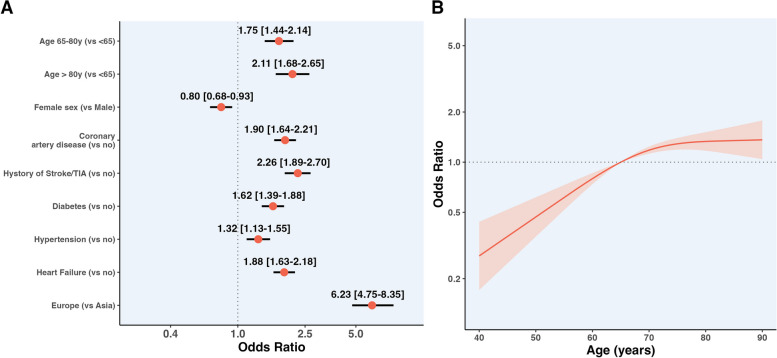
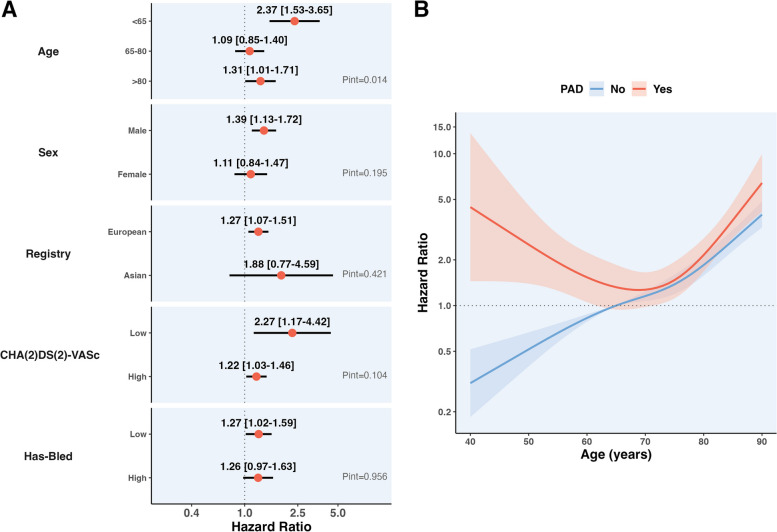
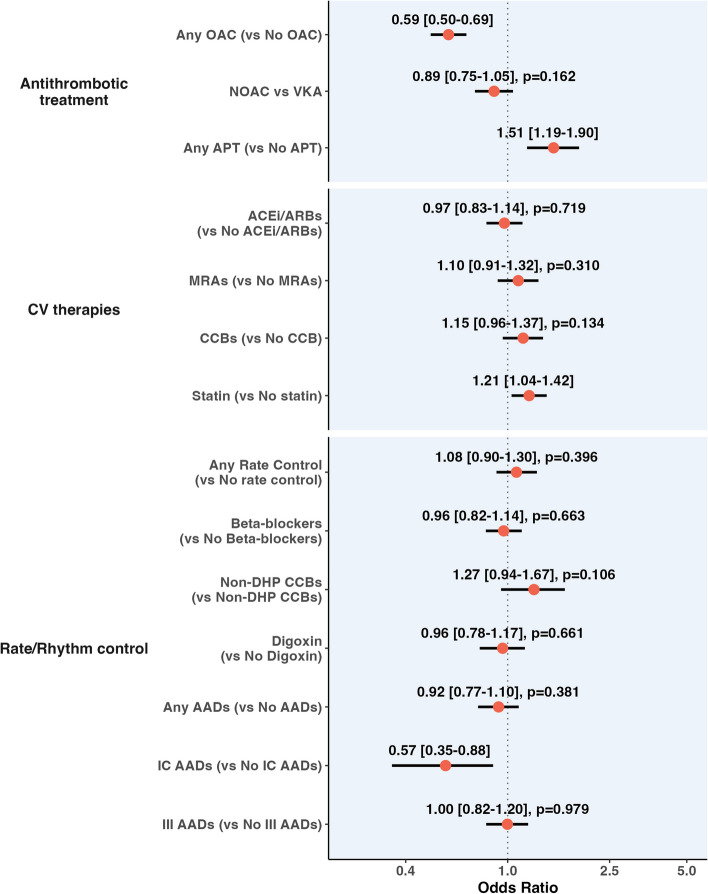
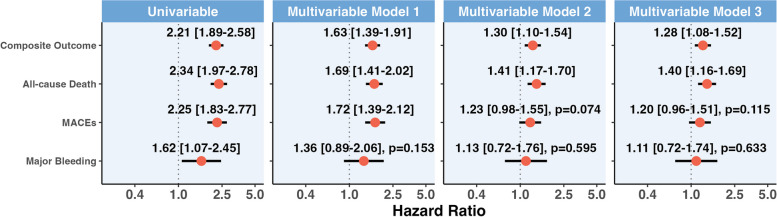
Fifteen-thousand-four-hundred-ninety-seven patients with AF (mean age 68.9, SD 11.6 years; 38.6% female, 30% from Asia) were included in the analysis. PAD was found in 941 patients (6.1%), with a higher prevalence among European individuals compared to Asian (8.1% vs 1.2%, p < 0.001). On logistic regression analysis, European patients had sixfold higher odds of presenting with PAD compared with Asians (OR 6.23, 95% CI 4.75-8.35). After adjustments, PAD was associated with lower use of OAC (OR: 0.59, 95% CI: 0.50-0.69). On Cox regression analysis, PAD was associated with a higher risk of the primary composite outcome (HR 1.28, 95% CI: 1.08-1.52) and all-cause death (HR 1.40, 95% CI: 1.16-1.69). A significant interaction was observed between PAD and age, with higher effects of PAD found in younger patients (< 65 years) for the risk of the primary outcome (p = 0.014).
In patients with AF, PAD is associated with lower use of OAC and a higher risk of adverse outcomes, with a greater risk seen in younger patients.
在心房颤动(AF)患者中,外周动脉疾病(PAD)对口服抗凝剂(OAC)治疗使用情况及结局风险的影响尚不清楚。
分析一大群欧洲和亚洲AF患者中PAD的流行病学情况,以及对治疗模式和不良结局风险的影响。
我们分析了来自两个大型前瞻性观察性登记处的AF患者。根据是否存在PAD,使用校正后的逻辑回归和Cox回归分析来分析OAC处方和结局风险。主要结局是全因死亡和主要不良心血管事件(MACE)的复合结局。还进行了交互作用分析。
15497例AF患者(平均年龄68.9岁,标准差11.6岁;38.6%为女性,30%来自亚洲)纳入分析。941例患者(6.1%)存在PAD,欧洲个体中的患病率高于亚洲(8.1%对1.2%,p<0.001)。逻辑回归分析显示,与亚洲人相比,欧洲患者出现PAD的几率高6倍(比值比6.23,95%置信区间4.75-8.35)。校正后,PAD与OAC使用减少相关(比值比:0.59,95%置信区间:0.50-0.69)。Cox回归分析显示,PAD与主要复合结局的较高风险(风险比1.28,95%置信区间:1.08-1.52)和全因死亡(风险比1.40,95%置信区间:1.16-1.69)相关。在PAD和年龄之间观察到显著的交互作用,在年轻患者(<65岁)中,PAD对主要结局风险的影响更大(p=0.014)。
在AF患者中,PAD与OAC使用减少及不良结局风险较高相关,年轻患者的风险更大。