Xu Xiaohui, Hu Shiyun, Shen Sijie, Ding Fang, Shao Jianlin, Shen Xiafen, Chen Tianxu, Xu Xiaoling, Yan Jing, Zhu Yin, Cai Qiang, Yu Wei
Zhejiang Provincial Center for Cardiovascular Disease Control and Prevention, Zhejiang Hospital, 310013 Hangzhou, Zhejiang, China.
Department of Food and Agricultural Technology, Yangtze Delta Region Institute of Tsinghua University, 314006 Jiaxing, Zhejiang, China.
Rev Cardiovasc Med. 2024 Nov 20;25(11):412. doi: 10.31083/j.rcm2511412. eCollection 2024 Nov.
Dietary choices are inextricably linked to the incidence of cardiovascular disease (CVD), whereas an optimal dietary pattern to minimize CVD morbidity in high-risk subjects remains challenging.
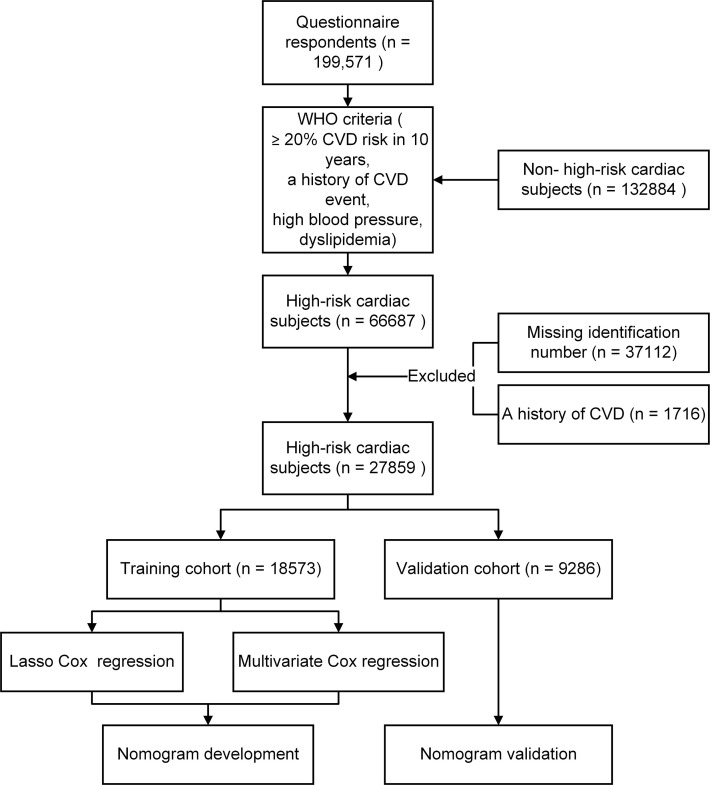
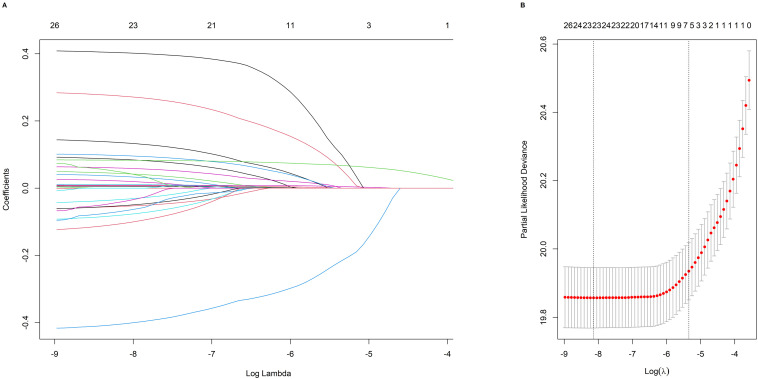
We comprehensively assessed the relationship between food consumption frequencies and CVD in 28,979 high-risk subjects. The outcome was defined as the composite of the incidence of major CVD events, including coronary heart disease and stroke. Risk factors associated with CVD were screened through a shrinkage approach, specifically least absolute shrinkage and selection operator (LASSO) regression. Hazard ratios (HRs) for various dietary consumption frequencies were assessed using multivariable Cox frailty models with random intercepts.
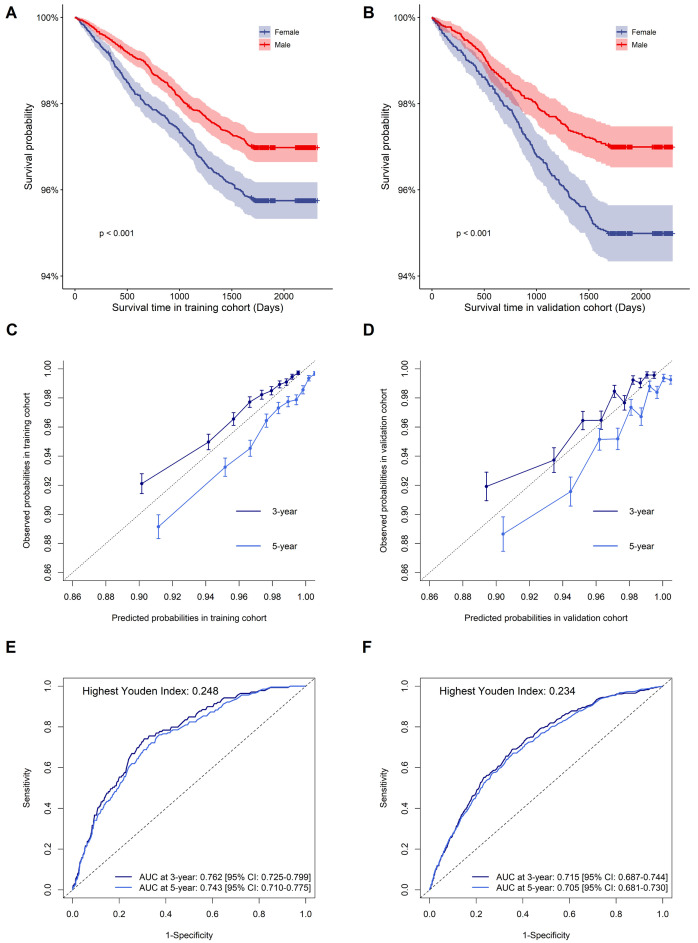
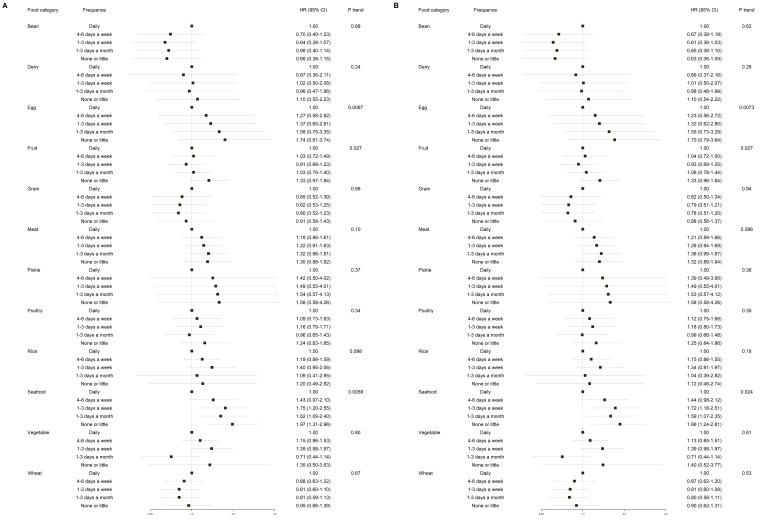
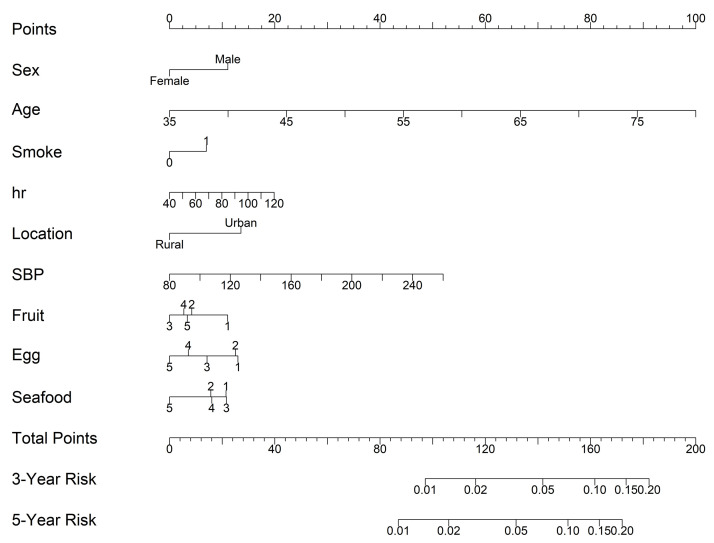
Increased egg and seafood consumption were associated with a lower risk of CVD (daily vs little, HR 1.70, 95% confidence interval, CI: 0.79-3.64, = 0.0073 and HR 1.86, 95% CI: 1.24-2.81, = 0.024, respectively). 6 non-food (age, sex, smoke, location, heart ratio, and systolic blood pressure) and 3 food (fruit, egg, and seafood) related risk factors were included in the nomogram to predict 3 and 5-year incidence of CVD. The concordance indexes of the training and validation cohorts were 0.733 (95% CI: 0.725-0.741) and 0.705 (95% CI: 0.693-0.717), respectively. The nomogram was validated using the calibration and time-dependent receiver operating characteristic curves, demonstrating respectable accuracy and discrimination.
Guided by the concept of "food as medicine", this nomogram could provide dietary guidance and prognostic prediction for high cardiac risk subjects in CVD prevention.
饮食选择与心血管疾病(CVD)的发病率有着千丝万缕的联系,然而,在高危人群中确定一种能将CVD发病率降至最低的最佳饮食模式仍然具有挑战性。
我们全面评估了28979名高危人群的食物消费频率与CVD之间的关系。结果定义为主要CVD事件(包括冠心病和中风)的发病率总和。通过一种收缩法,即最小绝对收缩和选择算子(LASSO)回归,筛选出与CVD相关的危险因素。使用具有随机截距的多变量Cox脆弱模型评估各种饮食消费频率的风险比(HRs)。
鸡蛋和海鲜消费增加与较低的CVD风险相关(每日食用与很少食用相比,HR分别为1.70,95%置信区间,CI:0.79 - 3.64,P = 0.0073;HR为1.86,95%CI:1.24 - 2.81,P = 0.024)。列线图纳入了6个非食物(年龄、性别、吸烟、地理位置、心率和收缩压)和3个食物(水果、鸡蛋和海鲜)相关危险因素,以预测CVD的3年和5年发病率。训练队列和验证队列的一致性指数分别为0.733(95%CI:0.725 - 0.741)和0.705(95%CI:0.693 - 0.717)。通过校准曲线和时间依赖性受试者工作特征曲线对列线图进行验证,显示出良好的准确性和区分度。
以“食物即药物”的理念为指导,该列线图可为心血管疾病高危人群的饮食指导和预后预测提供参考。