Muhammad Ali, Kong Xiangjun, Zheng Shuaichao, Bai Na, Li Lijie, Khan Muhammad Hafeez Ullah, Fiaz Sajid, Zhang Zhiyong
Henan Collaborative Innovation Center of Modern Biological Breeding, Henan Institute of Science and Technology, Xinxiang, China.
State Key Laboratory of Crop Stress Adaptation and Improvement, College of Agriculture, Henan University, Kaifeng, China.
Front Plant Sci. 2024 Nov 15;15:1482739. doi: 10.3389/fpls.2024.1482739. eCollection 2024.
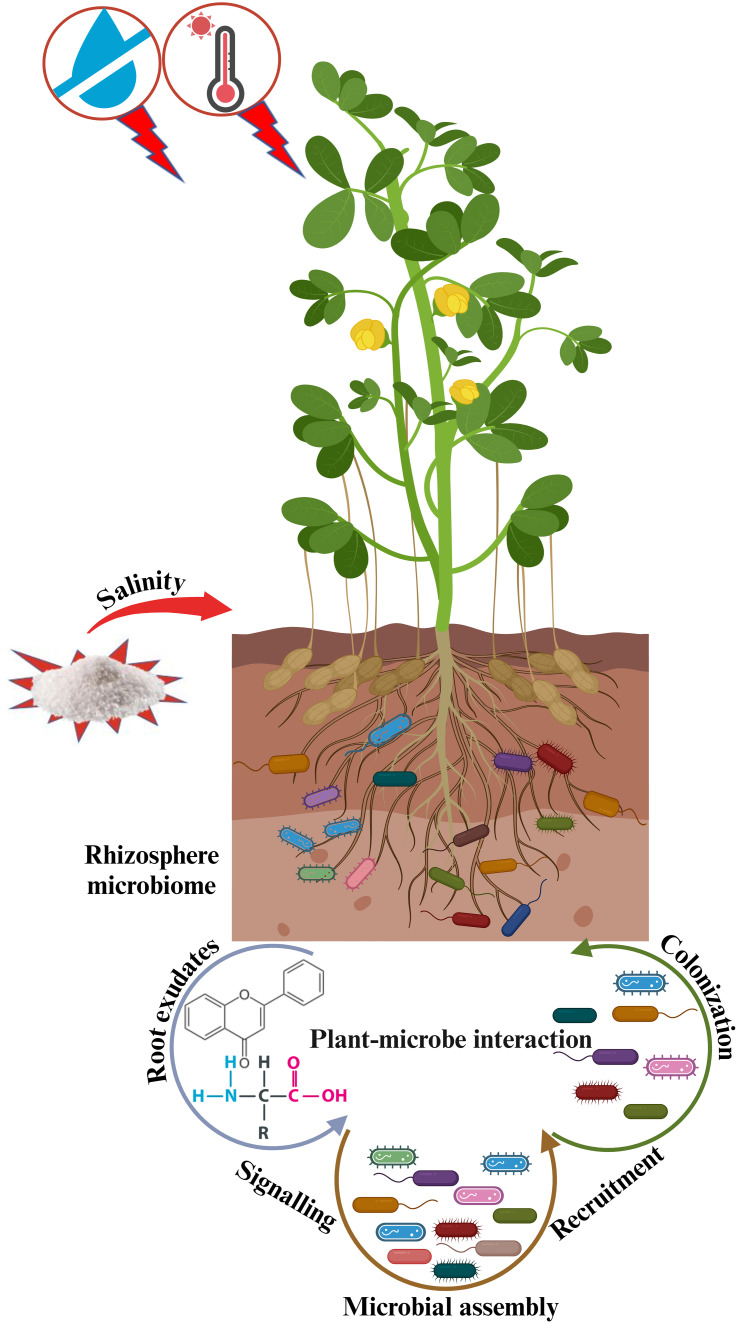
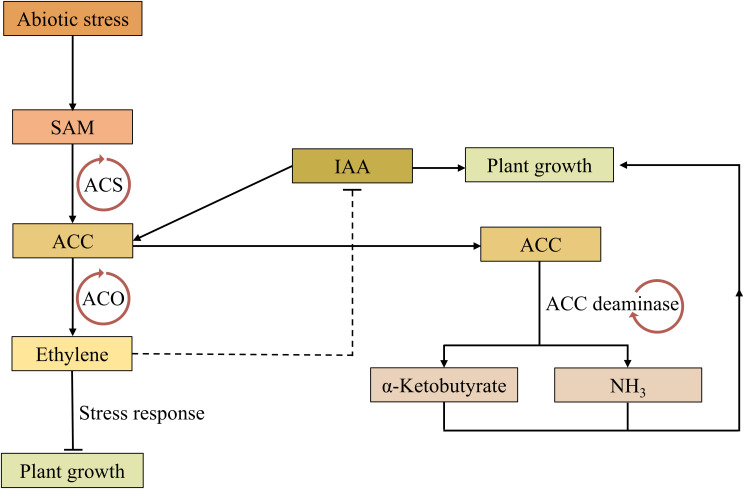
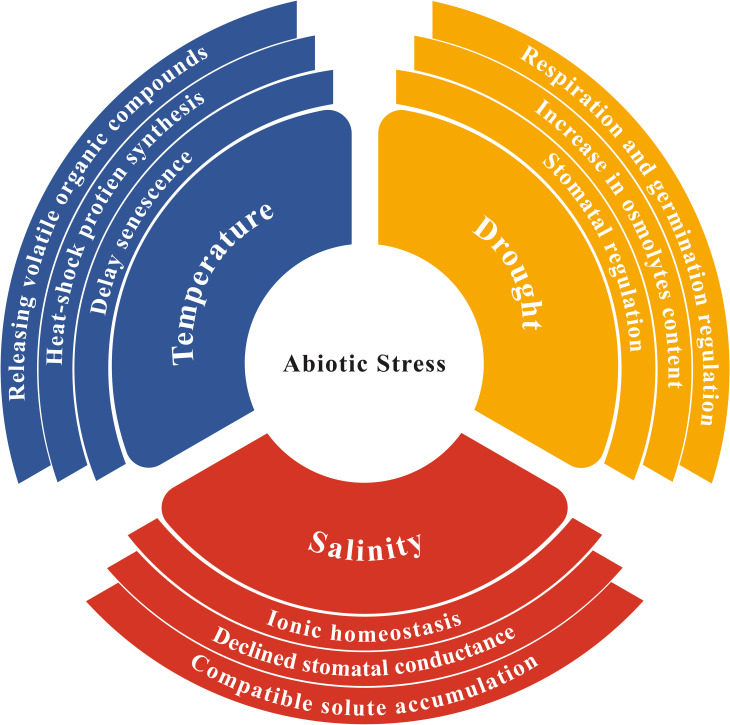
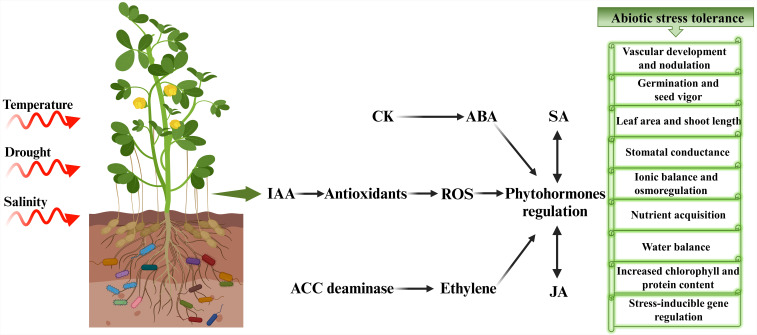
Climatic change and extreme weather events have become a major threat to global agricultural productivity. Plants coexist with microorganisms, which play a significant role in influencing their growth and functional traits. The rhizosphere serves as an ecological niche encompassing plant roots and is a chemically complex environment that supports the growth and development of diverse plant-interactive microbes. Although plant-microbe interactions have been extensively investigated however, limited exploration have been made how abiotic stresses affect the structure and assembly of microbial communities in the rhizosphere. This review highlights climate change influence on plant growth, functional traits, and microbial communities. It explores plant mechanisms for mitigating abiotic stress, such as removing reactive oxygen species (ROS), regulating antioxidant activity and indole-3-acetic acid (IAA) production, and controlling growth-inhibitory ethylene levels through colonization by bacteria producing ACC deaminase. Additionally, we elaborated the systematic communicatory network steered by hormonal crosstalk and root exudation, which can modulate and initiate the dialogues between plants and surrounding microbes. This network ultimately promotes the chemotactic movement of microbes towards the rhizosphere, facilitating their early colonization. Finally, we reviewed the recent advancements for understanding how plant-microbe interactions foster resilience under climate stress.
气候变化和极端天气事件已成为全球农业生产力的主要威胁。植物与微生物共存,微生物在影响植物生长和功能性状方面发挥着重要作用。根际是一个包含植物根系的生态位,是一个化学性质复杂的环境,支持多种与植物相互作用的微生物的生长和发育。尽管植物与微生物的相互作用已得到广泛研究,然而,关于非生物胁迫如何影响根际微生物群落的结构和组装的探索却很有限。本综述强调了气候变化对植物生长、功能性状和微生物群落的影响。它探讨了植物减轻非生物胁迫的机制,例如清除活性氧(ROS)、调节抗氧化活性和吲哚 - 3 - 乙酸(IAA)的产生,以及通过产ACC脱氨酶的细菌定殖来控制抑制生长的乙烯水平。此外,我们阐述了由激素互作和根系分泌物引导的系统通讯网络,该网络可以调节并启动植物与周围微生物之间的对话。这个网络最终促进微生物向根际的趋化运动,便于它们早期定殖。最后,我们回顾了最近在理解植物 - 微生物相互作用如何在气候胁迫下增强恢复力方面取得的进展。