Lee Da Young, Lee Seung Yun, Jeong Jae Won, Kim Jae Hyeon, Yun Seung Hyeon, Lee Juhyun, Mariano Ermie, Hur Sun Jin
Department of Animal Science and Technology Chung-Ang University Anseong Korea.
Division of Animal Science, Institute of Agriculture & Life Science Gyeongsang National University Jinju Republic of Korea.
Food Sci Nutr. 2024 Oct 18;12(11):9511-9524. doi: 10.1002/fsn3.4470. eCollection 2024 Nov.
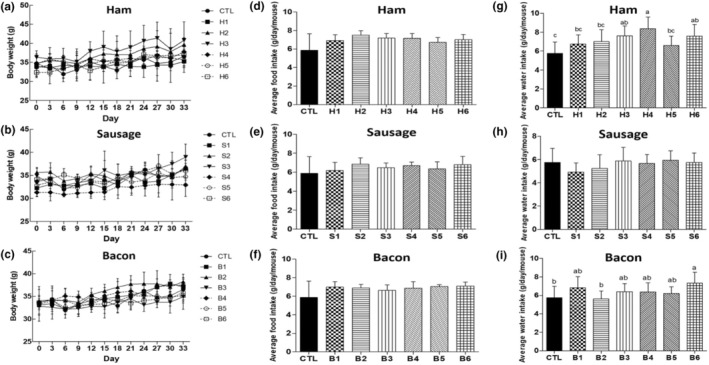
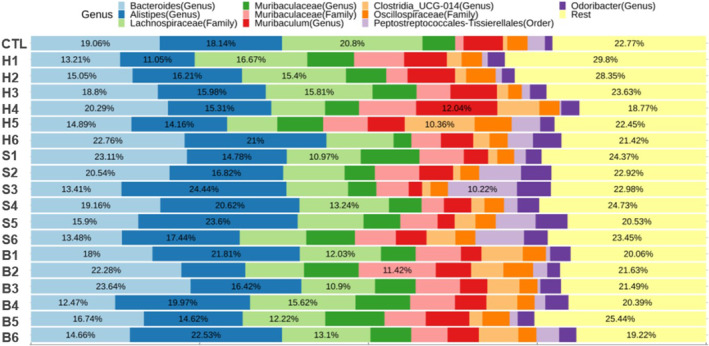
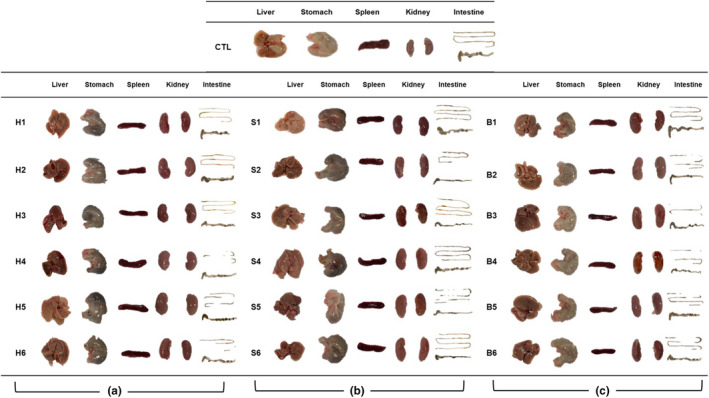
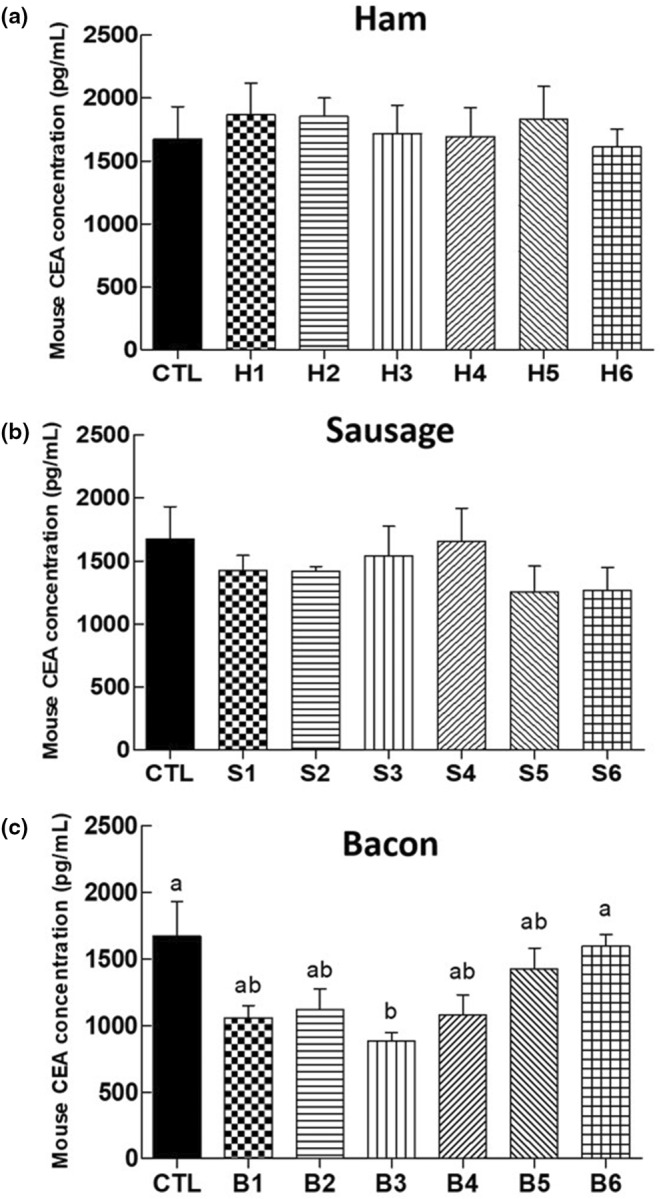
This study investigated the effects of fermented food consumption on the risk of colorectal cancer (CRC) related to processed meat intake using a mouse model. Processed meat products and fermented foods were supplemented to analyze heterocyclic amines (HCA) and carcinoembryonic antigen (CEA) levels and the gut microbiota in mice. The study determined age to be a non-influential factor. While HCAs were detected in all the processed meat samples, no CRC development was observed, even when they consumed excessive amounts of these processed meats, either alone or in combination with fermented foods. and were the most predominant gut microbiota. Kimchi, soybean paste, and red pepper paste showed a decreasing trend in the ratio of these bacteria associated with gut inflammation, but the results were inconclusive because this trend was inconsistent. Therefore, this study found that fermented foods did not significantly affect CRC risk indicators associated with dietary processed meat intake, regardless of age.
本研究使用小鼠模型,调查了食用发酵食品对与加工肉类摄入相关的结直肠癌(CRC)风险的影响。添加加工肉类产品和发酵食品,以分析小鼠体内的杂环胺(HCA)和癌胚抗原(CEA)水平以及肠道微生物群。该研究确定年龄为非影响因素。虽然在所有加工肉类样品中均检测到HCA,但即使小鼠单独或与发酵食品一起食用过量的这些加工肉类,也未观察到CRC的发生。[此处原文缺失两种微生物名称]是最主要的肠道微生物群。泡菜、豆瓣酱和红辣椒酱显示出与肠道炎症相关的这些细菌比例呈下降趋势,但结果尚无定论,因为这种趋势并不一致。因此,本研究发现,无论年龄如何,发酵食品对与膳食加工肉类摄入相关的CRC风险指标均无显著影响。