Wang Hui, Guo Jingjing, Xiu Tiancong, Tang Yue, Li Ping, Zhang Wei, Zhang Wen, Tang Bo
College of Chemistry, Chemical Engineering and Materials Science, Key Laboratory of Molecular and Nano Probes, Ministry of Education, Collaborative Innovation Center of Functionalized Probes for Chemical Imaging in Universities of Shandong, Institutes of Biomedical Sciences, Shandong Normal University Jinan 250014 Shandong China
Department of Emergency Medicine, Shandong Provincial Clinical, Research Center for Emergency and Critical Care Medicine, Qilu Hospital of Shandong University Jinan 250012 Shandong China
Chem Sci. 2024 Nov 23;16(1):345-353. doi: 10.1039/d4sc05546b. eCollection 2024 Dec 18.
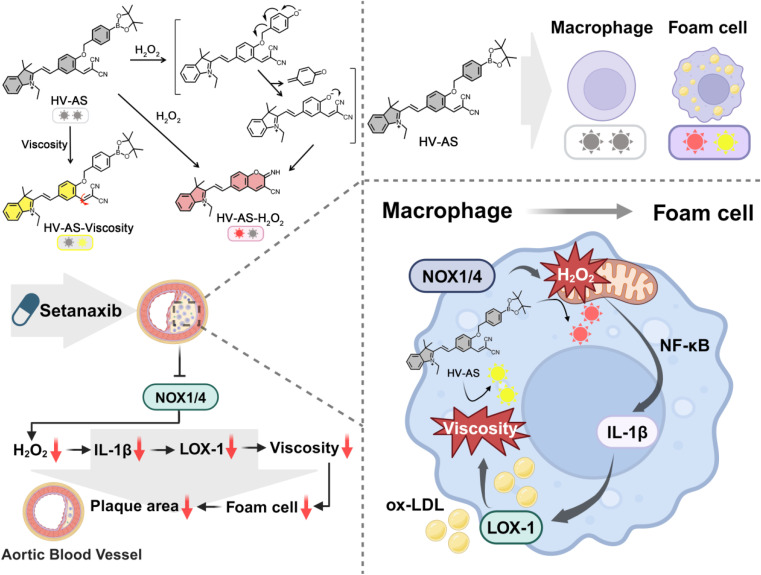
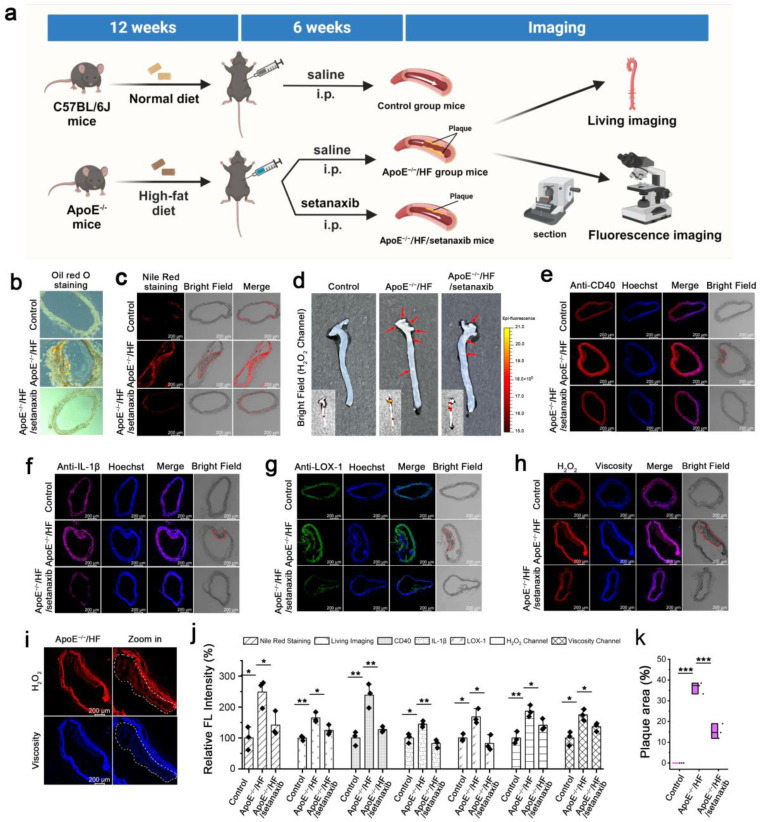
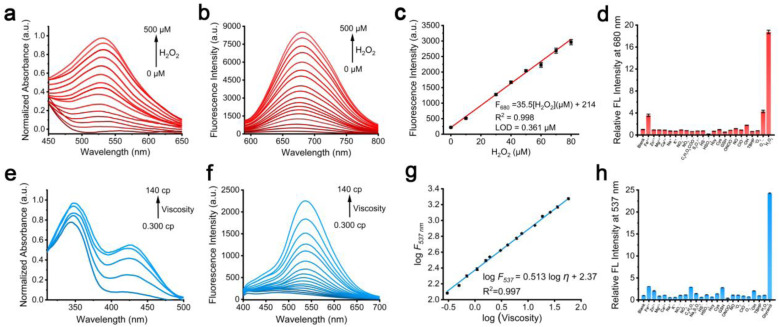
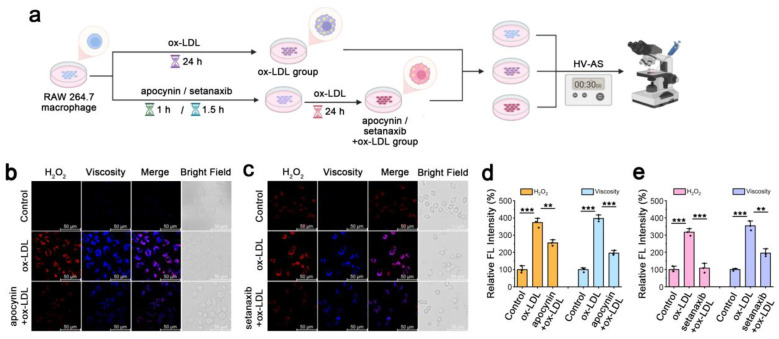
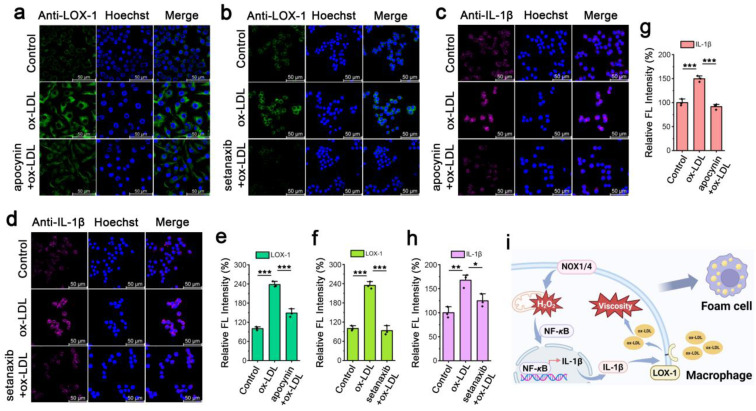
The equilibrium of lipid metabolism is critical to sustaining human health. Metabolic disorders often result in a variety of cardiovascular illnesses, especially atherosclerosis. Atherosclerosis is characterized by complicated complications and high mortality. Cholesterol deposition and oxidative stress have been considered as critical mechanisms in the occurrence and progression of atherosclerosis, however, the relationship between oxidative stress and lipid accumulation remains a puzzle in foam cells during the early stages of atherosclerosis development. Hydrogen peroxide (HO) has been reported to participate in various signaling pathways associated with atherosclerotic diseases. Additionally, the excessive intake of oxidized low-density lipoprotein (ox-LDL) leads to cholesterol accumulation and viscosity increasing in foam cells. Therefore, it is critical to investigate the internalization and modification of ox-LDL by HO in foam cells. Herein, we developed a near-infrared, synergistic dual-functional fluorescent probe capable of detecting HO and viscosity simultaneously with high selectivity and sensitivity. Through imaging of HO and viscosity , we discovered that HO accumulation leads to an increased intake of ox-LDL in the early stages of plaque formation. This finding establishes a new experimental approach and theoretical foundation for the diagnosis and treatment of atherosclerosis, as well as the development of new medications.
脂质代谢平衡对于维持人类健康至关重要。代谢紊乱常导致多种心血管疾病,尤其是动脉粥样硬化。动脉粥样硬化具有复杂的并发症和高死亡率。胆固醇沉积和氧化应激被认为是动脉粥样硬化发生和发展的关键机制,然而,在动脉粥样硬化发展的早期阶段,氧化应激与脂质蓄积在泡沫细胞中的关系仍是一个谜。据报道,过氧化氢(HO)参与了与动脉粥样硬化疾病相关的各种信号通路。此外,过量摄入氧化型低密度脂蛋白(ox-LDL)会导致泡沫细胞中胆固醇蓄积和黏度增加。因此,研究HO对泡沫细胞中ox-LDL的内化和修饰至关重要。在此,我们开发了一种近红外协同双功能荧光探针,能够高选择性和高灵敏度地同时检测HO和黏度。通过对HO和黏度的成像,我们发现HO蓄积导致斑块形成早期ox-LDL摄取增加。这一发现为动脉粥样硬化的诊断和治疗以及新药物的开发建立了新的实验方法和理论基础。