Tan Taner, Bozdag Sinem Civriz
Department of Hematology, ͣKoc University Medical School, Istanbul, Turkey.
Blood Res. 2024 Dec 2;59(1):39. doi: 10.1007/s44313-024-00041-7.
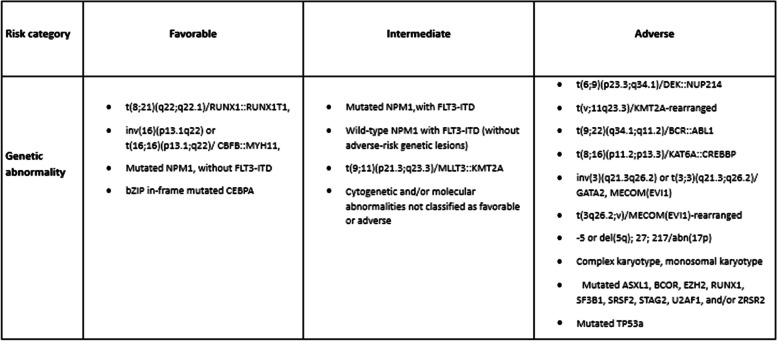
Understanding the intricacies of the pathophysiology and genomic landscape has enhanced the long-term outcomes for patients with acute myeloid leukemia (AML). The identification of novel molecular targets has introduced new therapeutic strategies that attempt to surpass the dominance of the "7 + 3 regimen" established in the 1970s. In 2022, the World Health Organization and International Consensus Classification revised their definitions and approaches to AML, reflecting the current and evolving changes at the molecular level. The guidelines are now grounded in a definition of the disease that emphasizes genetic characteristics. Today, we recognize AML as a genetically diverse disease; a retrospective study identified 5234 driver mutations across 76 genes or genomic regions, with two or more drivers observed in 86% of patients (Papaemmanuil et al., N Engl J Med 374:2209-21, 2016).
了解急性髓系白血病(AML)病理生理学和基因组格局的复杂性,改善了患者的长期预后。新型分子靶点的发现引入了新的治疗策略,试图超越20世纪70年代确立的“7+3方案”的主导地位。2022年,世界卫生组织和国际共识分类修订了AML的定义和诊断方法,反映了分子水平上当前不断演变的变化。目前的指南基于强调遗传特征的疾病定义。如今,我们认识到AML是一种基因多样化的疾病;一项回顾性研究在76个基因或基因组区域中鉴定出5234个驱动突变,86%的患者观察到两个或更多驱动突变(Papaemmanuil等人,《新英格兰医学杂志》374:2209-21,2016)。