Liu Zuojun, Yin Qiang, Fang Yong, Zhang Xueping, Xia Wensheng, Jiao Zhentong, Song Tao, Wan Heyan, Guo Ting
Agriculture Mechanization and Engineering Research Institute, Anhui Academy of Agricultural Sciences, Hefei, China.
Jiangsu Academy of Agricultural Sciences, Nanjing, China.
Front Microbiol. 2024 Nov 15;15:1484047. doi: 10.3389/fmicb.2024.1484047. eCollection 2024.
Aerobic composting is an effective method for utilizing chicken manure. However, its low carbon to nitrogen (C/N) ratio leads to slow heating and short high-temperature phases, which reduce composting efficiency and product quality.
To address this issue, splinted mushroom cultivation residues were added to adjust the C/N ratio, and exogenous thermophilic composting strains were introduced to increase composting temperature. This study analyzed the relationship between physicochemical metabolites and microbial community structure during high-temperature chicken manure composting.
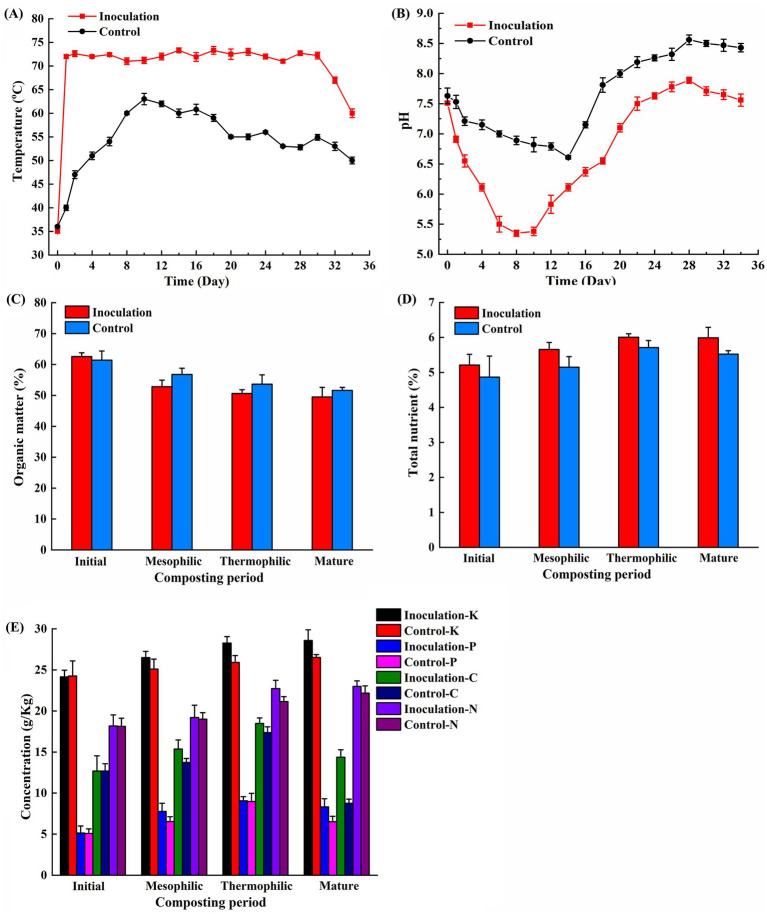
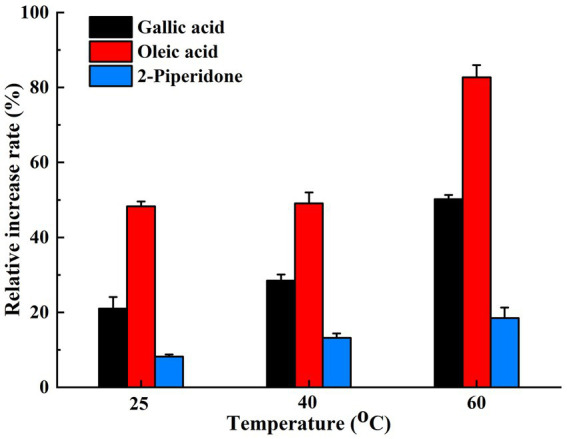
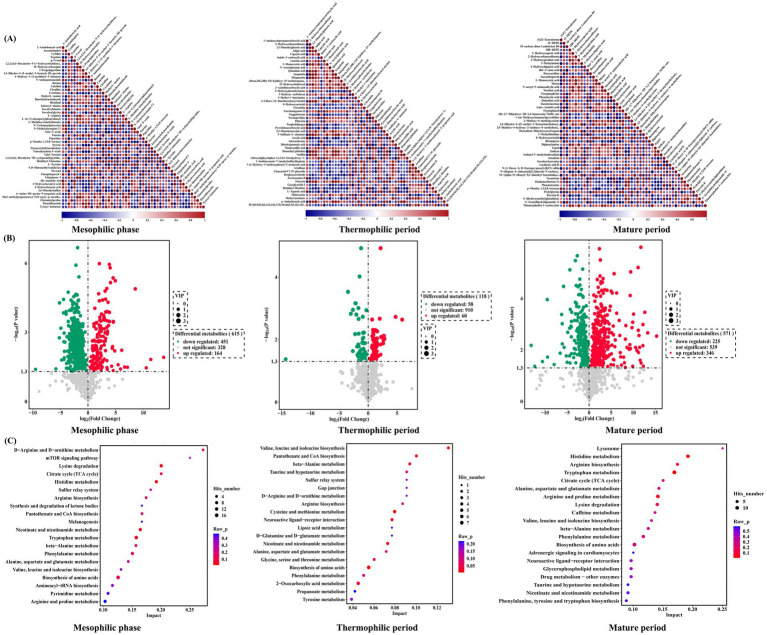
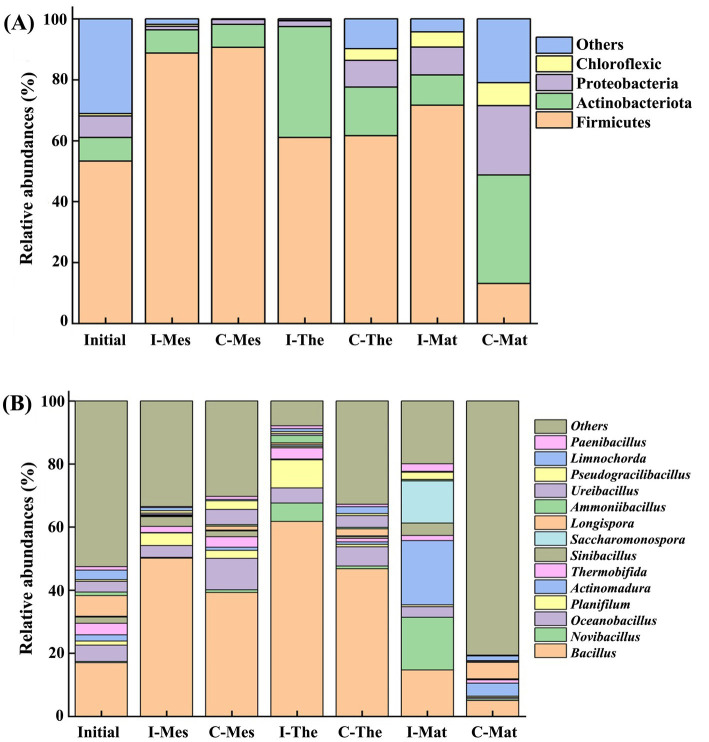
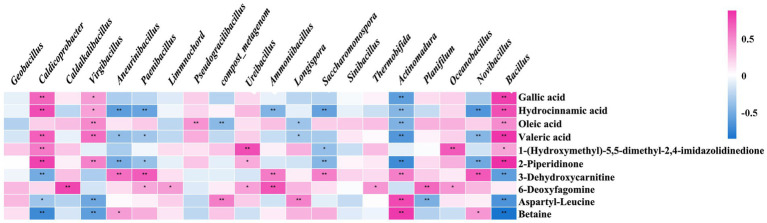
Based on metagenomic and physicochemical analyses, results showed that the exogenous microbial agents extended the thermophilic phase by three-times, reduced the heating phase duration by 75%, and increased nitrogen, phosphorus, potassium, and soluble organic carbon contents by 3.61, 21.63, 7.21, and 39.03%, respectively. Genes associated with amino acid metabolism were significantly enriched during the heating phase, while genes involved in the tricarboxylic acid cycle were more active in the thermophilic phase. During the thermophilic phase, bacterial diversity and richness decreased compared to the heating and cooling phases. Functional microbes such as , , and showed a positive correlation with the key differential metabolites. While , , , and displayed an opposite correlation. Further experiments demonstrated that the increased temperature during the thermophilic phase triggered the upregulation of oleic acid metabolism and piperidine metabolism pathways in functional microorganisms, leading to the production of heat stabilizers and protective agents like oleic acid, gallic acid, and 2-piperidone. This phenomenon helped maintain microbial viability during the thermophilic phase and improved composting efficiency.
好氧堆肥是利用鸡粪的有效方法。然而,其低碳氮比导致升温缓慢且高温阶段持续时间短,从而降低了堆肥效率和产品质量。
为解决这一问题,添加了平菇栽培残渣以调节碳氮比,并引入外源嗜热堆肥菌株以提高堆肥温度。本研究分析了高温鸡粪堆肥过程中理化代谢产物与微生物群落结构之间的关系。
基于宏基因组和理化分析,结果表明外源微生物制剂将嗜热阶段延长了三倍,将升温阶段持续时间缩短了75%,并使氮、磷、钾和可溶性有机碳含量分别提高了3.61%、21.63%、7.21%和39.03%。与氨基酸代谢相关的基因在升温阶段显著富集,而参与三羧酸循环的基因在嗜热阶段更为活跃。在嗜热阶段,细菌多样性和丰富度相较于升温阶段和降温阶段有所下降。功能微生物如[此处原文缺失具体微生物名称]与关键差异代谢产物呈正相关。而[此处原文缺失具体微生物名称]则呈现相反的相关性。进一步实验表明,嗜热阶段温度升高触发了功能微生物中油酸代谢和哌啶代谢途径的上调,导致产生油酸、没食子酸和2-哌啶酮等热稳定剂和保护剂。这一现象有助于在嗜热阶段维持微生物活力并提高堆肥效率。