Dos Santos Thiago Tavares, de Azevedo Luciano César Pontes, Nassar Junior Antonio Paulo, Salluh Jorge Ibrain Figueira
Instituto de Ensino e Pesquisa, Hospital Sírio-Libanês - São Paulo (SP), Brazil.
Hospital Israelita Albert Einstein - São Paulo (SP), Brazil.
Crit Care Sci. 2024 Dec 2;36:e20240006en. doi: 10.62675/2965-2774.20240006-en. eCollection 2024.
To examine the associations between the scientific output of Brazilian intensive care units and their organizational characteristics.
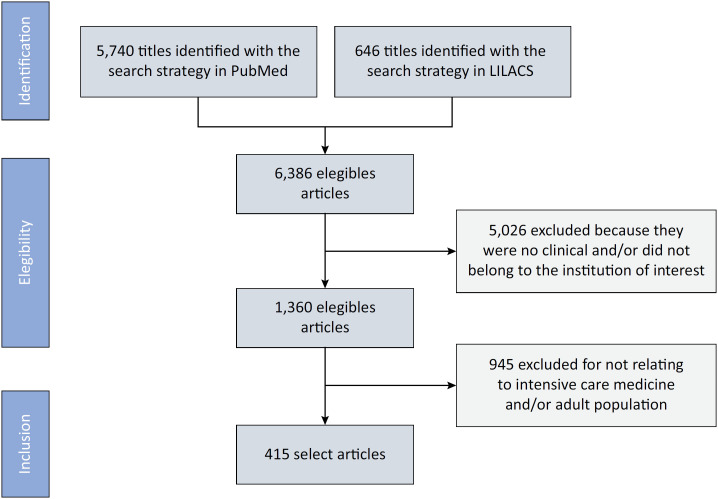
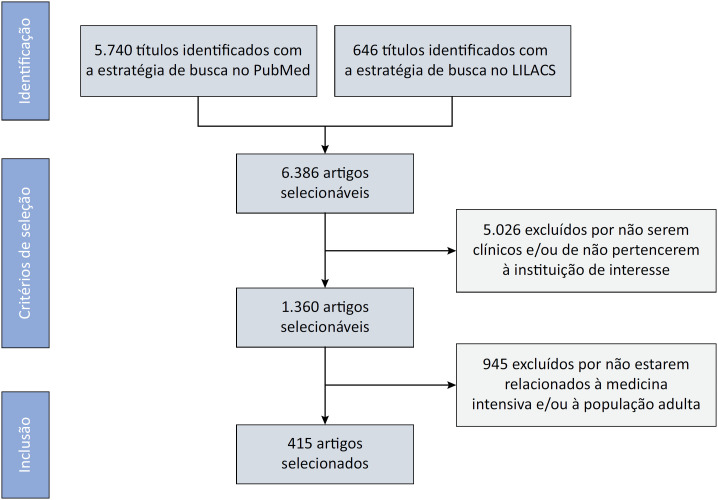
This study is a re-analysis of a previous retrospective cohort that evaluated organizational intensive care unit characteristics and their associations with outcomes. We analyzed data from 93 intensive care units across Brazil. Intensive care units were assessed for scientific productivity and the effects of their research activities, using indicators of care for comparison. We defined the most scientifically productive intensive care units as those with numerous publications and a SCImago Journal Rank score or an H-index above the median values of the participating intensive care units.
Intensive care units with more publications, higher SCImago Journal Rank scores and higher H-index scores had a greater number of certified intensivists (median of 7; IQR 5 - 10 versus 4; IQR 2 - 8; with p < 0.01 for the comparison between intensive care units with more versus fewer publications). Intensive care units with higher SCImago Journal Rank scores and H-index scores also had a greater number of fully implemented protocols (median of 8; IQR 6 - 8 versus 5; IQR 3.75 - 7.25; p < 0.01 for the comparison between intensive care units with higher versus lower SCImago Journal Rank scores).
Scientific engagement was associated with better staffing patterns and greater protocol implementation, suggesting that research activity may be an indicator of better intensive care unit organization and care delivery.
探讨巴西重症监护病房的科研产出与其组织特征之间的关联。
本研究是对先前一项回顾性队列研究的重新分析,该研究评估了重症监护病房的组织特征及其与结局的关联。我们分析了巴西93个重症监护病房的数据。利用护理指标进行比较,评估重症监护病房的科研生产力及其研究活动的影响。我们将科研产出最高的重症监护病房定义为那些发表论文数量众多、SCImago期刊排名得分或H指数高于参与研究的重症监护病房中位数的病房。
发表论文数量更多、SCImago期刊排名得分更高和H指数得分更高的重症监护病房拥有更多获得认证的重症医学专家(中位数为7;四分位间距为5 - 10,而较少发表论文的重症监护病房中位数为4;四分位间距为2 - 8;发表论文较多与较少的重症监护病房之间的比较,p < 0.01)。SCImago期刊排名得分和H指数得分较高的重症监护病房也有更多完全实施的方案(中位数为8;四分位间距为6 - 8,而SCImago期刊排名得分较低的重症监护病房中位数为5;四分位间距为3.75 - 7.25;SCImago期刊排名得分较高与较低的重症监护病房之间的比较,p < 0.01)。
科研参与与更好的人员配备模式和更多的方案实施相关,这表明研究活动可能是重症监护病房组织和护理质量更好的一个指标。