Peng Weicheng, Ma Haiyang, Zhao Rui, Xu Sheng, Lv Meng, Jing Bei, Hu Zhiqiang
Department of Neurosurgery, Neuromedicine Center, Beijing Shijitan Hospital, Capital Medical University, No. 10, Tieyi Road, Yangfangdian, Haidian District, Beijing, 100038, China.
Sci Rep. 2024 Dec 4;14(1):30252. doi: 10.1038/s41598-024-81226-z.
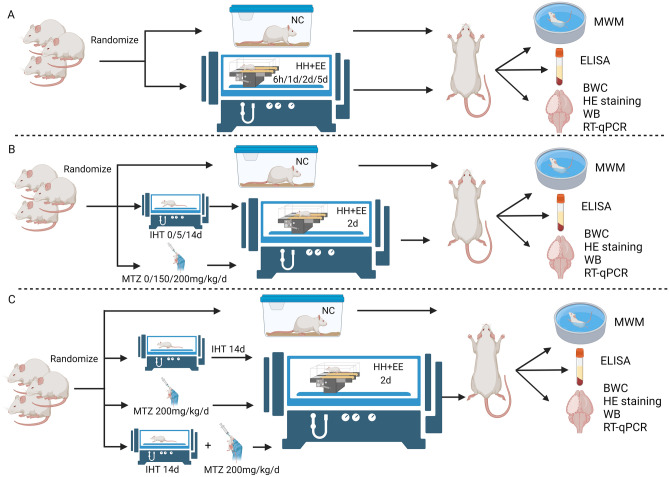
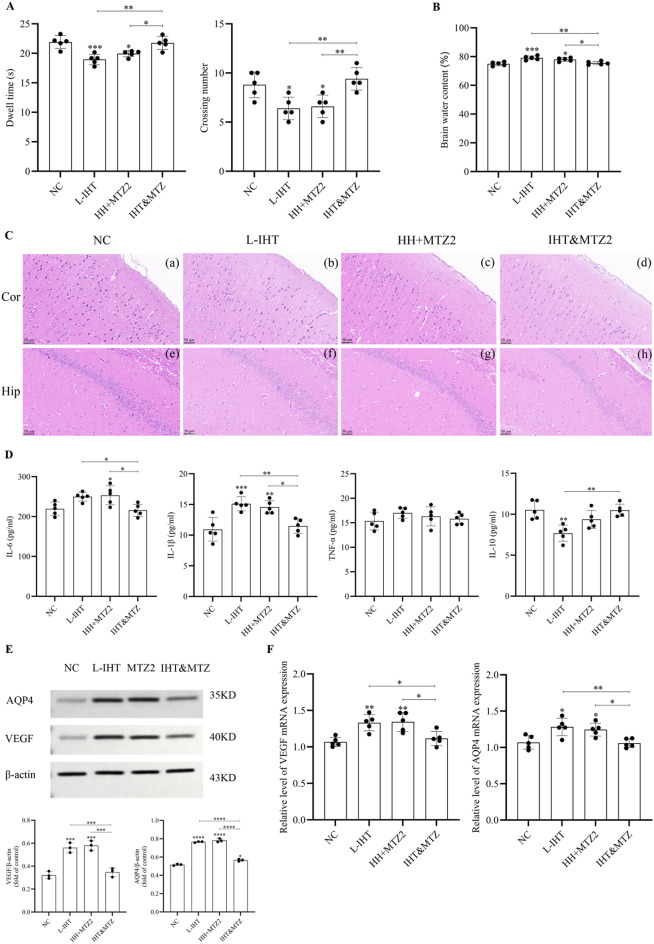
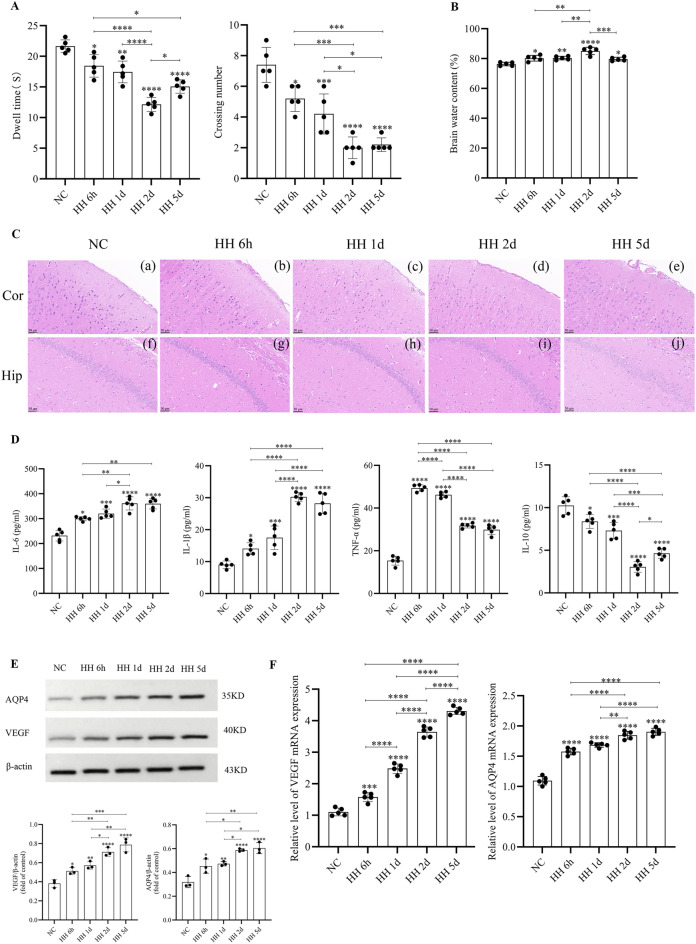
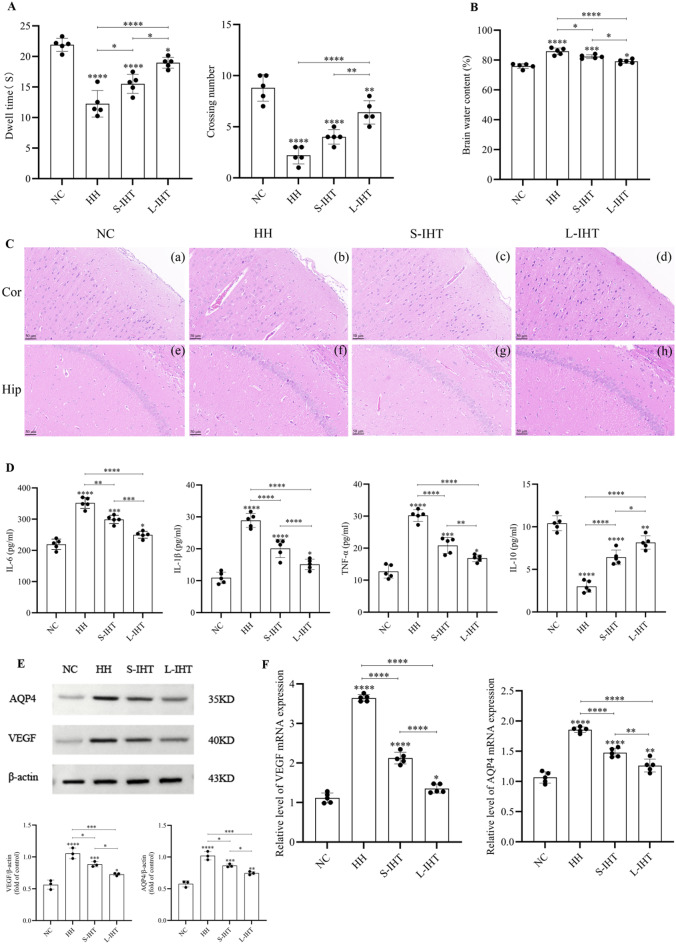
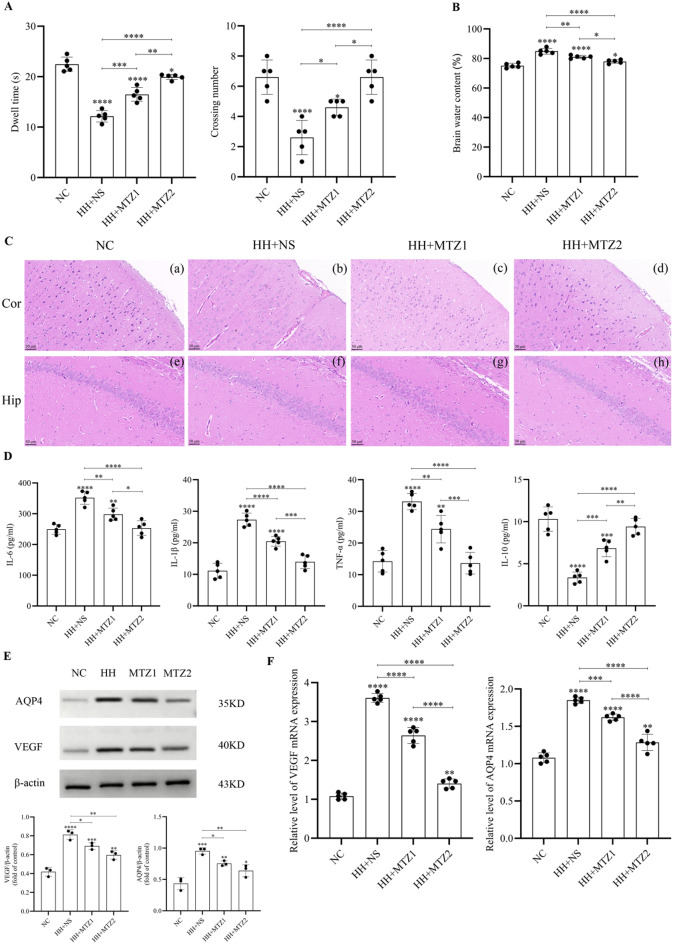
Although intermittent hypoxia training (IHT) and methazolamide (MTZ) alone can prevent high-altitude cerebral edema (HACE) to varying degrees, their efficacy and dispersion remain limited. However, only a handful of trials have explored the effectiveness of the IHT and MTZ combination in preventing HACE. Rats were first exposed to hypobaric hypoxia (5000 m, 54.02 kPa, 10.8% fraction of inspired oxygen (FiO)) with simultaneous exhaustive exercise (EE) for different durations to determine the ideal condition for establishing a rat model of HACE. Rats receiving various courses of IHT were subjected to this condition, and changes in behaviour, brain water content (BWC), pathology and brain protein expression were evaluated. Meanwhile, rats received different doses of MTZ before and during hypoxia exposure with simultaneous EE. Finally, rats receiving the IHT and MTZ combination were then exposed to hypoxia with simultaneous EE. Systemic inflammation and mild cerebral edema developed in rats after 6 h of hypobaric hypoxia with simultaneous EE. Rats showed severe impairment of spatial and memory functions after 2 days of hypobaric hypoxia with simultaneous EE, and the pathology of their brain showed significant dilated perivascular spaces, cell swelling, vacuolar degeneration and reduced neuron count. BWC, serum inflammatory factors and expression of vascular endothelial growth factor (VEGF) and aquaporin 4 (AQP4) proteins in the hippocampus increased significantly. Both IHT and MTZ differentially counteracted hypobaric hypoxia-induced spatial and memory function impairments and increased BWC, pathological changes and expression of AQP4 and VEGF proteins in the hippocampus. Among these, the long-course IHT (BID, 14 d) combined with MTZ (200 mg/kg/d) showed the most significant improvement, restoring the rats' indices to normal levels. Continuous hypobaric hypoxia with simultaneous EE for 2 days resulted in significant HACE in rats, which may be used to establish a rat model of HACE. Both IHT and MTZ alleviated HACE in rats to varying degrees, among which long-course IHT (BID, 14 d) combined with MTZ (200 mg/kg/d) effectively prevented HACE in rats.
尽管间歇性低氧训练(IHT)和乙酰唑胺(MTZ)单独使用均可在不同程度上预防高原脑水肿(HACE),但其疗效和差异仍有限。然而,仅有少数试验探讨了IHT与MTZ联合使用预防HACE的有效性。首先将大鼠暴露于低压低氧环境(5000米,54.02千帕,吸入氧分数(FiO)为10.8%)并同时进行不同时长的力竭运动(EE),以确定建立HACE大鼠模型的理想条件。接受不同疗程IHT的大鼠处于此条件下,评估其行为、脑含水量(BWC)、病理学及脑蛋白表达的变化。同时,在低氧暴露期间及之前,给予大鼠不同剂量的MTZ并同时进行EE。最后,将接受IHT与MTZ联合处理的大鼠暴露于低氧环境并同时进行EE。低压低氧并同时进行EE 6小时后,大鼠出现全身炎症和轻度脑水肿。低压低氧并同时进行EE 2天后,大鼠的空间和记忆功能出现严重受损,其脑部病理学表现为血管周围间隙明显增宽、细胞肿胀、空泡变性及神经元数量减少。海马体中的BWC、血清炎症因子以及血管内皮生长因子(VEGF)和水通道蛋白4(AQP4)的蛋白表达显著增加。IHT和MTZ均不同程度地对抗了低压低氧诱导的空间和记忆功能损伤,并减轻了海马体中BWC、病理变化以及AQP4和VEGF蛋白的表达。其中,长疗程IHT(每日两次,共14天)联合MTZ(200毫克/千克/天)显示出最显著的改善效果,使大鼠各项指标恢复至正常水平。连续低压低氧并同时进行EE 2天可导致大鼠出现显著的HACE,这可用于建立HACE大鼠模型。IHT和MTZ均不同程度地减轻了大鼠的HACE,其中长疗程IHT(每日两次,共14天)联合MTZ(200毫克/千克/天)可有效预防大鼠的HACE。