Zhang Yuanyuan, Li Shuang, Fang Xueyang, Miao Beiping, Wang Yujie, Liu Jiantao, Nie Guohui, Zhang Bin
Shenzhen Key Laboratory of Nanozymes and Translational Cancer Research, Department of Otolaryngology, Shenzhen Institute of Translational Medicine, The First Affiliated Hospital of Shenzhen University, Shenzhen Second People's Hospital, Shenzhen 518035, China.
State Key Laboratory of Chemical Oncogenomics, Guangdong Provincial Key Laboratory of Chemical Genomics, Peking University Shenzhen Graduate School, Shenzhen 518055, China.
Nanophotonics. 2022 Nov 4;11(22):5189-5204. doi: 10.1515/nanoph-2022-0599. eCollection 2022 Dec.
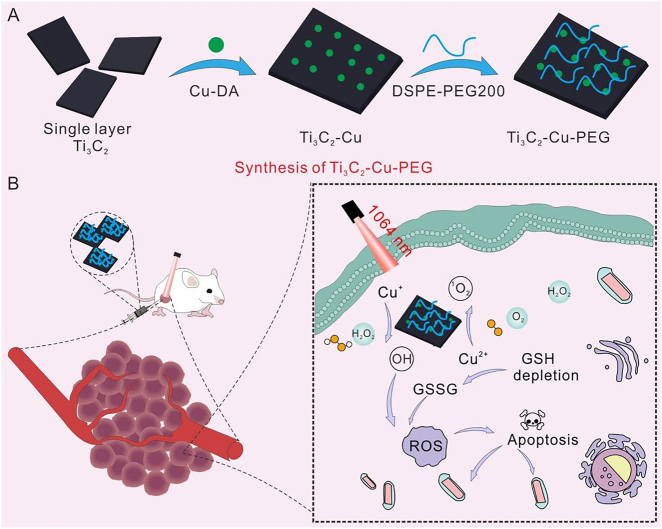
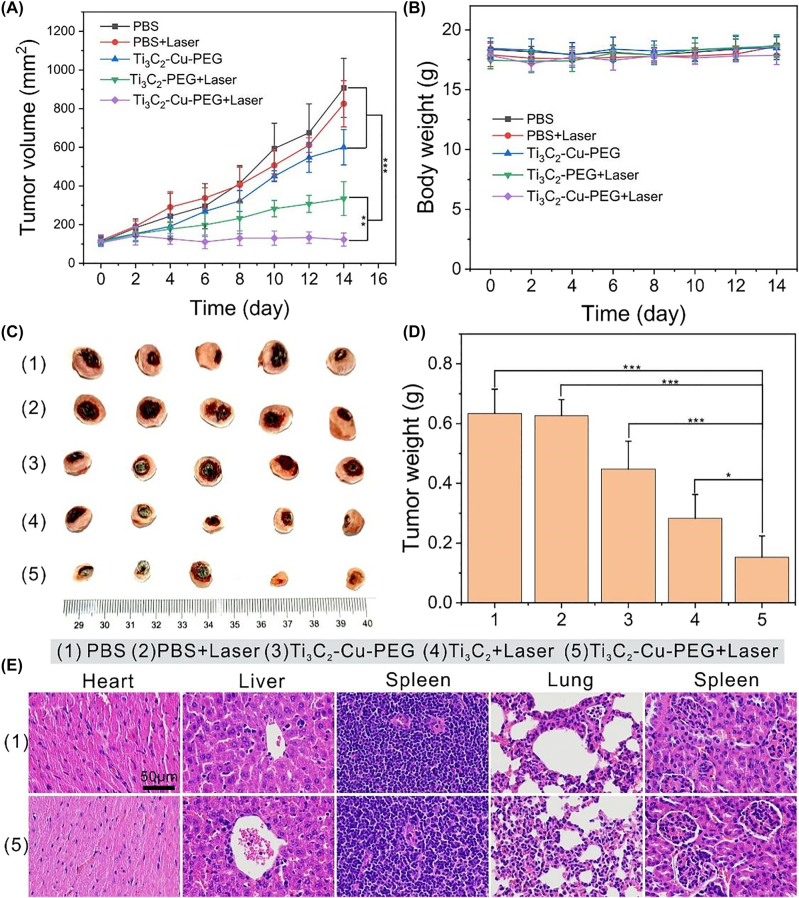
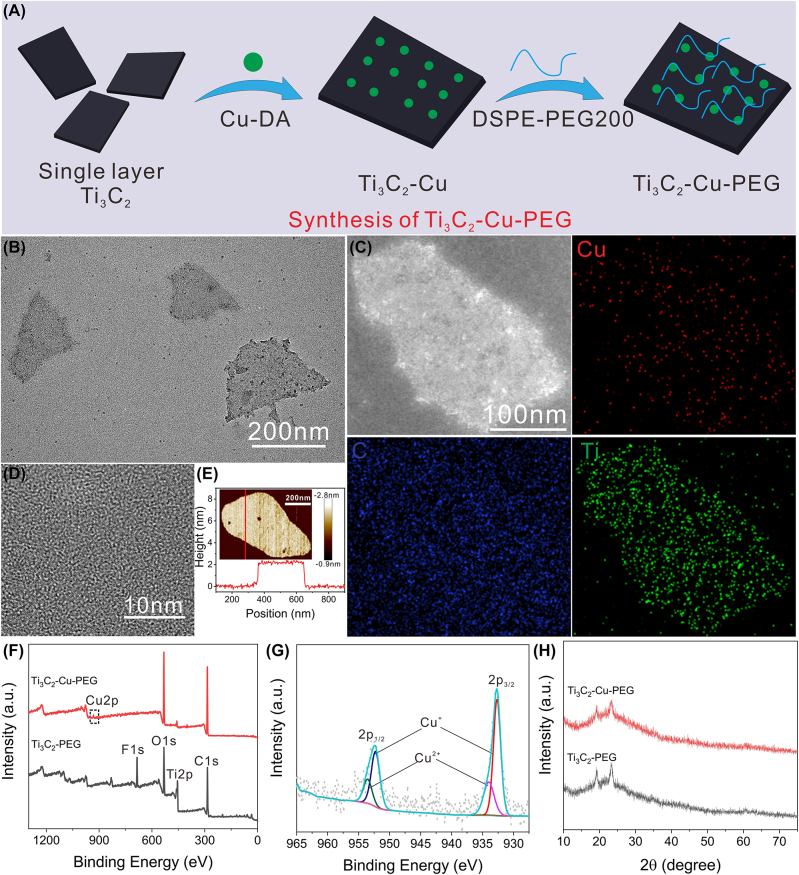
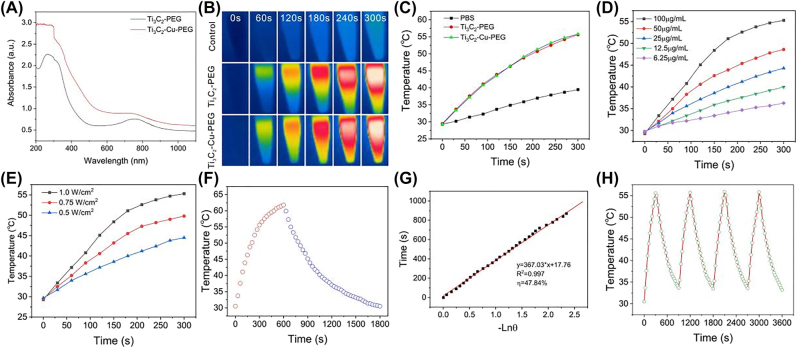
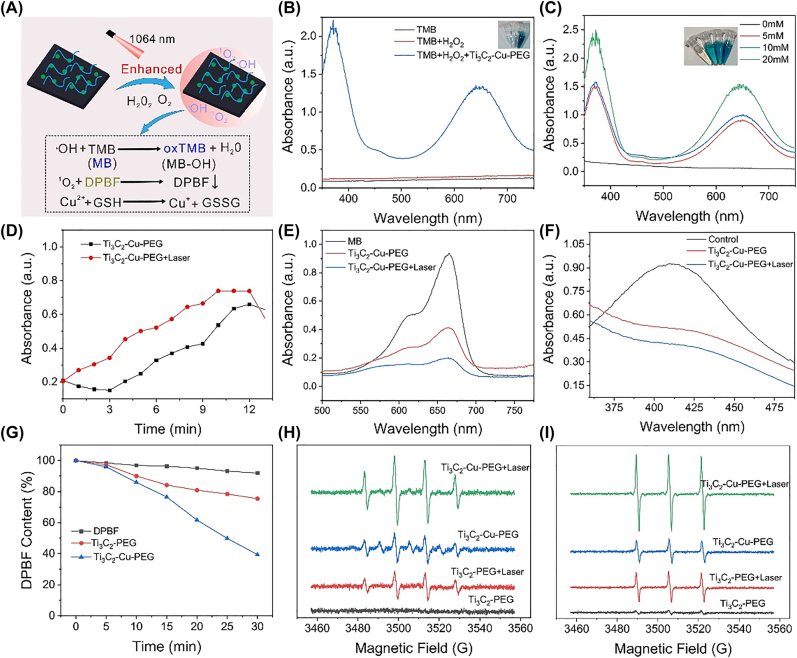
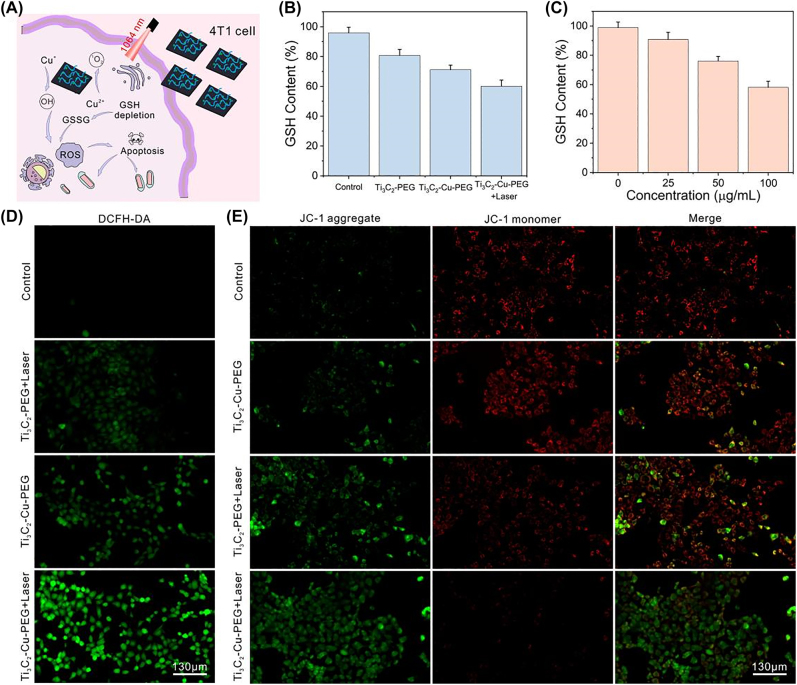
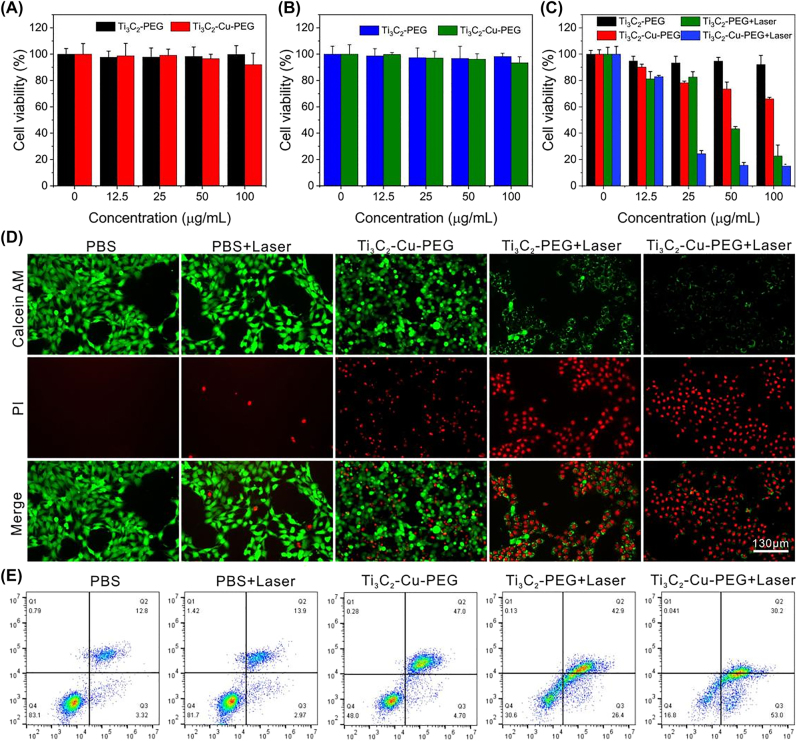
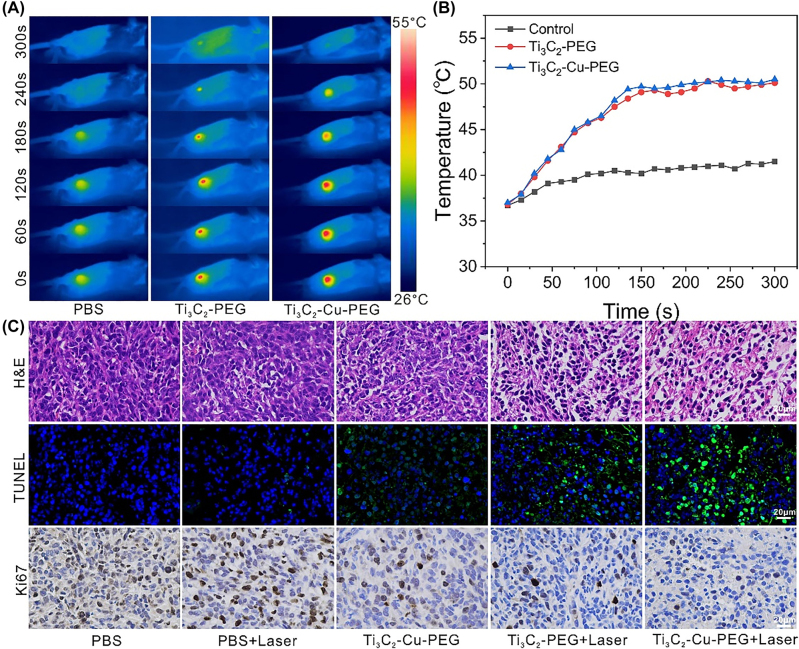
Nanodynamic therapy (NDT) based on reactive oxygen species (ROS) production has been envisioned as an effective cancer treatment. However, the efficacy is limited by the hypoxia, insufficient hydrogen peroxide conversion, and high glutathione (GSH) levels in the tumor microenvironment (TME). To solve these issues, we proposed and designed a biocompatible, oxygen resistant Cu-modified TiC nanocomposite (TiC-Cu-PEG), which can efficiently deplete the endogenous GSH in tumor cells, smartly respond to NIR-II light irradiation with in-depth tissue penetration to achieve photothermally enhanced tumor photodynamic therapy (PDT) and catalytic therapy. Specifically, TiC-Cu-PEG reacted with oxygen to produce singlet oxygen (O) under NIR-II irradiation, and catalyzed the highly expressed HO in the tumor microenvironment to generate ·OH. In addition, TiC-Cu-PEG significantly decreased intracellular GSH, reduced the chances of reaction between ROS and GSH, and thus promoting ROS effect. Moreover, the intrinsically high photothermal conversion efficiency of TiC-Cu-PEG further promotes the NDT process. and experiments, the TiC-Cu-PEG nanosystem showed excellent antitumor effect in 4T1 tumor-bearing mice by amplifying oxidative stress under NIR-II stimulation. This work highlights an easily synergistic nanosystem with remodeling TME and combined photothermal therapy to enhance the therapeutic effect of NDT in tumor therapy.
基于活性氧(ROS)产生的纳米动力疗法(NDT)被认为是一种有效的癌症治疗方法。然而,其疗效受到肿瘤微环境(TME)中缺氧、过氧化氢转化不足以及高谷胱甘肽(GSH)水平的限制。为了解决这些问题,我们提出并设计了一种生物相容性好、抗氧的铜修饰碳化钛纳米复合材料(TiC-Cu-PEG),它可以有效消耗肿瘤细胞内的内源性GSH,对具有深入组织穿透能力的近红外二区(NIR-II)光照射做出智能响应,以实现光热增强的肿瘤光动力疗法(PDT)和催化疗法。具体而言,TiC-Cu-PEG在NIR-II照射下与氧气反应产生单线态氧(¹O₂),并催化肿瘤微环境中高表达的H₂O₂生成·OH。此外,TiC-Cu-PEG显著降低细胞内GSH水平,减少ROS与GSH之间的反应机会,从而增强ROS效应。而且,TiC-Cu-PEG本身具有的高光热转换效率进一步促进了NDT过程。在体外和体内实验中,TiC-Cu-PEG纳米系统通过在NIR-II刺激下放大氧化应激,在4T1荷瘤小鼠中显示出优异的抗肿瘤效果。这项工作突出了一种易于实现协同作用的纳米系统,其通过重塑TME和联合光热疗法来增强NDT在肿瘤治疗中的疗效。