Ben Ismail Imen, Rebii Saber, Mouna Mlika, Sghaier Marwen, Yaich Khadija, Zoghlami Ayoub
University of Tunis El Manar Faculty of Medicine of Tunis, Department of General Surgery, Trauma Center Ben Arous, Tunisia.
University of Tunis El Manar Faculty of Medicine of Tunis, Department of Pathology, Trauma Center Ben Arous, Tunisia.
Heliyon. 2024 Oct 9;10(20):e39096. doi: 10.1016/j.heliyon.2024.e39096. eCollection 2024 Oct 30.
Intestinal tuberculosis (ITB), a rare yet severe manifestation of infection, poses significant diagnostic and therapeutic challenges due to its nonspecific clinical presentation. Perforation, a life-threatening complication, necessitates prompt surgical intervention and effective antituberculous therapy.
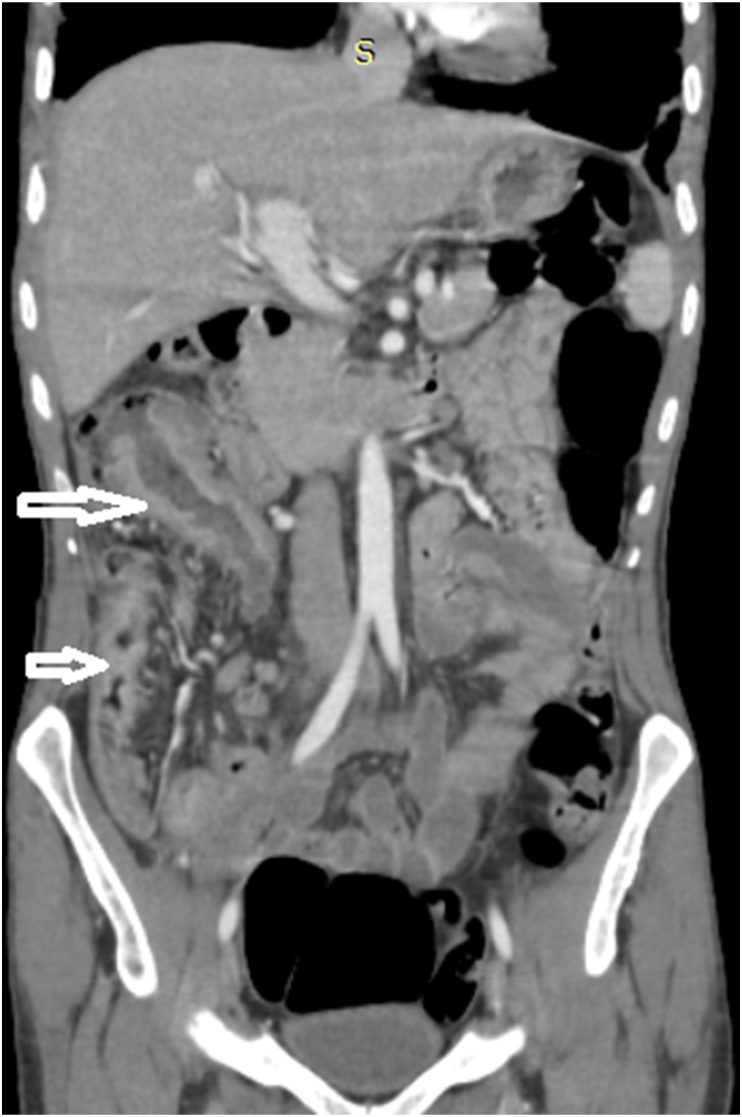
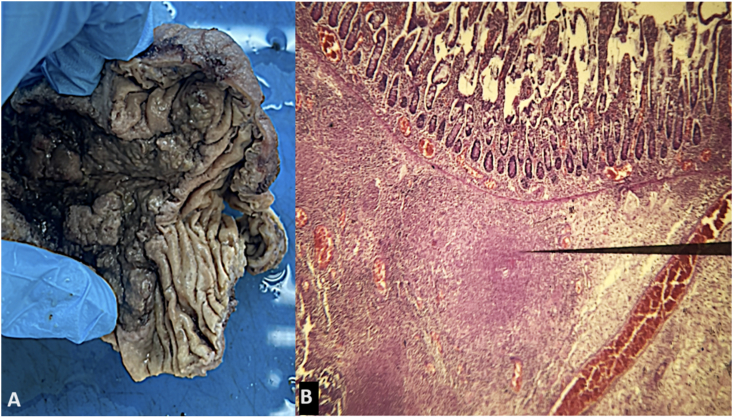
This case study highlights a 41-year-old immunocompetent male who presented with fever, abdominal pain, vomiting, and significant weight loss. A computed tomography scan revealed minimal pneumoperitoneum, intestinal wall thickening, mesenteric fat stranding, lymphadenopathy, and an intra-abdominal abscess. Exploratory laparotomy identified a perforation at the terminal ileum, leading to ileocaecal resection and stoma formation. Histopathological examination confirmed ITB, and a nine-month regimen of antituberculous medication was initiated.
ITB, more common in immunocompromised individuals, can also affect immunocompetent patients, often mimicking other gastrointestinal conditions and delaying diagnosis. This case underscores the importance of considering ITB in differential diagnoses for patients with vague gastrointestinal symptoms. Diagnostic confirmation typically requires a combination of clinical, radiological, and microbiological assessments, with histopathology playing a crucial role. Factors such as age and comorbidities can increase the risk of severe complications like perforation. Surgical resection with anastomosis tends to yield better outcomes than direct closure, and comprehensive antituberculous therapy is essential for successful treatment.
The complexity of diagnosing and managing ITB, compounded by its severe complications, necessitates heightened awareness among healthcare providers. Accurate diagnosis, timely surgical intervention, and rigorous antituberculous therapy are vital for improving patient outcomes, especially in high-risk populations or regions with prevalent TB.
肠结核(ITB)是一种罕见但严重的感染表现形式,因其非特异性临床表现而带来重大的诊断和治疗挑战。穿孔是一种危及生命的并发症,需要及时进行手术干预和有效的抗结核治疗。
本病例研究重点介绍了一名41岁免疫功能正常的男性,他出现发热、腹痛、呕吐和显著体重减轻。计算机断层扫描显示少量气腹、肠壁增厚、肠系膜脂肪条索状改变、淋巴结肿大和腹腔内脓肿。剖腹探查发现回肠末端穿孔,导致回盲部切除和造口形成。组织病理学检查确诊为肠结核,并开始了为期九个月的抗结核药物治疗方案。
肠结核在免疫功能低下的个体中更为常见,但也可影响免疫功能正常的患者,常表现类似其他胃肠道疾病,从而延迟诊断。本病例强调了在对有模糊胃肠道症状的患者进行鉴别诊断时考虑肠结核的重要性。诊断的确立通常需要临床、放射学和微生物学评估相结合,组织病理学起着关键作用。年龄和合并症等因素可增加穿孔等严重并发症的风险。与直接缝合相比,行吻合术的手术切除往往能取得更好的效果,全面的抗结核治疗对于成功治疗至关重要。
肠结核诊断和管理的复杂性,再加上其严重并发症,需要医护人员提高认识。准确诊断、及时手术干预和严格的抗结核治疗对于改善患者预后至关重要,尤其是在结核病高发的高危人群或地区。