Gulzar Yonis, Ünal Zeynep, Kızıldeniz Tefide, Umar Usman Muhammad
Department of Management Information Systems, College of Business Administration, King Faisal University, Al-Ahsa, 31982, Saudi Arabia.
Department of Biosystem Engineering, Niğde Ömer Halisdemir University, Central Campus, 51240, Niğde, Türkiye.
MethodsX. 2024 Nov 16;13:103051. doi: 10.1016/j.mex.2024.103051. eCollection 2024 Dec.
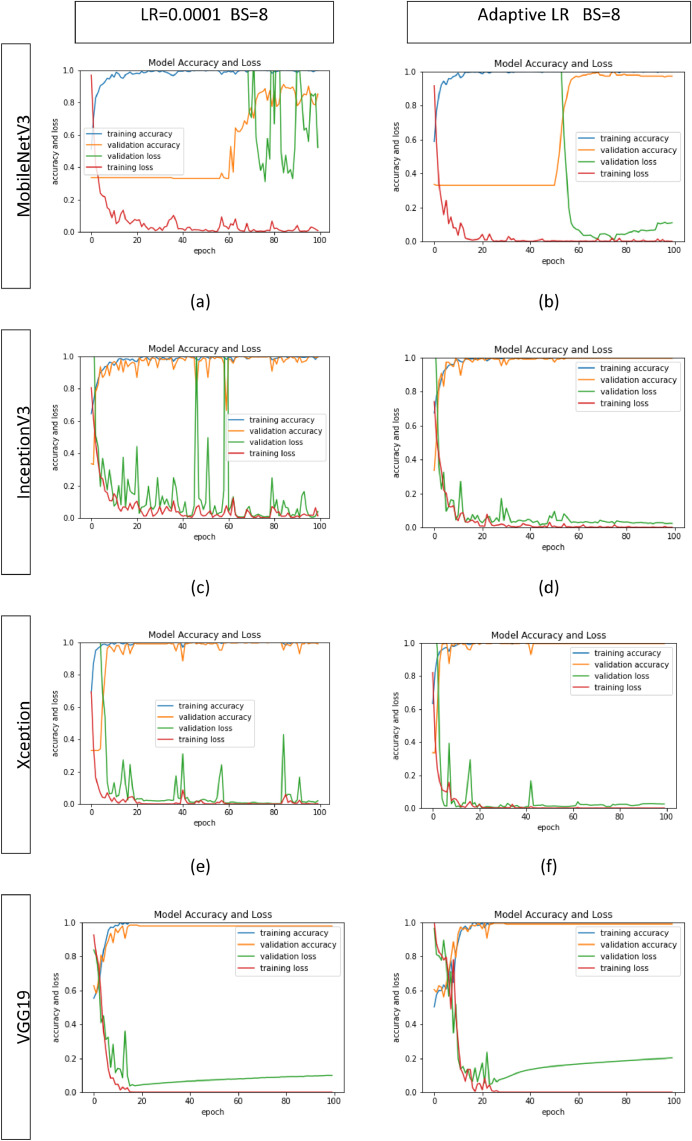
Deep learning has profoundly impacted agriculture by enhancing the accuracy and efficiency of plant classification tasks. In particular, advanced models have significantly improved the ability to classify various plant species based on their visual features. This study focuses on classifying alfalfa plant varieties using deep learning techniques. We created a custom dataset comprising 1,214 images of three alfalfa varieties (Bilensoy-80, Diana and Nimet) cultivated under controlled conditions. Our comparative study involved several state-of-the-art models, including MobileNetV3, InceptionV3, Xception, VGG19, DenseNet121, ResNet101, and EfficientNetB3, to assess their performance in classifying these alfalfa varieties. We evaluated these models with various configurations: learning rates ranging from 0.1 to 0.000001, batch sizes of 8, 16, 32, and 64, and using dropout with a decay rate of 0.96 and decay steps of 1000. The results revealed that models trained with transfer learning generally achieved higher test accuracies. For instance, DenseNet121 achieved a test accuracy of 0.9945 when trained from scratch and 1.0000 with transfer learning, while EfficientNetB3 achieved a test accuracy of 0.9945 with both methods. The findings underscore the effectiveness of transfer learning in enhancing model performance for plant classification tasks.•The study introduced a unique dataset consisting of 1214 images of three alfalfa varieties (Bilensoy-80, Diana, and Nimet) cultivated under controlled conditions, providing a valuable resource for advancing plant classification research.•The research compared the performance of several state-of-the-art deep learning models (MobileNetV3, InceptionV3, Xception, VGG19, DenseNet121, ResNet101, and EfficientNetB3) with various hyperparameter configurations, demonstrating the effectiveness of different architectures for classifying alfalfa plant varieties.•The study highlighted the superior performance of transfer learning in plant classification tasks, with models like DenseNet121 and EfficientNetB3 achieving near-perfect accuracy, underscoring its potential to significantly enhance model accuracy and efficiency in agricultural applications.
深度学习通过提高植物分类任务的准确性和效率,对农业产生了深远影响。特别是,先进的模型显著提高了基于视觉特征对各种植物物种进行分类的能力。本研究重点使用深度学习技术对苜蓿植物品种进行分类。我们创建了一个自定义数据集,其中包含在受控条件下种植的三个苜蓿品种(比伦索伊 - 80、戴安娜和尼梅特)的1214张图像。我们的比较研究涉及几个最先进的模型,包括MobileNetV3、InceptionV3、Xception、VGG19、DenseNet121、ResNet101和EfficientNetB3,以评估它们在对这些苜蓿品种进行分类时的性能。我们用各种配置评估了这些模型:学习率范围从0.1到0.000001,批量大小为8、16、32和64,并使用衰减率为0.96和衰减步长为1000的随机失活。结果表明,使用迁移学习训练的模型通常能获得更高的测试准确率。例如,DenseNet121从零开始训练时测试准确率为0.9945,使用迁移学习时为1.0000,而EfficientNetB3在两种方法下的测试准确率均为0.9945。这些发现强调了迁移学习在提高植物分类任务模型性能方面的有效性。
• 该研究引入了一个独特的数据集,由在受控条件下种植的三个苜蓿品种(比伦索伊 - 80、戴安娜和尼梅特)的1214张图像组成,为推进植物分类研究提供了宝贵资源。
• 该研究比较了几个最先进的深度学习模型(MobileNetV3、InceptionV3、Xception、VGG19、DenseNet121、ResNet101和EfficientNetB3)在各种超参数配置下的性能,证明了不同架构对苜蓿植物品种分类的有效性。
• 该研究强调了迁移学习在植物分类任务中的卓越性能,像DenseNet121和EfficientNetB3这样的模型实现了近乎完美的准确率,突出了其在农业应用中显著提高模型准确性和效率的潜力。