An Hui, Li Ting, Zhang Xinyue, Hu Hao, Zhang Chen, Wang Yongyu, Jin Shengwei, Li Ming
Department of Anesthesia and Critical Care, The Second Affiliated Hospital and Yuying Children's Hospital of Wenzhou Medical University, Wenzhou, Zhejiang, China.
Key Laboratory of Pediatric Anesthesiology, Ministry of Education, Wenzhou Medical University, Wenzhou, Zhejiang, China.
Front Cell Infect Microbiol. 2024 Nov 22;14:1488607. doi: 10.3389/fcimb.2024.1488607. eCollection 2024.
Long COVID (LC) poses a persistent challenge in clinical practice due to limited understanding of its etiology. LC is hypothesized to stem from aberrant immune responses in COVID-19. Vaccinations, which boost immune cells to restore function, could help ease LC symptoms.
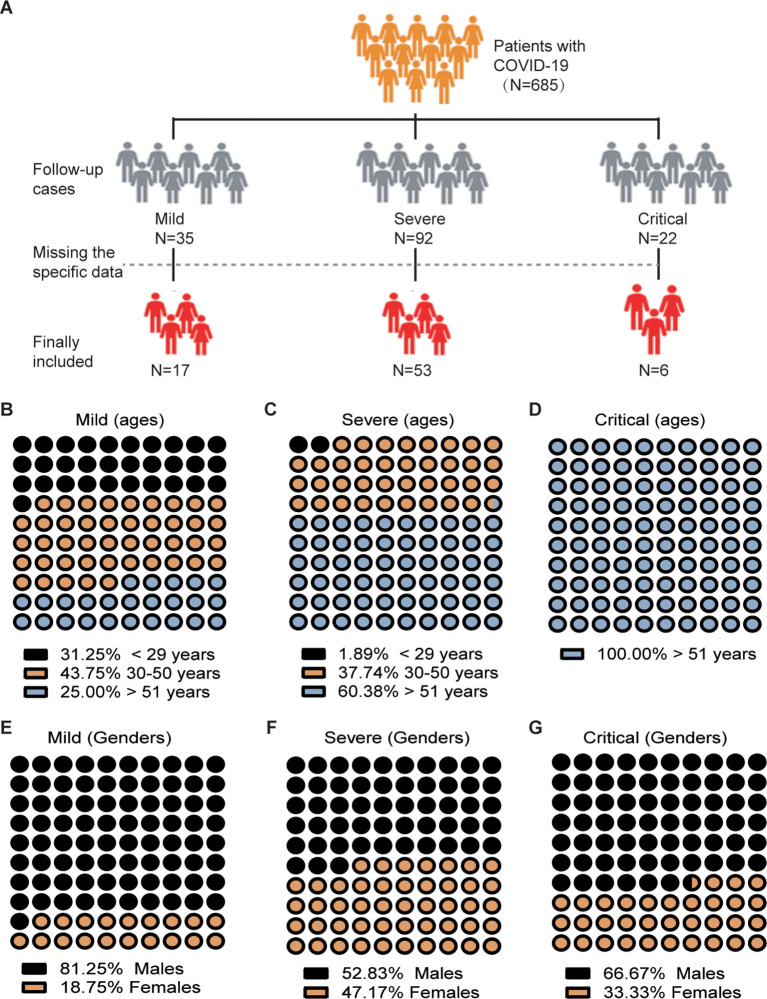
To exclude the impact of vaccination, we examined the immune cell profiles of recovering COVID-19 patients before vaccines were available. White blood cell differentials were monitored in ninety-twohealthy unvaccinated controls. Seventy-six unvaccinated COVID-19 patients were monitored upon admission and on the 50th day post-symptom onset (DPSO50). Peripheral lymphocyte subsets were analyzed using flow cytometry.
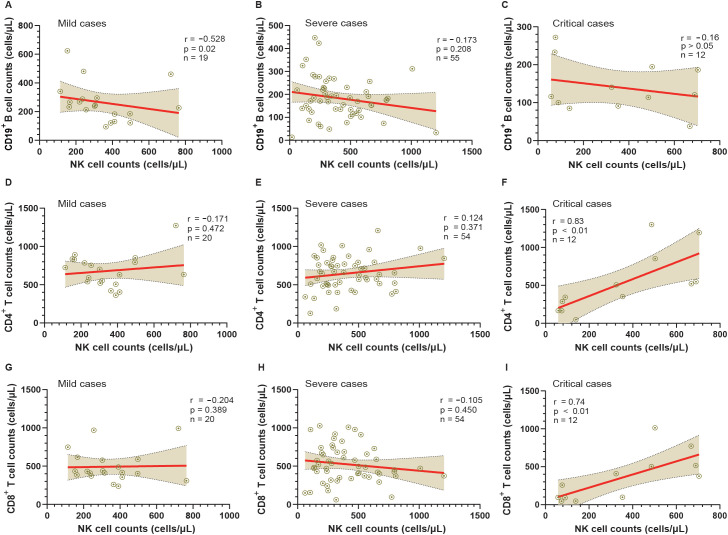
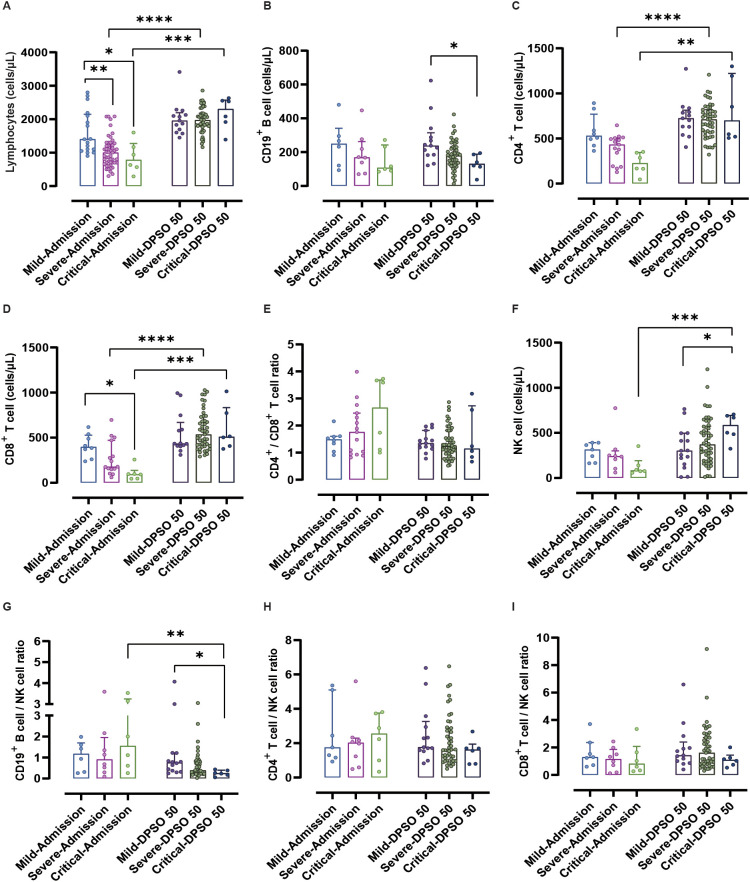
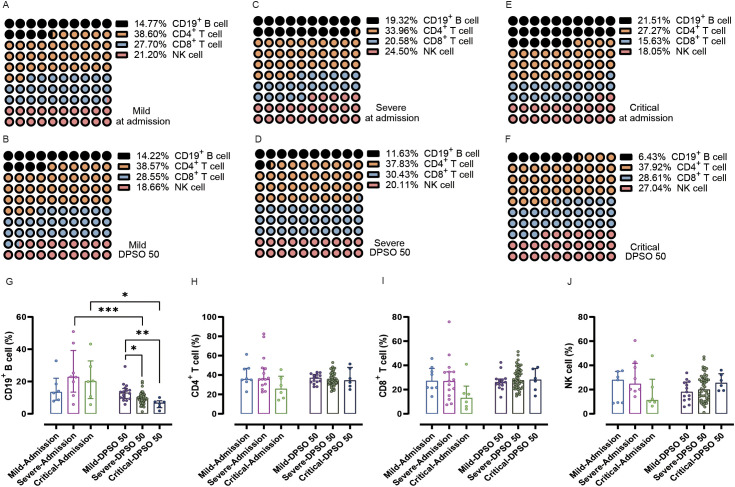
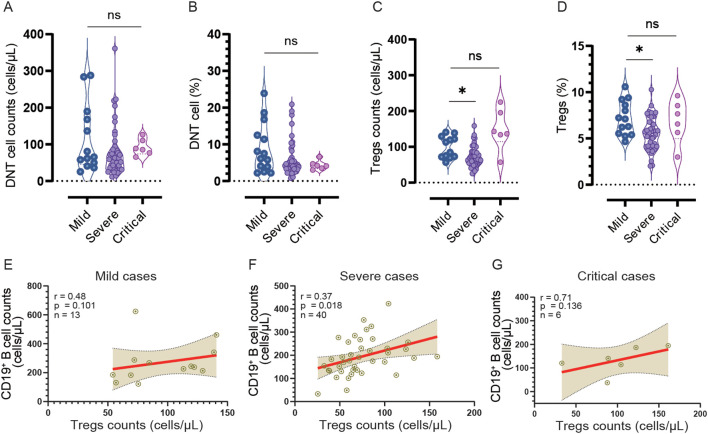
Mild cases showed no significant changes in lymphocyte counts or subsets from admission to DPSO50. By DPSO50, severe and critical cases showed almost complete recovery from lymphopenia, with critical cases having CD19+ B-cell counts approximately 45% lower than the mild group. Severe and critical cases exhibited reduced B-cell frequencies, with critical cases displaying around 48% higher natural killer (NK) cell counts. In mild cases, NK cell counts negatively correlated with B-cell counts (r=-0.528, p=0.02). Additionally, critical cases showed positive correlations between NK cell counts and CD4+ T-cell counts (r=0.83, p<0.01), and between NK cell counts and CD8+ T-cell counts (r=0.74, p<0.01). Severe cases demonstrated decreased counts of CD4+CD25+CD127lowFoxP3+ regulatory T-cells (Tregs), which positively correlated with B-cell counts (r=0.37, p<0.05).
Our findings indicate that aberrant immune cell profiles in COVID-19 patients change dynamically during recovery, depending on disease severity. This study suggests that convalescent patients from critical COVID-19 may experience long-lasting B-cell lymphopenia.
由于对其病因了解有限,长期新冠(LC)在临床实践中构成了持续挑战。据推测,长期新冠源于新冠病毒病(COVID-19)中异常的免疫反应。疫苗接种可增强免疫细胞以恢复功能,可能有助于缓解长期新冠症状。
为排除疫苗接种的影响,我们在疫苗可用之前检查了康复中的COVID-19患者的免疫细胞谱。对92名未接种疫苗的健康对照者进行白细胞分类监测。对76名未接种疫苗的COVID-19患者在入院时和症状出现后第50天(DPSO50)进行监测。使用流式细胞术分析外周淋巴细胞亚群。
轻症患者从入院到DPSO50淋巴细胞计数和亚群无显著变化。到DPSO50时,重症和危重症患者淋巴细胞减少几乎完全恢复,危重症患者CD19+B细胞计数比轻症组低约45%。重症和危重症患者B细胞频率降低,危重症患者自然杀伤(NK)细胞计数高出约48%。在轻症患者中,NK细胞计数与B细胞计数呈负相关(r=-0.528,p=0.02)。此外,危重症患者NK细胞计数与CD4+T细胞计数呈正相关(r=0.83,p<0.01),与CD8+T细胞计数呈正相关(r=0.74,p<0.01)。重症患者CD4+CD25+CD127lowFoxP3+调节性T细胞(Tregs)计数减少,与B细胞计数呈正相关(r=0.37,p<0.05)。
我们的研究结果表明,COVID-19患者异常的免疫细胞谱在恢复过程中会动态变化,这取决于疾病的严重程度。这项研究表明,危重症COVID-19康复患者可能会经历持久的B细胞淋巴细胞减少。