Huebschmann Amy G, Brega Angela G, Stotz Sarah A, Shane Aliassa L, King Roxanna, Jernigan Valarie Blue Bird, Clyma Kaylee R, Goins R Turner, Ferguson Gary L, Parker Tassy, Tsosie Nathania, Mumby Sara J, Manson Spero M, Fort Meredith P
Division of General Internal Medicine, University of Colorado School of Medicine, Center for American Indian and Alaska Native Diabetes Translation Research (CAIANDTR), Ludeman Family Center for Women's Health Research, Adult and Child Center for Outcomes Research and Delivery Science, University of Colorado Anschutz Medical Campus, Aurora, CO, USA.
Centers for American Indian and Alaska Native Health, Colorado School of Public Health, University of Colorado Anschutz Medical Campus, Aurora, CO, USA.
J Clin Transl Sci. 2024 Oct 24;8(1):e206. doi: 10.1017/cts.2024.638. eCollection 2024.
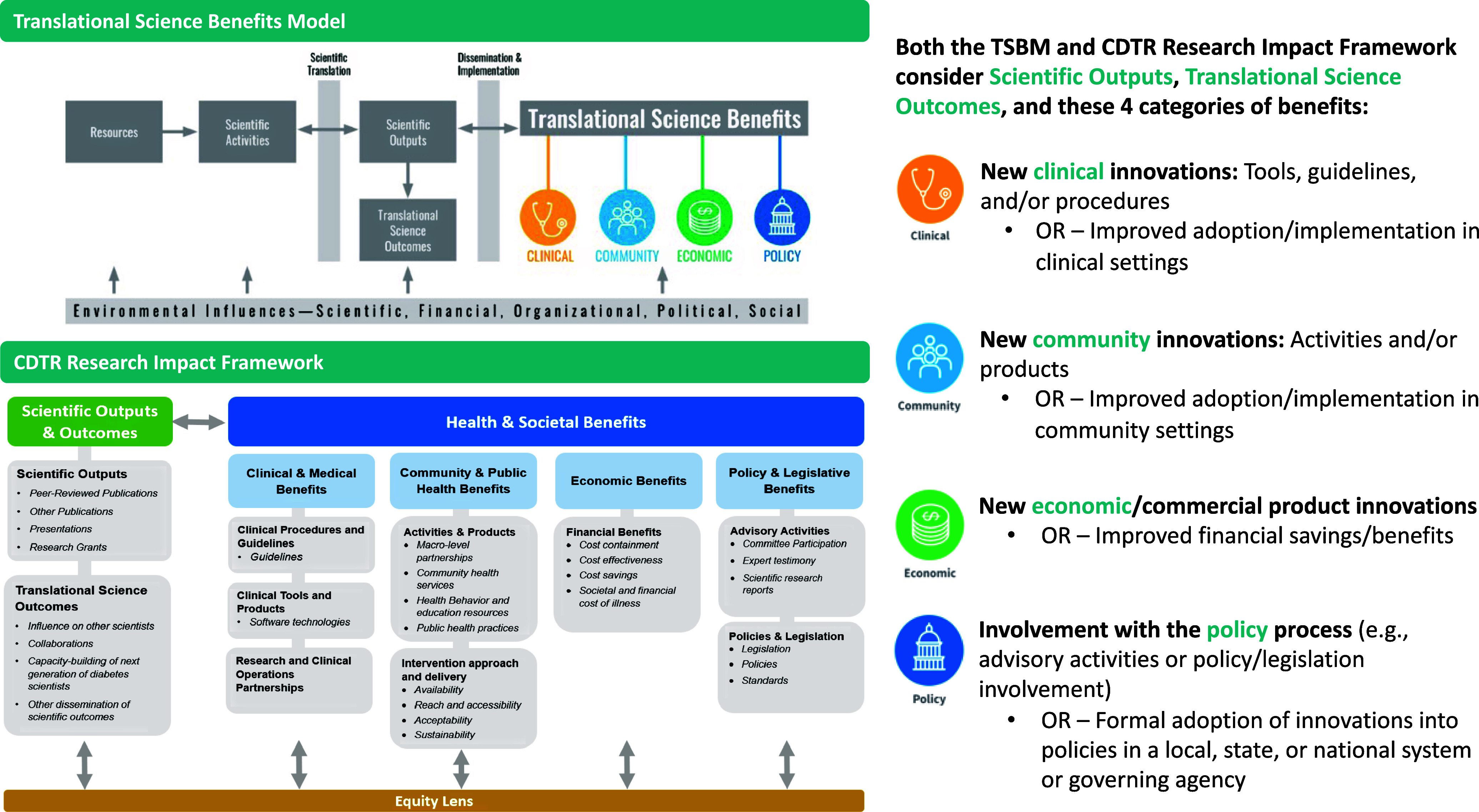
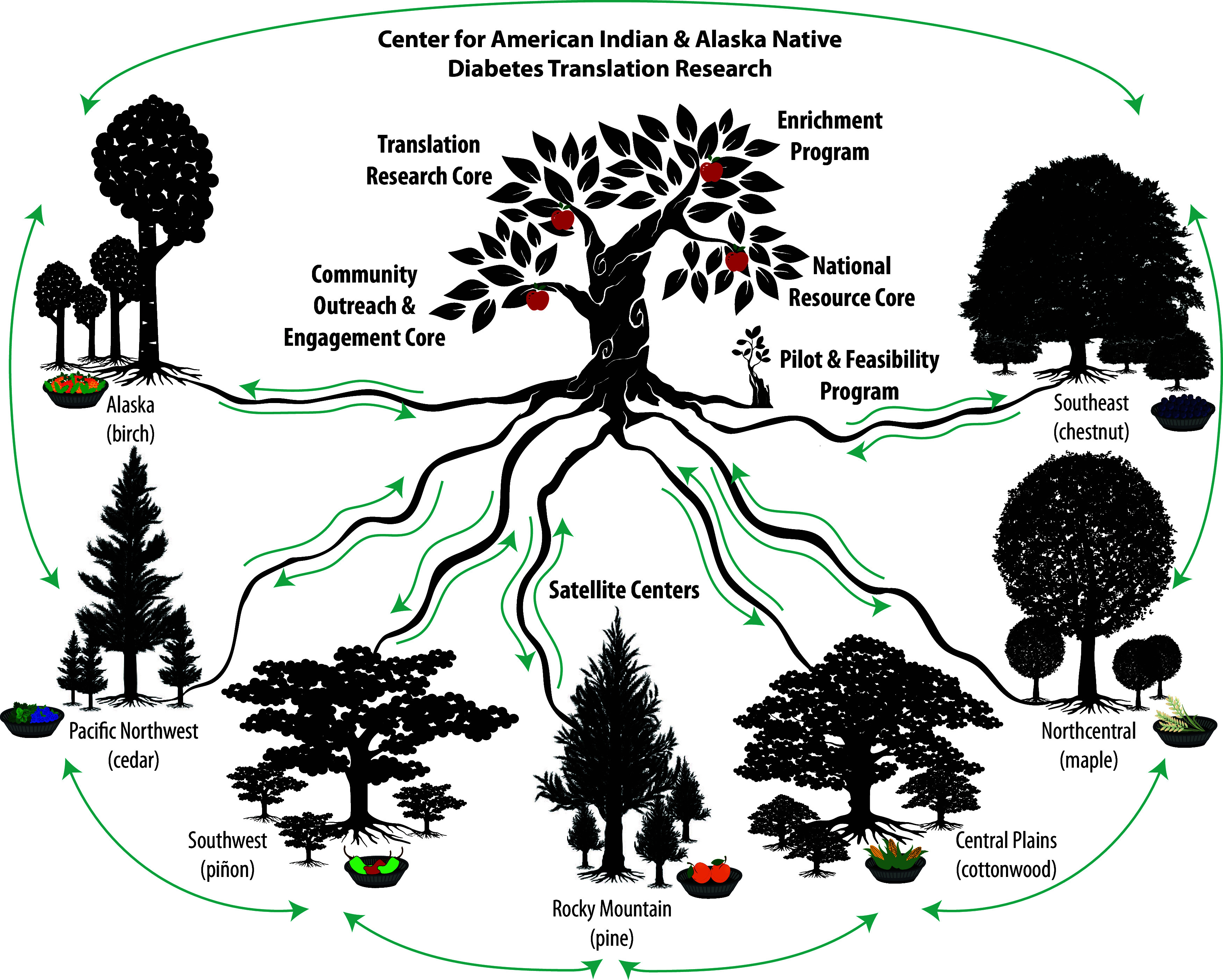
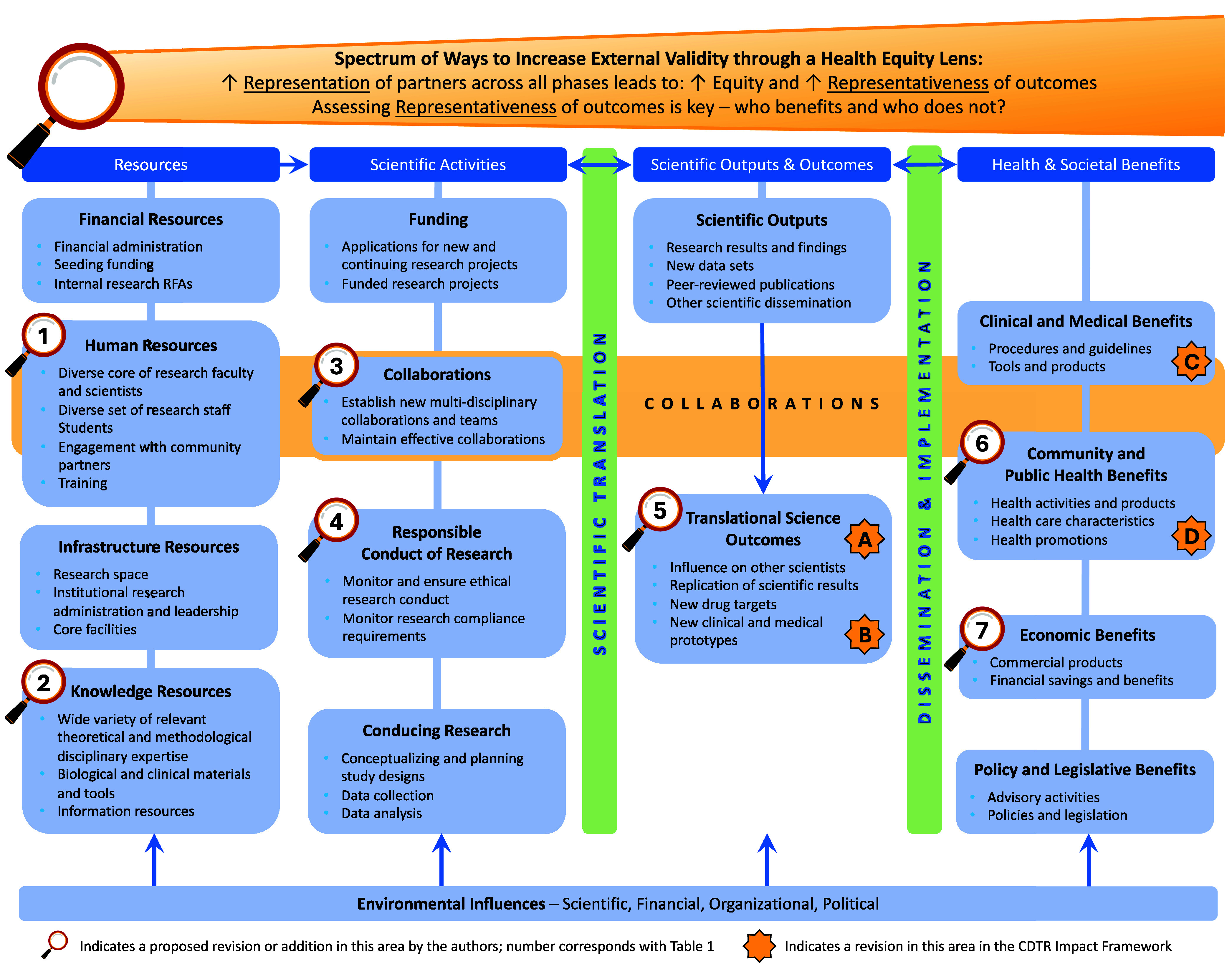
Translational research needs to show value through impact on measures that matter to the public, including health and societal benefits. To this end, the Translational Science Benefits Model (TSBM) identified four categories of impact: Clinical, Community, Economic, and Policy. However, TSBM offers limited guidance on how these areas of impact relate to equity. Central to the structure of our Center for American Indian and Alaska Native Diabetes Translation Research are seven regional, independent Satellite Centers dedicated to community-engaged research. Drawing on our collective experience, we provide empirical evidence about how TSBM applies to equity-focused research that centers community partnerships and recognizes Indigenous knowledge. For this special issue - "Advancing Understanding and Use of Impact Measures in Implementation Science" - our objective is to describe and critically evaluate gaps in the fit of TSBM as an evaluation approach with sensitivity to health equity issues. Accordingly, we suggest refinements to the original TSBM Logic model to add: 1) community representation as an indicator of providing community partners "a seat at the table" across the research life cycle to generate solutions (innovations) that influence equity and to prioritize what to evaluate, and 2) assessments of the representativeness of the measured outcomes and benefits.
转化研究需要通过对公众重要的指标产生影响来展现其价值,这些指标包括健康和社会效益。为此,转化科学效益模型(TSBM)确定了四类影响:临床、社区、经济和政策。然而,TSBM在这些影响领域与公平性的关系方面提供的指导有限。我们的美国印第安人和阿拉斯加原住民糖尿病转化研究中心的核心结构是七个区域独立的卫星中心,致力于社区参与研究。借鉴我们的集体经验,我们提供了关于TSBM如何应用于以公平为重点、以社区伙伴关系为中心并认可本土知识的研究的实证证据。对于本期特刊——“推进对实施科学中影响指标的理解和应用”——我们的目标是描述并批判性地评估TSBM作为一种评估方法在适应健康公平问题方面存在的差距。因此,我们建议对原始的TSBM逻辑模型进行改进,增加:1)社区代表性,作为在整个研究生命周期中为社区伙伴提供“参与机会”以产生影响公平性的解决方案(创新)并确定评估重点的指标;2)对所测量结果和效益的代表性进行评估。