Aljohani Yousef, Payne William, Yasuda Robert P, Olson Thao, Kellar Kenneth J, Dezfuli Ghazaul
Department of Pharmacology and Physiology, Georgetown University Medical Center, Washington, District of Columbia, USA.
J Neurochem. 2025 Jan;169(1):e16280. doi: 10.1111/jnc.16280.
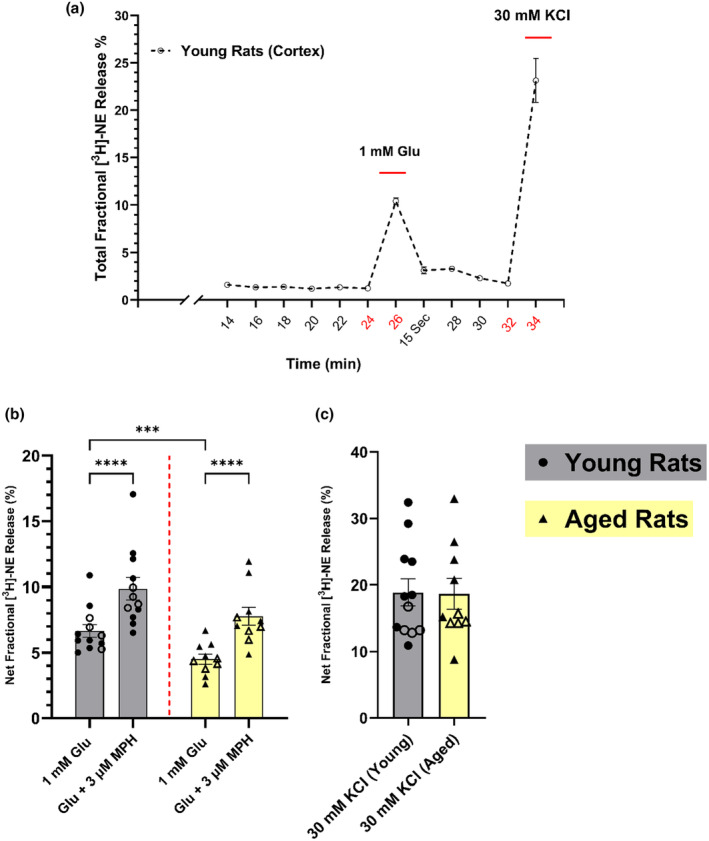
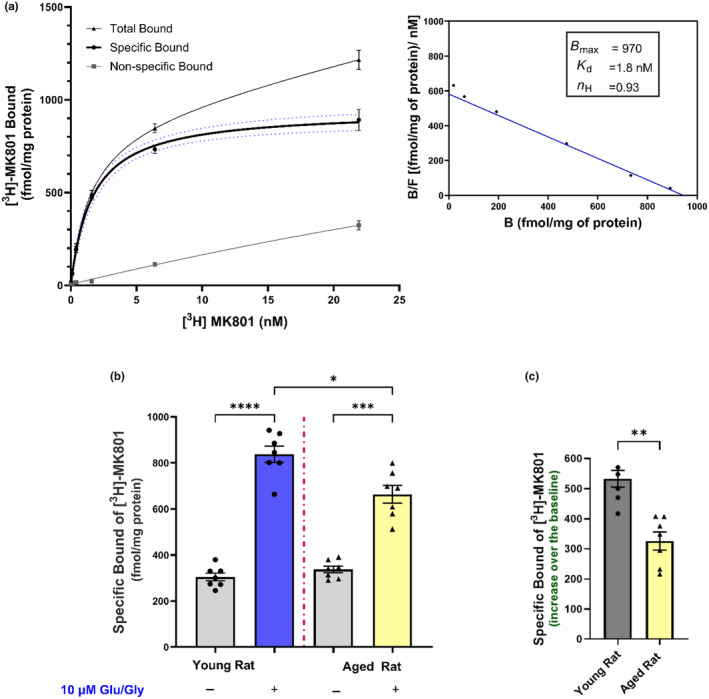
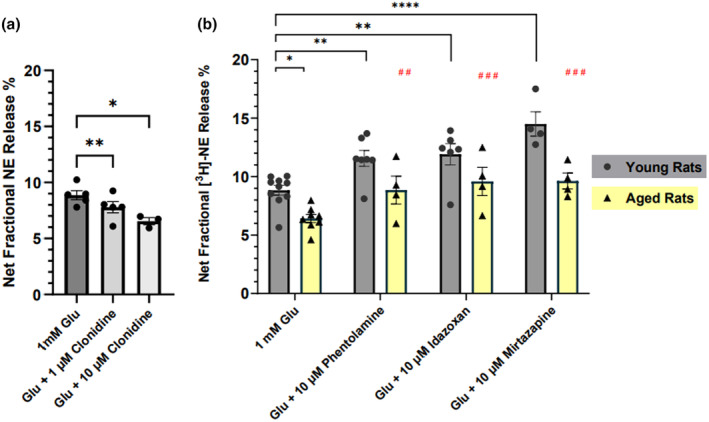
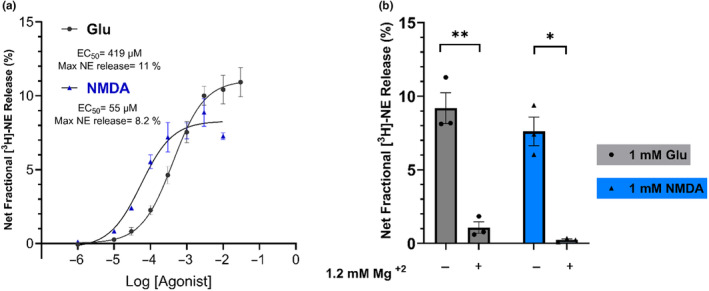
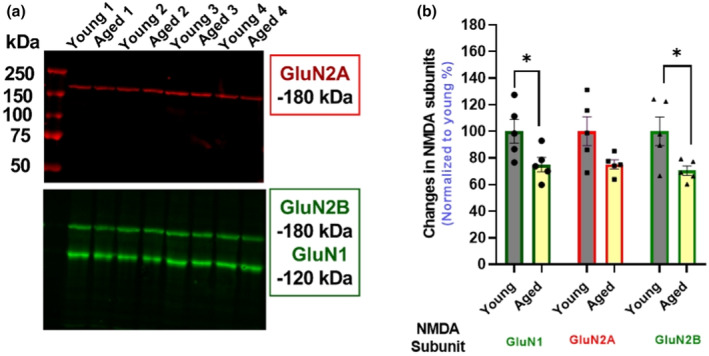
Aging affects virtually all organs of the body, but perhaps it has the most profound effects on the brain and its neurotransmitter systems, which influence a wide range of crucial functions, such as attention, focus, mood, neuroendocrine and autonomic functions, and sleep cycles. All of these essential functions, as well as fundamental cognitive processes such as memory, recall, and processing speed, utilize neuronal circuits that depend on neurotransmitter signaling between neurons. Glutamate (Glu), the main excitatory neurotransmitter in the CNS, is involved in most neuronal excitatory functions, including release of the neurotransmitter norepinephrine (NE). Previous studies from our lab demonstrated that the age-associated decline in Glu-stimulated NE release in rat cerebral cortex and hippocampus mediated by NMDA glutamate receptors, as well as deficits in dendritic spines, and cognitive functions are fully rescued by the CNS stimulant amphetamine. Here we further investigated Glu-stimulated NE release in the cerebral cortex to identify additional novel target sites for restoration of Glu-stimulated NE release. We found that blockade of alpha-2 adrenergic receptors fully restores Glu-stimulated NE release to the levels of young controls. In addition, we investigated the density and responsiveness of NMDA receptors as a potential underlying neuronal mechanism that could account for the observed age-associated decline in Glu-stimulated NE release. In the basal state of the receptor (no added glutamate and glycine) the density of NMDA receptors in the cortex from young and aged rats was similar. However, in contrast, in the presence of 10 μM added glutamate, which opens the receptor channel and increases the number of available [H]-MK-801 binding sites within the channel, the density of [H]-MK-801 binding sites was significantly less in the cortex from aged rats.
衰老几乎会影响身体的所有器官,但或许对大脑及其神经递质系统的影响最为深远,而神经递质系统会影响广泛的关键功能,如注意力、专注力、情绪、神经内分泌和自主功能以及睡眠周期。所有这些基本功能,以及诸如记忆、回忆和处理速度等基本认知过程,都利用了依赖神经元之间神经递质信号传递的神经回路。谷氨酸(Glu)是中枢神经系统中的主要兴奋性神经递质,参与大多数神经元的兴奋功能,包括神经递质去甲肾上腺素(NE)的释放。我们实验室之前的研究表明,由NMDA谷氨酸受体介导的大鼠大脑皮层和海马体中谷氨酸刺激的去甲肾上腺素释放随年龄增长而下降,以及树突棘和认知功能的缺陷,可被中枢神经系统兴奋剂苯丙胺完全挽救。在此,我们进一步研究了大脑皮层中谷氨酸刺激的去甲肾上腺素释放,以确定恢复谷氨酸刺激的去甲肾上腺素释放的其他新靶点。我们发现,阻断α-2肾上腺素能受体可将谷氨酸刺激的去甲肾上腺素释放完全恢复到年轻对照组的水平。此外,我们研究了NMDA受体的密度和反应性,作为一种潜在的神经元机制,它可能解释了观察到的谷氨酸刺激的去甲肾上腺素释放随年龄增长而下降的现象。在受体的基础状态(未添加谷氨酸和甘氨酸)下,年轻和老年大鼠皮层中NMDA受体的密度相似。然而,相比之下,在添加10μM谷氨酸的情况下,谷氨酸会打开受体通道并增加通道内可用的[H]-MK-801结合位点的数量,老年大鼠皮层中[H]-MK-801结合位点的密度明显较低。