Aldali Jehad A, Asseri Mushabbab K, Almufarrij Haneen A, Alromih Aroob M, Alajlan Albandari M, Alrashed Khawlah A, ALghadeer Atheer I, Almutawa Bushra I, Alshalani Abdulrahman
Department of Pathology, College of Medicine, Imam Mohammad Ibn Saud Islamic University (IMSIU), Riyadh 13317, Saudi Arabia.
Department of Endocrine & Diabetes, Prince Sultan Medical Military City, Riyadh 11159, Saudi Arabia.
Gastroenterol Res Pract. 2024 Dec 4;2024:3713569. doi: 10.1155/grp/3713569. eCollection 2024.
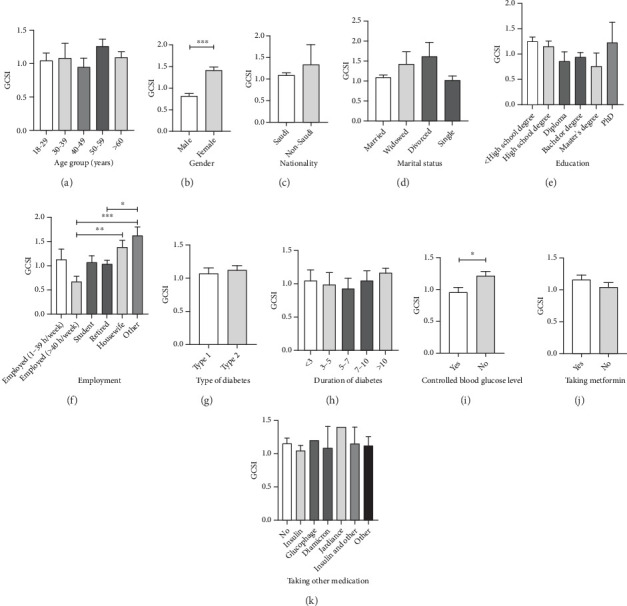
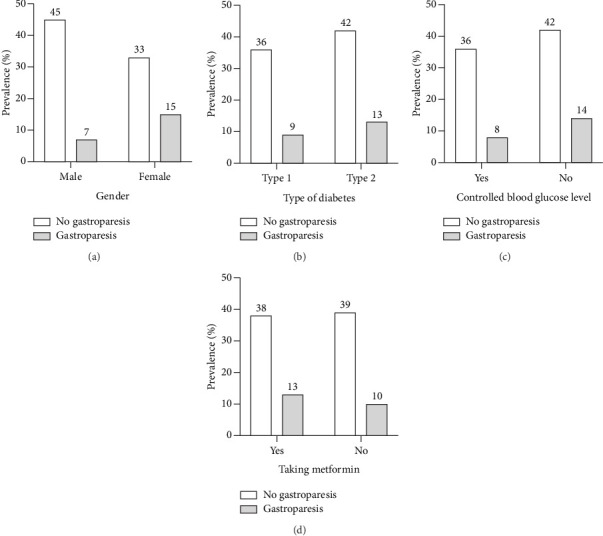
The prevalence of gastroparesis in individuals with diabetes mellitus varies significantly across different studies. This study is aimed at estimating the prevalence of gastroparesis among diabetic patients in Riyadh, Saudi Arabia, and evaluating the association between metformin use and clinical manifestations of gastroparesis. This cross-sectional study employed an online survey distributed via Google Forms, targeting patients at a diabetes clinic. The survey comprised three sections, including the Gastroparesis Cardinal Symptom Index (GCSI). Eligible participants were those diagnosed with either type 1 or type 2 diabetes mellitus and aged 18 or older. The study included 385 participants, with the majority diagnosed with type 2 diabetes (55.6%) for over 10 years (59.5%). A significant proportion had poorly controlled blood glucose levels (56.6%) and were taking metformin (50.9%). Among gastrointestinal (GI) symptoms, "stomach fullness" was reported most frequently (53.2%), whereas "vomiting" was reported least often (17.9%). GCSI scores did not differ significantly between type 1 and type 2 diabetes patients ( = 0.88). However, patients with diabetes durations of less than 3 years, those with durations of 5-7 years controlled blood glucose levels, and those on metformin exhibited higher GCSI scores ( = 0.20, = 0.02, and = 0.10, respectively). This study identified some commonalities as well as differences in the prevalence and symptomatology of gastroparesis among diabetic patients. We observed no significant variation in GCSI scores between type 1 and type 2 diabetes. Nevertheless, higher GCSI scores were associated with shorter diabetes durations, controlled blood glucose levels, and metformin use. However, due to the small sample size and reliance on self-reported data, one should interpret the study's findings with caution.
不同研究中,糖尿病患者胃轻瘫的患病率差异显著。本研究旨在估算沙特阿拉伯利雅得糖尿病患者中胃轻瘫的患病率,并评估二甲双胍的使用与胃轻瘫临床表现之间的关联。这项横断面研究通过谷歌表单进行在线调查,目标人群为一家糖尿病诊所的患者。该调查包括三个部分,其中有胃轻瘫主要症状指数(GCSI)。符合条件的参与者为确诊患有1型或2型糖尿病且年龄在18岁及以上者。该研究纳入了385名参与者,其中大多数被诊断为2型糖尿病(55.6%),患病超过10年(59.5%)。很大一部分人的血糖水平控制不佳(56.6%),且正在服用二甲双胍(50.9%)。在胃肠道(GI)症状中,“胃部饱胀感”的报告最为频繁(53.2%),而“呕吐”的报告最少(17.9%)。1型和2型糖尿病患者的GCSI评分无显著差异( = 0.88)。然而,糖尿病病程小于3年的患者、病程为5 - 7年且血糖水平得到控制的患者以及服用二甲双胍的患者GCSI评分更高(分别为 = 0.20、 = 0.02和 = 0.10)。本研究确定了糖尿病患者胃轻瘫患病率和症状学方面的一些共性与差异。我们观察到1型和2型糖尿病患者的GCSI评分无显著差异。尽管如此,较高的GCSI评分与较短的糖尿病病程、血糖水平得到控制以及使用二甲双胍有关。然而,由于样本量小且依赖自我报告数据,对该研究结果的解读应谨慎。