Wang Hui, Qi Liang, Han Han, Li Xuena, Han Mengmeng, Xing Lei, Li Ling, Jiang Hulin
Department of Endocrinology, Zhongda Hospital, School of Medicine, Southeast University, Nanjing 210009, China.
State Key Laboratory of Natural Medicines, Department of Pharmaceutics, China Pharmaceutical University, Nanjing 210009, China.
Acta Pharm Sin B. 2024 Nov;14(11):4756-4775. doi: 10.1016/j.apsb.2024.07.007. Epub 2024 Jul 10.
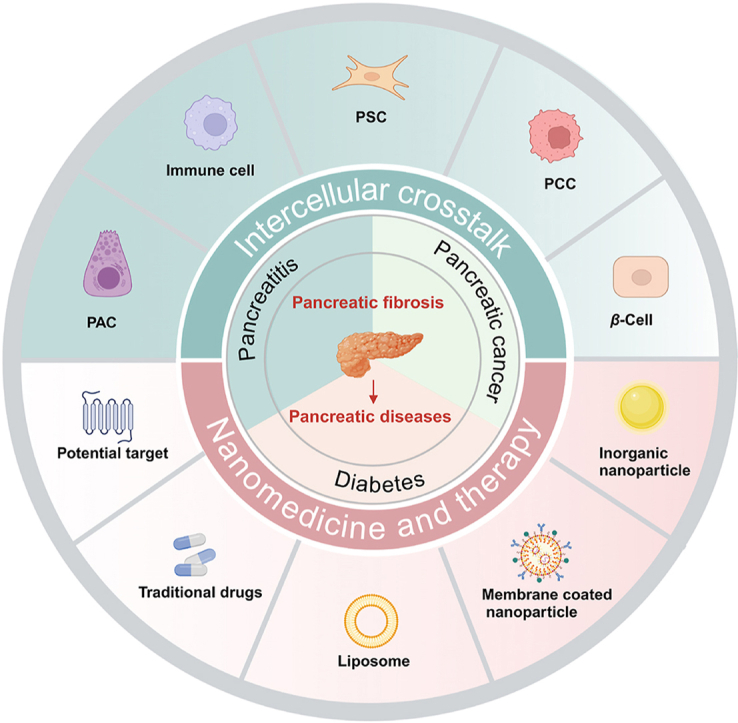
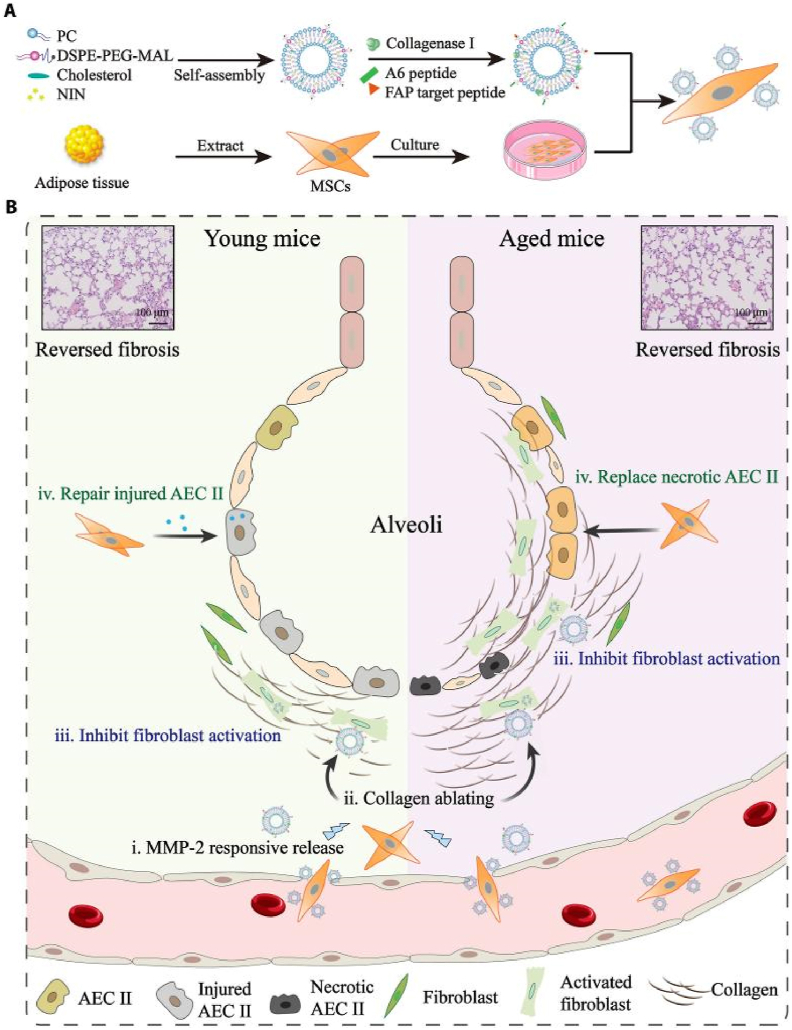
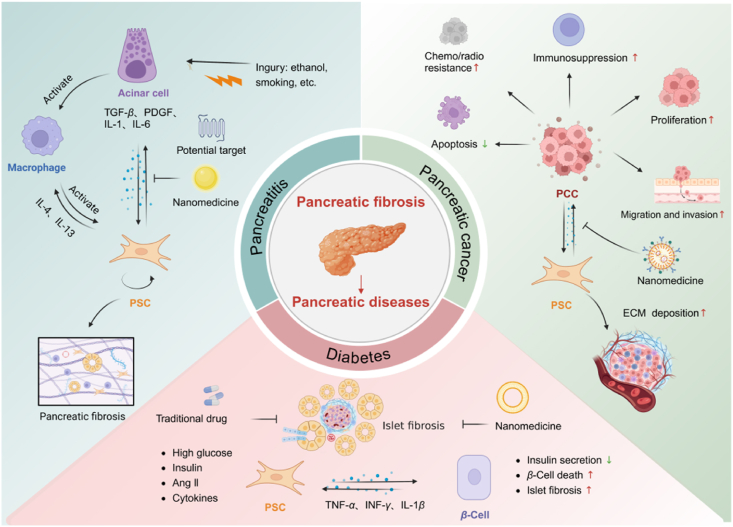
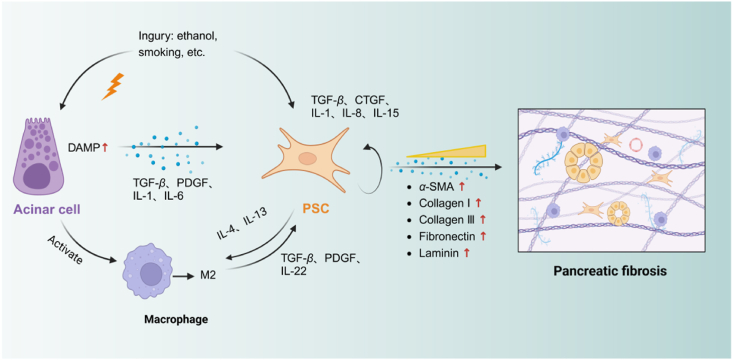
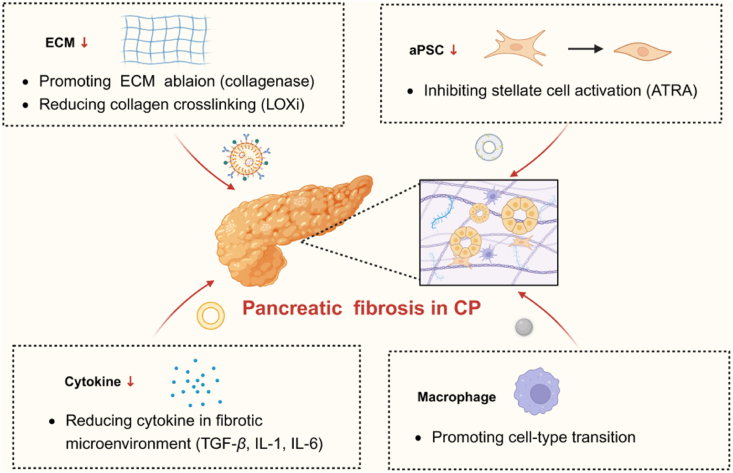
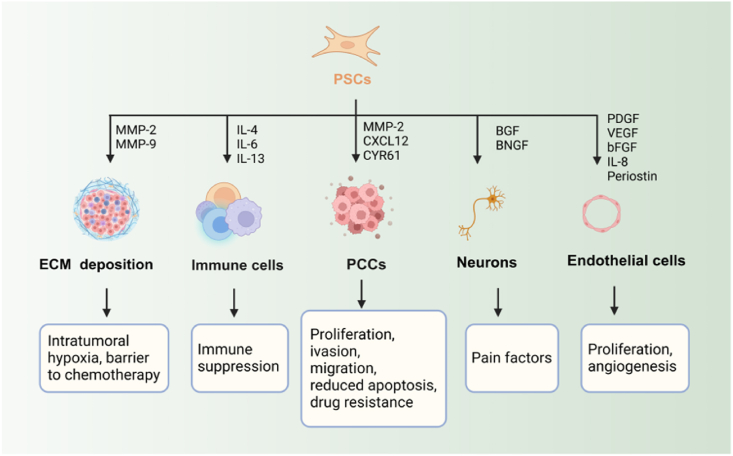
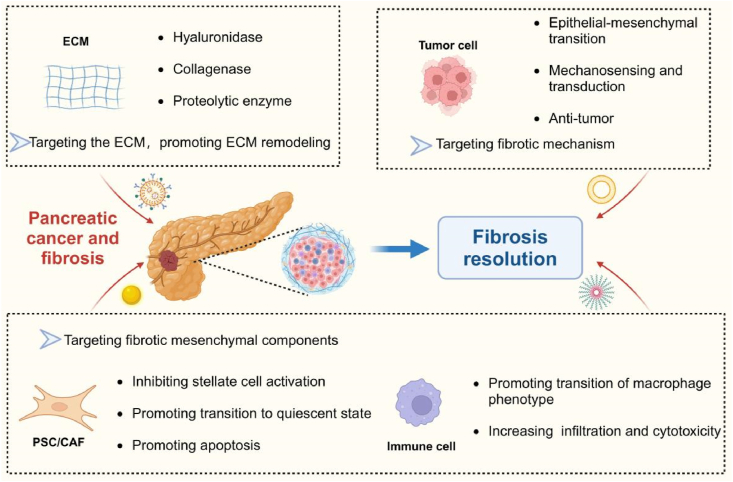
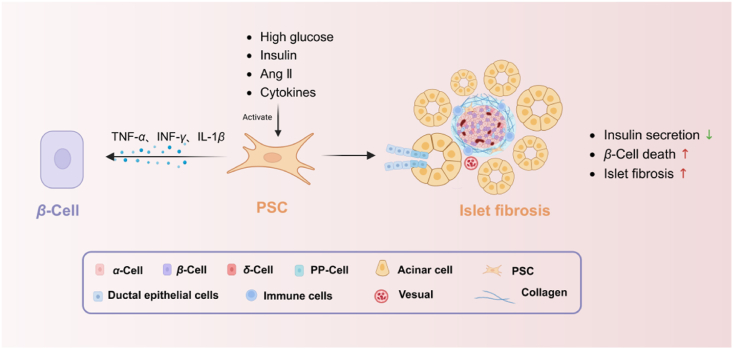
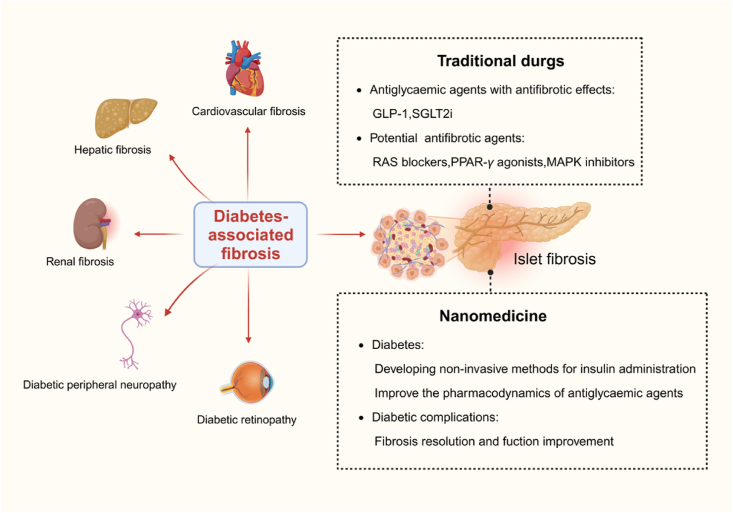
Pancreatic fibrosis (PF) is primarily distinguished by the stimulation of pancreatic stellate cells (PSCs) and excessive extracellular matrix deposition, which is the main barrier impeding drug delivery and distribution. Recently, nanomedicine, with efficient, targeted, and controllable drug release characteristics, has demonstrated enormous advantages in the regression of pancreas fibrotic diseases. Notably, paracrine signals from parenchymal and immune cells such as pancreatic acinar cells, islet cells, pancreatic cancer cells, and immune cells can directly or indirectly modulate PSC differentiation and activation. The intercellular crosstalk between PSCs and these cells has been a critical event involved in fibrogenesis. However, the connections between PSCs and other pancreatic cells during the progression of diseases have yet to be discussed. Herein, we summarize intercellular crosstalk in the activation of PSCs and its contribution to the development of common pancreatic diseases, including pancreatitis, pancreatic cancer, and diabetes. Then, we also examine the latest treatment strategies of nanomedicine and potential targets for PSCs crosstalk in fibrosis, thereby offering innovative insights for the design of antifibrotic nanomedicine. Ultimately, the enhanced understanding of PF will facilitate the development of more precise intervention strategies and foster individually tailored therapeutic approaches for pancreatic diseases.
胰腺纤维化(PF)主要表现为胰腺星状细胞(PSC)的激活和细胞外基质的过度沉积,这是阻碍药物递送和分布的主要障碍。近年来,具有高效、靶向和可控药物释放特性的纳米药物在胰腺纤维化疾病的消退方面显示出巨大优势。值得注意的是,来自实质细胞和免疫细胞(如胰腺腺泡细胞、胰岛细胞、胰腺癌细胞和免疫细胞)的旁分泌信号可直接或间接调节PSC的分化和激活。PSC与这些细胞之间的细胞间串扰是参与纤维化形成的关键事件。然而,疾病进展过程中PSC与其他胰腺细胞之间的联系尚未得到讨论。在此,我们总结了PSC激活过程中的细胞间串扰及其对常见胰腺疾病(包括胰腺炎、胰腺癌和糖尿病)发展的贡献。然后,我们还研究了纳米药物的最新治疗策略以及PSC在纤维化中串扰的潜在靶点,从而为抗纤维化纳米药物的设计提供创新见解。最终,对PF的深入理解将有助于制定更精确的干预策略,并促进针对胰腺疾病的个性化治疗方法的发展。