Thomas Hannah Rae, Gevorgyan Alice, Hermanson Alexandra, Yanders Samantha, Erndwein Lindsay, Norman-Ariztía Matthew, Sparks Erin E, Frank Margaret H
School of Integrative Plant Science, Cornell University, Ithaca, NY 14850, USA.
Department of Cell and Developmental Biology, John Innes Centre, Norwich NR2 2DT, UK.
Hortic Res. 2024 Sep 11;11(12):uhae255. doi: 10.1093/hr/uhae255. eCollection 2024 Dec.
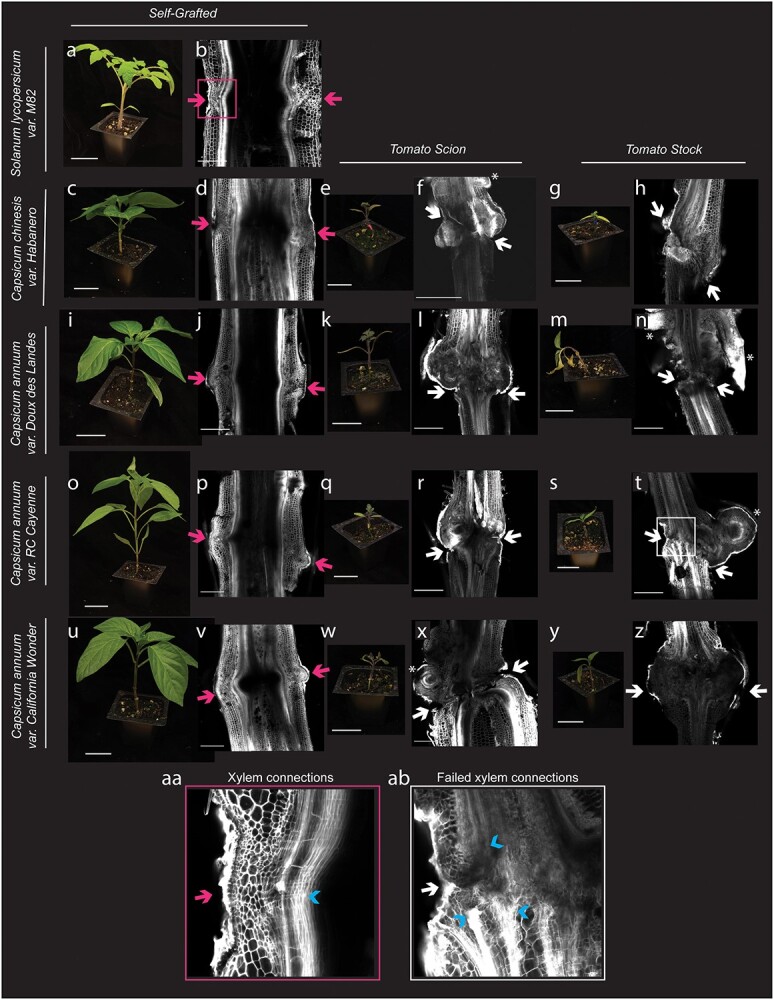
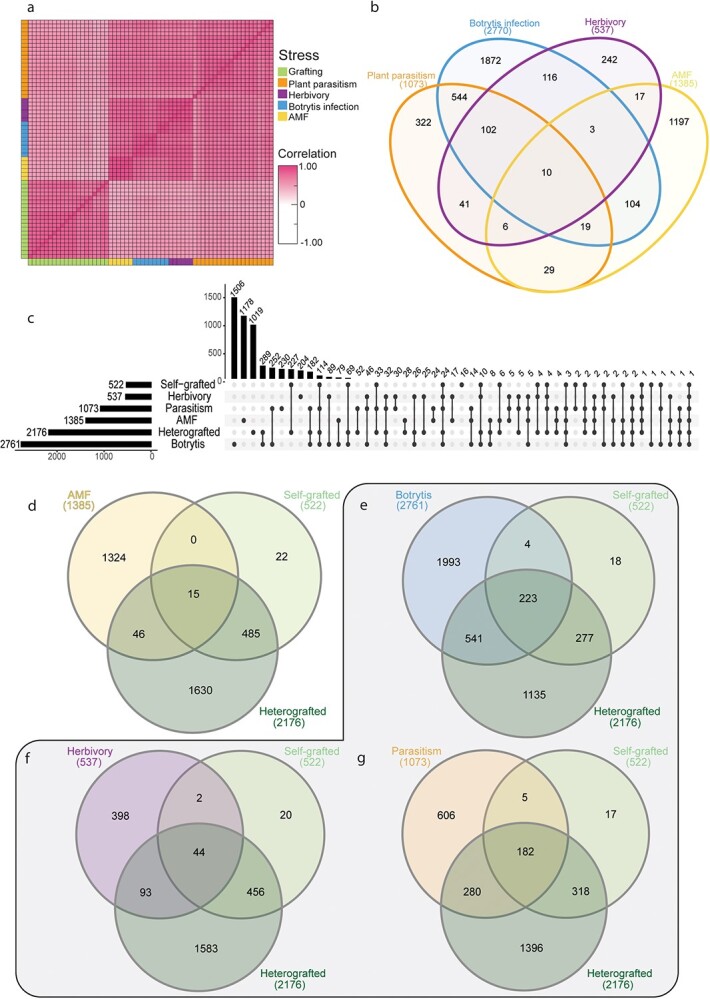
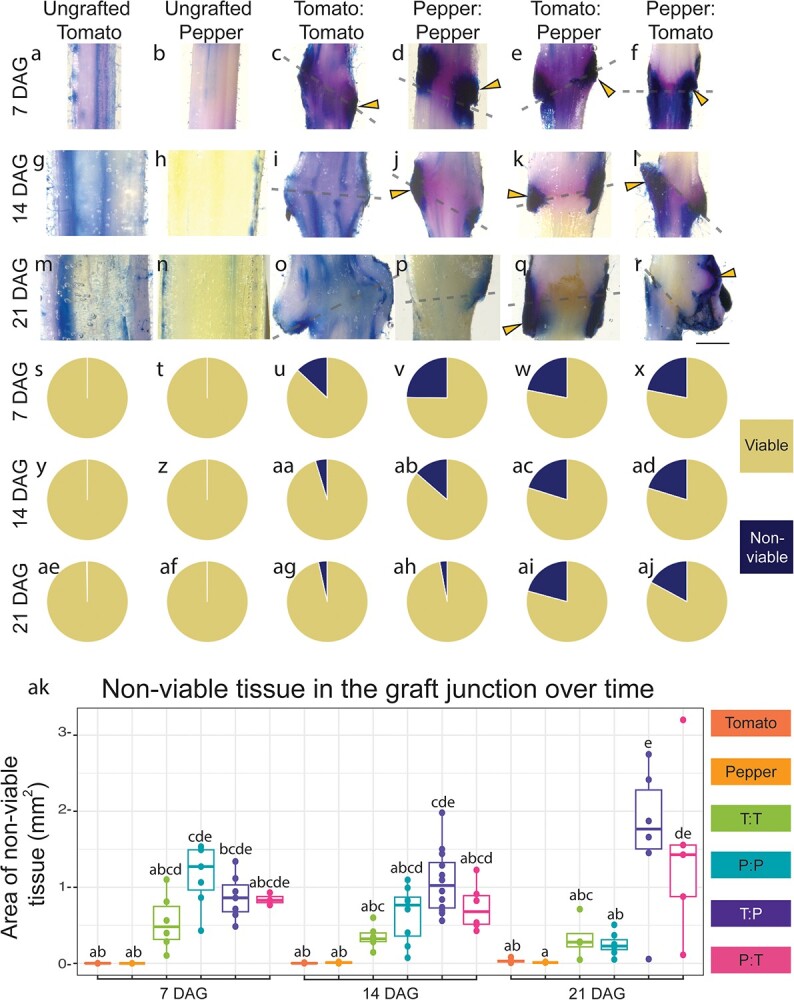
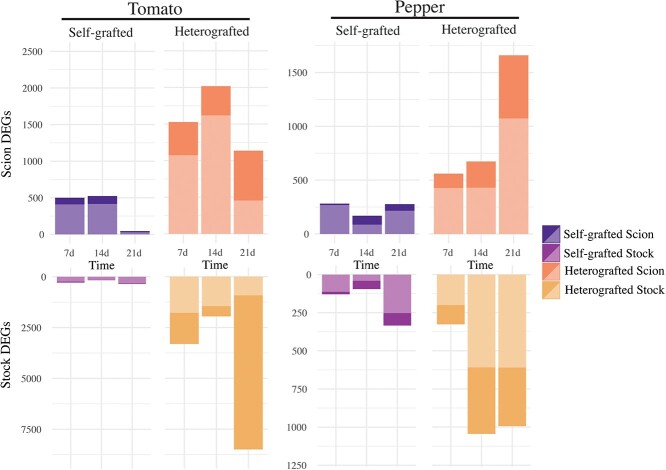
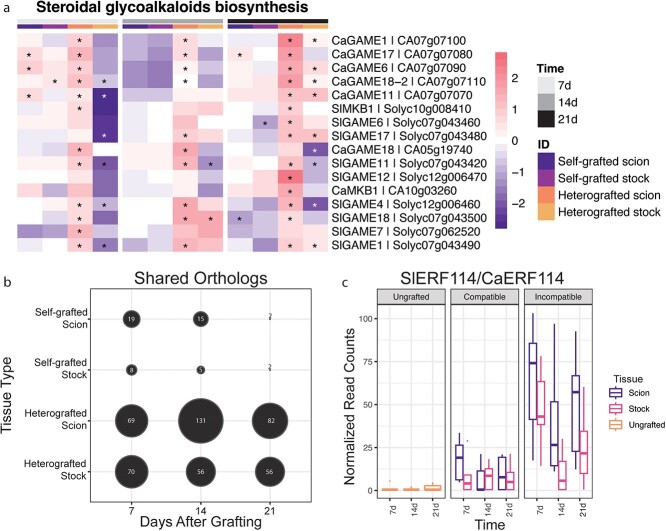
Graft compatibility is the capacity of two plants to form cohesive vascular connections. Tomato and pepper are incompatible graft partners; however, the underlying cause of graft rejection between these two species remains unknown. We diagnosed graft incompatibility between tomato and diverse pepper varieties based on weakened biophysical stability, decreased growth, and persistent cell death using viability stains. Transcriptomic analysis of the junction was performed using RNA sequencing, and molecular signatures for incompatible graft response were characterized based on meta-transcriptomic comparisons with other biotic processes. We show that tomato is broadly incompatible with diverse pepper cultivars. These incompatible graft partners activate prolonged transcriptional changes that are highly enriched for defense processes. Amongst these processes was broad nucleotide-binding and leucine-rich repeat receptors (NLR) upregulation and genetic signatures indicative of an immune response. Using transcriptomic datasets for a variety of biotic stress treatments, we identified a significant overlap in the genetic profile of incompatible grafting and plant parasitism. In addition, we found over 1000 genes that are uniquely upregulated in incompatible grafts. Based on NLR overactivity, DNA damage, and prolonged cell death, we hypothesize that tomato and pepper graft incompatibility is characterized by an immune response that triggers cell death which interferes with junction formation.
嫁接亲和性是指两种植物形成紧密维管连接的能力。番茄和辣椒是不亲和的嫁接组合;然而,这两个物种之间嫁接排斥的根本原因尚不清楚。我们通过活力染色,基于生物物理稳定性减弱、生长减缓以及持续的细胞死亡,诊断了番茄与不同辣椒品种之间的嫁接不亲和性。利用RNA测序对嫁接结合处进行转录组分析,并基于与其他生物过程的元转录组比较,对不亲和嫁接反应的分子特征进行了表征。我们发现番茄与多种辣椒品种普遍不亲和。这些不亲和的嫁接组合激活了长时间的转录变化,这些变化在防御过程中高度富集。在这些过程中,广泛的核苷酸结合和富含亮氨酸重复序列受体(NLR)上调以及指示免疫反应的基因特征。利用各种生物胁迫处理的转录组数据集,我们在不亲和嫁接和植物寄生的基因谱中发现了显著重叠。此外,我们发现超过1000个基因在不亲和嫁接中独特地上调。基于NLR过度激活、DNA损伤和持续的细胞死亡,我们推测番茄和辣椒嫁接不亲和的特征是一种免疫反应,该反应触发细胞死亡,从而干扰结合处的形成。