Kouvroukoglou Niki, Sandhu Sanita, Delage Barbara, Sell Debbie, Stock Nicola, Davies Gareth, Campodonico Marina, Richard Bruce, Gathuya Zipporah Njeri, Eshete Mekonen, Mehendale Felicity V
Medical School, University of Edinburgh, Edinburgh, UK.
The London Clinic, London, UK.
J Glob Health. 2024 Dec 13;14:04261. doi: 10.7189/jogh.14.04261.
Inclusivity in research priority setting is fundamental to capturing the opinion of all stakeholders in a research area. Globally, experienced healthcare workers often have deep insights that could impactfully shape future research, and a lack of their involvement in formal research and publications could mean that their voices are insufficiently represented. We aimed to modify the well-established Child Health and Nutrition Research Initiative (CHNRI) methodology to address barriers to inclusivity, which are particularly relevant in healthcare that requires highly multidisciplinary care.
This global research priority-setting exercise for orofacial clefts adapted the CHNRI methodology to include research experts, clinicians from multiple disciplines, and non-technical stakeholders (i.e. patients and parents and non-governmental organisations (NGOs)) on a global basis. A multidisciplinary international steering group proposed and discussed methodological changes to improve inclusivity, including survey edits, subgroups for research questions, a demographics section, translation in French and Spanish, phrasing adaptation, and alternative dissemination techniques.
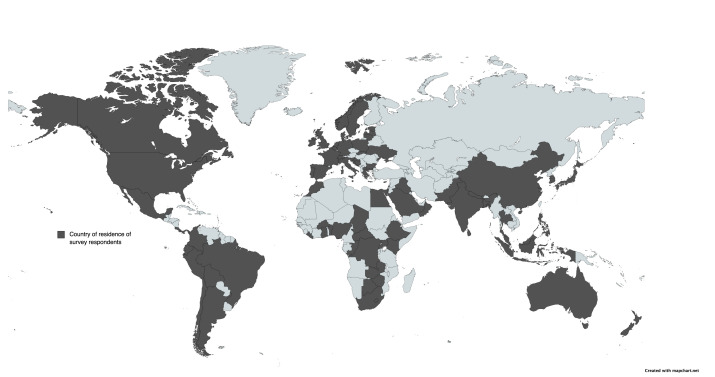
We received 412 responses and 1420 questions, spanning 78 different countries and 18 different specialties/groups. Challenges remain to improve representation of all groups, with the vast majority of answers (30%) being from surgeons and a comparatively small proportion from patient/parent groups (9%). This also includes managing responses in three languages, effective dissemination, and responses that were not worded as research questions.
This is one of the first CHNRI exercises to involve patients and parents, clinicians, and researchers in its first question submission stage, and the first ever to do so on a global scale. We describe our approach to addressing inclusivity challenges and report related demographic data to serve as a benchmark upon which we hope future CHNRI exercises will improve.
研究优先级设定中的包容性对于获取研究领域所有利益相关者的意见至关重要。在全球范围内,经验丰富的医护人员往往拥有深刻见解,这些见解可能对塑造未来研究产生重大影响,而他们缺乏参与正式研究和发表可能意味着他们的声音未得到充分体现。我们旨在修改成熟的儿童健康与营养研究倡议(CHNRI)方法,以解决包容性方面的障碍,这在需要高度多学科护理的医疗保健领域尤为相关。
这项针对口腔颌面裂的全球研究优先级设定活动采用了CHNRI方法,在全球范围内纳入了研究专家、多个学科的临床医生以及非技术利益相关者(即患者及其父母和非政府组织(NGO))。一个多学科国际指导小组提出并讨论了旨在提高包容性的方法学变化,包括调查编辑、研究问题的子组、人口统计学部分、法语和西班牙语翻译、措辞调整以及替代传播技术。
我们收到了412份回复和1420个问题,来自78个不同国家和18个不同专业/群体。在提高所有群体的代表性方面仍存在挑战,绝大多数答案(30%)来自外科医生,而患者/父母群体的比例相对较小(9%)。这还包括处理三种语言的回复、有效传播以及未表述为研究问题的回复。
这是首次在第一个问题提交阶段就让患者及其父母、临床医生和研究人员参与的CHNRI活动之一,也是有史以来首次在全球范围内这样做。我们描述了应对包容性挑战的方法,并报告相关人口统计数据,作为一个基准,希望未来的CHNRI活动能够在此基础上有所改进。