
多机构使用1.5特斯拉磁共振直线加速器治疗心脏装置患者的经验及胸部治疗的工作流程开发。
Multi-institutional experience treating patients with cardiac devices on a 1.5 Tesla magnetic resonance-linear accelerator and workflow development for thoracic treatments.
作者信息
Keesman Rick, van der Bijl Erik, Kerkmeijer Linda G W, Tyagi Neelam, Akdag Osman, Wolthaus Jochem W H, van de Pol Sandrine M G, Noteboom Juus L, Intven Martijn P W, Fast Martin F, van Lier Astrid L H M W
机构信息
Department of Radiation Oncology, Radboud University Medical Center, Nijmegen, The Netherlands.
Department of Medical Physics, Memorial Sloan-Kettering Cancer Center, NY, USA.
出版信息
Phys Imaging Radiat Oncol. 2024 Nov 26;32:100680. doi: 10.1016/j.phro.2024.100680. eCollection 2024 Oct.
BACKGROUND AND PURPOSE
Patients with cardiac implantable electronic devices (CIED patients) are often ineligible for online magnetic resonance-guided radiotherapy (MRgRT), most likely due to the absence of established guidelines. Existing radiotherapy (RT) and magnetic resonance imaging (MRI) guidelines offer an opportunity to construct MRgRT protocols, promoting equitable access. Our objective was to present such a workflow, share multi-institutional experiences treating CIED patients with MRgRT on a 1.5 T magnetic resonance-linear accelerator (MR-linac), and investigate geometric accuracy and electrocardiogram (ECG) monitoring for thoracic treatment.
MATERIALS AND METHODS
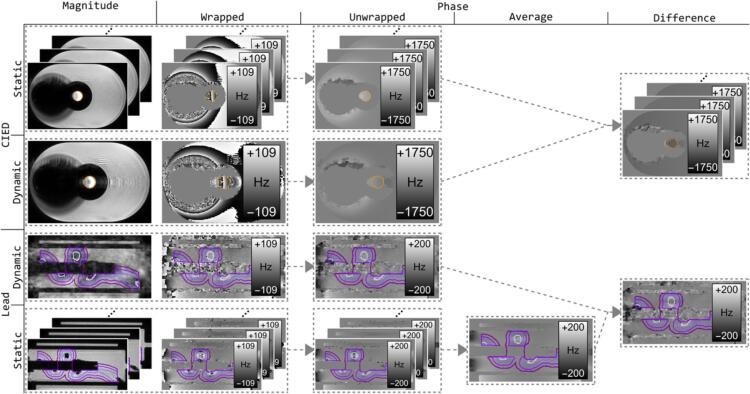
A risk analysis identified strategies for safe MRgRT for CIED patients. At three institutions, 21 pelvic and abdominal patients were treated. Patient records were analyzed for adverse events. Geometric accuracy was investigated using B-mapping with a phantom simulating moving lung and cardiac lesions near a CIED. Volunteer measurements evaluated the effects of patient positioning and MRI sequences on ECG signal distortion.
RESULTS
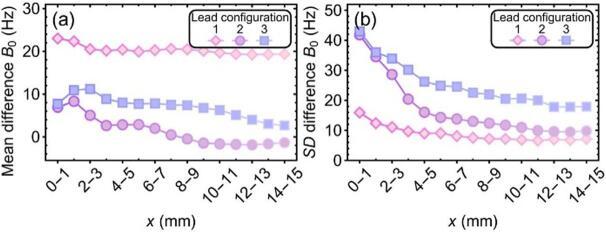
MRI and RT workflows were adaptable to MRgRT. No adverse events were recorded. B-maps showed a maximum mean difference between static and dynamic phantom configurations of 0.1 mm, increasing to 0.4 mm distortion in the presence of a CIED. ECG readings exhibited severe distortions during scanning, hampering heart rhythm detection for most MRI sequences.
CONCLUSIONS
CIED patients can safely undergo treatment on a 1.5 T MR-linac following RT and MRI guidelines. For targets near CIEDs, a B-mapping procedure was considered accurate enough to determine MRgRT eligibility. Pulse oximetry is recommended for cardiac monitoring during MRI scanning due to ECG signal distortion.
背景与目的
心脏植入式电子设备患者(CIED患者)通常不符合在线磁共振引导放疗(MRgRT)的条件,最可能的原因是缺乏既定指南。现有的放疗(RT)和磁共振成像(MRI)指南为构建MRgRT方案提供了机会,有助于促进公平获得治疗。我们的目标是展示这样一种工作流程,分享在1.5T磁共振直线加速器(MR直线加速器)上对CIED患者进行MRgRT治疗的多机构经验,并研究胸部治疗的几何精度和心电图(ECG)监测。
材料与方法
通过风险分析确定了CIED患者安全进行MRgRT的策略。在三个机构中,对21例盆腔和腹部患者进行了治疗。分析患者记录以查找不良事件。使用B映射对模拟CIED附近移动的肺部和心脏病变的体模进行几何精度研究。志愿者测量评估了患者体位和MRI序列对ECG信号失真的影响。
结果
MRI和RT工作流程可适应MRgRT。未记录到不良事件。B映射显示静态和动态体模配置之间的最大平均差异为0.1mm,在存在CIED的情况下失真增加到0.4mm。在扫描期间,ECG读数显示出严重失真,妨碍了大多数MRI序列的心律检测。
结论
遵循RT和MRI指南,CIED患者可以在1.5T MR直线加速器上安全地接受治疗。对于CIED附近的靶区,B映射程序被认为足够准确以确定MRgRT的适用性。由于ECG信号失真,建议在MRI扫描期间使用脉搏血氧饱和度仪进行心脏监测。

 Zotero 插件