Zeng Song, Wang Xin-Lu, Yang Hua
Department of Ultrasound, Shengjing Hospital of China Medical University, Shenyang, 110004, China.
Mil Med Res. 2024 Dec 14;11(1):77. doi: 10.1186/s40779-024-00580-1.
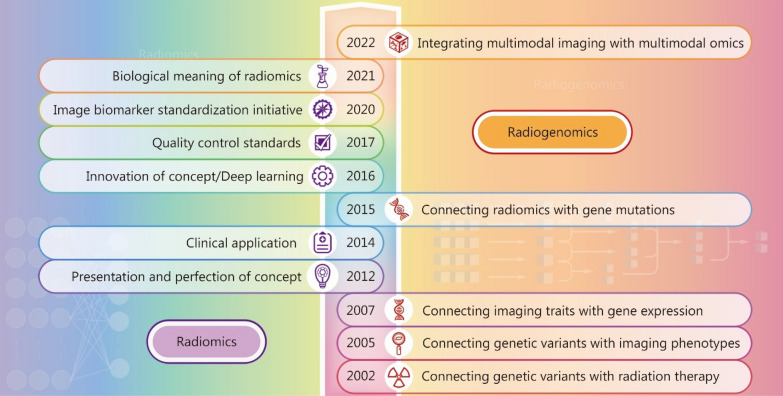
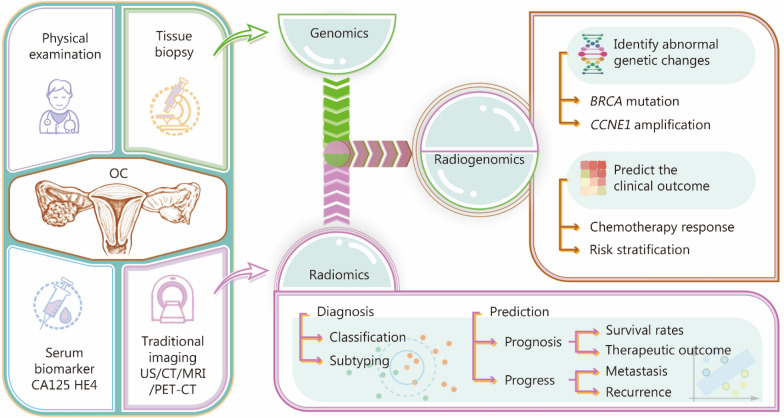
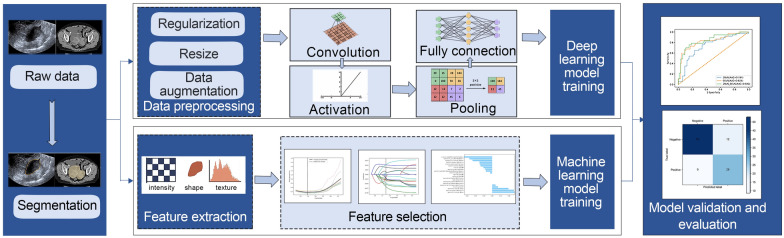
Ovarian cancer (OC) remains one of the most lethal gynecological malignancies globally. Despite the implementation of various medical imaging approaches for OC screening, achieving accurate differential diagnosis of ovarian tumors continues to pose significant challenges due to variability in image performance, resulting in a lack of objectivity that relies heavily on the expertise of medical professionals. This challenge can be addressed through the emergence and advancement of radiomics, which enables high-throughput extraction of valuable information from conventional medical images. Furthermore, radiomics can integrate with genomics, a novel approach termed radiogenomics, which allows for a more comprehensive, precise, and personalized assessment of tumor biological features. In this review, we present an extensive overview of the application of radiomics and radiogenomics in diagnosing and predicting ovarian tumors. The findings indicate that artificial intelligence methods based on imaging can accurately differentiate between benign and malignant ovarian tumors, as well as classify their subtypes. Moreover, these methods are effective in forecasting survival rates, treatment outcomes, metastasis risk, and recurrence for patients with OC. It is anticipated that these advancements will function as decision-support tools for managing OC while contributing to the advancement of precision medicine.
卵巢癌(OC)仍然是全球最致命的妇科恶性肿瘤之一。尽管实施了各种用于OC筛查的医学成像方法,但由于图像表现的可变性,实现卵巢肿瘤的准确鉴别诊断仍然面临重大挑战,导致缺乏客观性,这在很大程度上依赖于医学专业人员的专业知识。放射组学的出现和发展可以应对这一挑战,它能够从传统医学图像中高通量提取有价值的信息。此外,放射组学可以与基因组学整合,这是一种称为放射基因组学的新方法,它可以对肿瘤生物学特征进行更全面、精确和个性化的评估。在这篇综述中,我们对放射组学和放射基因组学在诊断和预测卵巢肿瘤中的应用进行了广泛概述。研究结果表明,基于成像的人工智能方法可以准确区分良性和恶性卵巢肿瘤,并对其亚型进行分类。此外,这些方法在预测OC患者的生存率、治疗结果、转移风险和复发方面是有效的。预计这些进展将作为管理OC的决策支持工具,同时推动精准医学的发展。