van der Schans Jort J, Katsarou Afroditi, Kladis George, Bar Citlali, Ramirez Max Medina, Themeli Maria, Mutis Tuna
Department of Hematology, Amsterdam UMC, Location VU University Medical Center, Cancer Center Amsterdam, Room CCA3.38, De Boelelaan 1117, Amsterdam 1081 HV, the Netherlands.
Department of Hematology, Amsterdam UMC, Location VU University Medical Center, Cancer Center Amsterdam, Room CCA3.38, De Boelelaan 1117, Amsterdam 1081 HV, the Netherlands.
J Genet Eng Biotechnol. 2024 Dec;22(4):100446. doi: 10.1016/j.jgeb.2024.100446. Epub 2024 Nov 28.
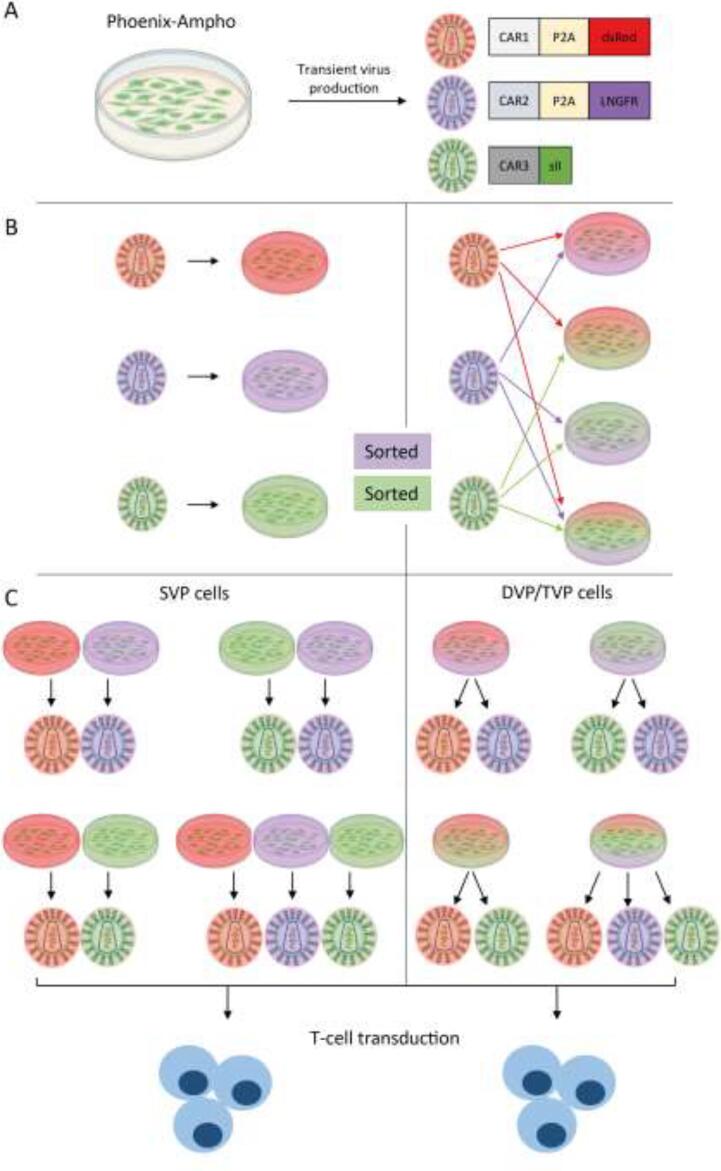
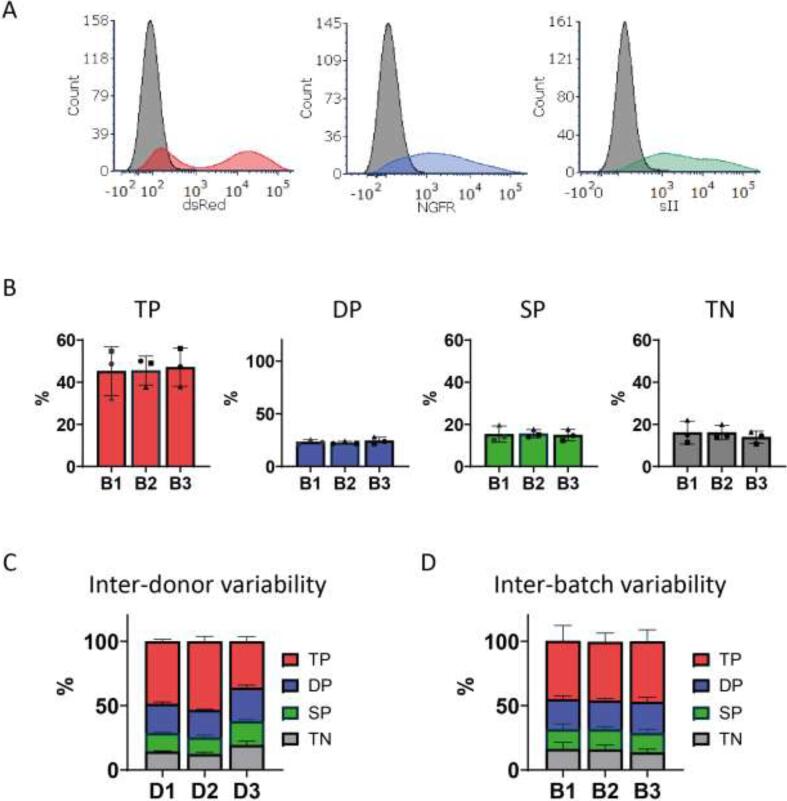
The past decades have illustrated the power of T-cell engineering in the development of new and successful cell therapies, such as chimeric antigen receptor (CAR) T-cells. Despite clinical success in hematological malignancies, it also becomes increasingly clear that additional T-cell engineering will be required to improve efficacy and safety and expand the application to solid tumors. Engineering is most often achieved by viral delivery of transgenes, however, viral vector capacity limitations make efficient and reproducible generation of multi transgene expressing T-cell therapeutics technically challenging. We here describe a convenient and efficient method for the delivery of up to three γ-retroviral CAR vectors in T-cells. We achieved this using virus vector mixtures that are simultaneously produced at high titers by double- or triple- transduced stable virus producer cells. We show that this method is superior in overall efficiency and reproducibility to conventional double or triple CAR transductions, in which separate viral batches are used. Due to its robustness, this method can facilitate the research and the development for advanced T-cell engineering towards more effective and safe therapies.
在过去几十年里,T细胞工程在新型成功细胞疗法(如嵌合抗原受体(CAR)T细胞)的开发中展现出强大力量。尽管在血液系统恶性肿瘤的临床治疗中取得了成功,但越来越明显的是,需要进一步进行T细胞工程改造,以提高疗效和安全性,并将应用范围扩大到实体瘤。工程改造通常通过病毒载体递送转基因来实现,然而,病毒载体容量的限制使得高效且可重复地生成表达多个转基因的T细胞疗法在技术上具有挑战性。我们在此描述了一种在T细胞中递送多达三种γ-逆转录病毒CAR载体的便捷高效方法。我们通过双转导或三转导的稳定病毒生产细胞同时高效产生病毒载体混合物来实现这一目标。我们表明,该方法在整体效率和可重复性方面优于使用单独病毒批次的传统双CAR或三CAR转导方法。由于其稳健性,该方法可为更有效、更安全的先进T细胞工程研发提供便利。