Jobe Tyler, Stephan Jonah, Wells Collin K, De Silva Maleesha, Lorkiewicz Pawel K, Hill Bradford G, Wysoczynski Marcin
Center for Cardiometabolic Science, Christina Lee Brown Envirome Institute, University of Louisville, Louisville, Kentucky; Department of Physiology, School of Medicine, University of Louisville, Louisville, Kentucky.
Center for Cardiometabolic Science, Christina Lee Brown Envirome Institute, University of Louisville, Louisville, Kentucky; Department of Biochemistry, School of Medicine, University of Louisville, Louisville, Kentucky.
J Biol Chem. 2025 Jan;301(1):108091. doi: 10.1016/j.jbc.2024.108091. Epub 2024 Dec 13.
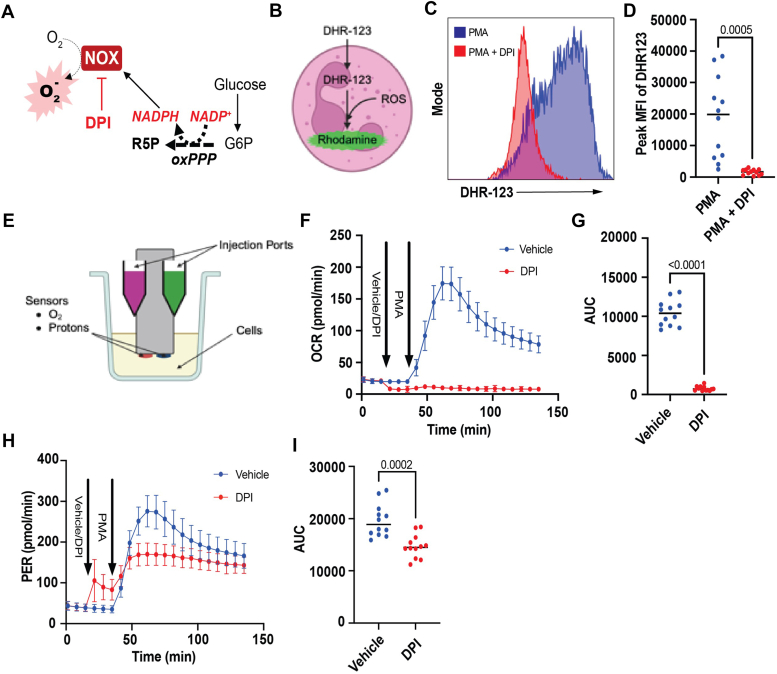
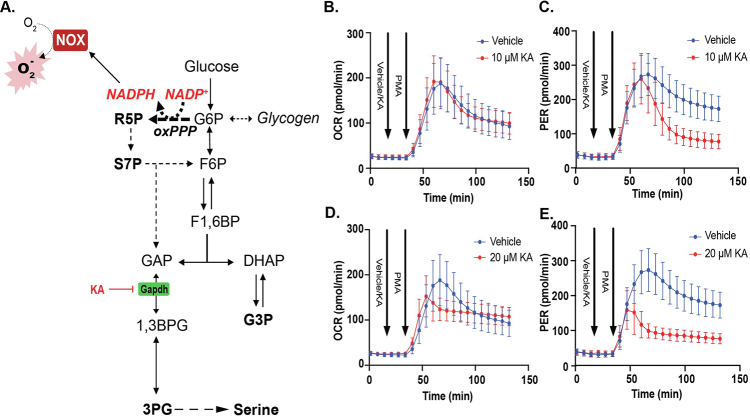
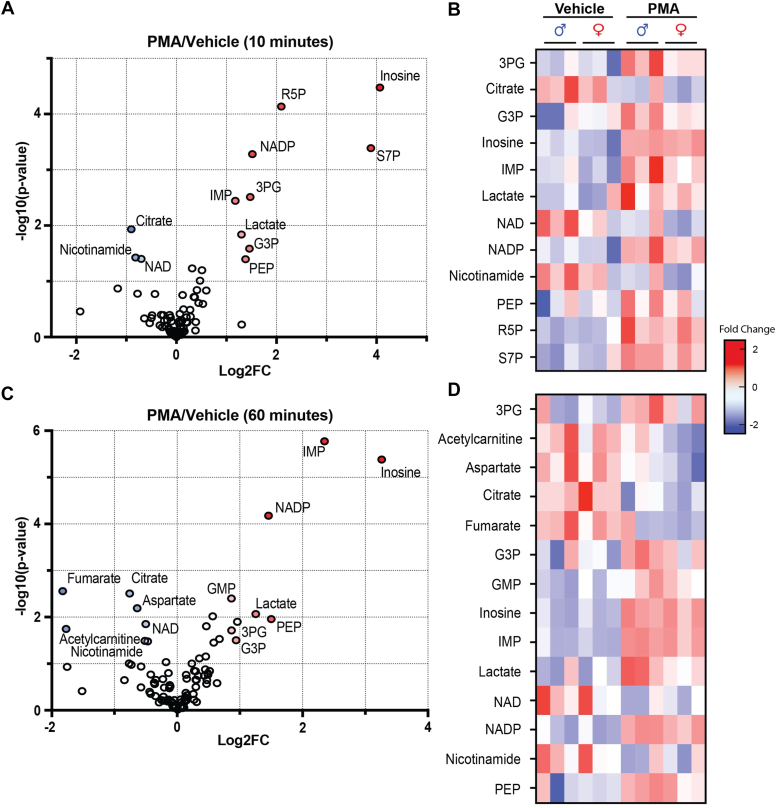
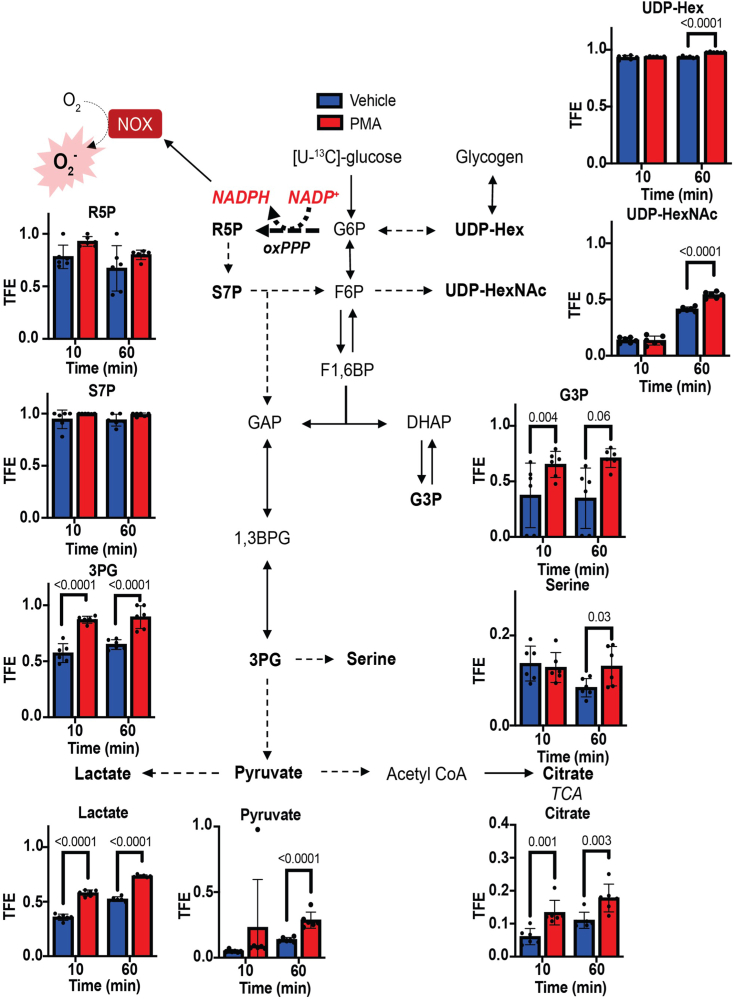
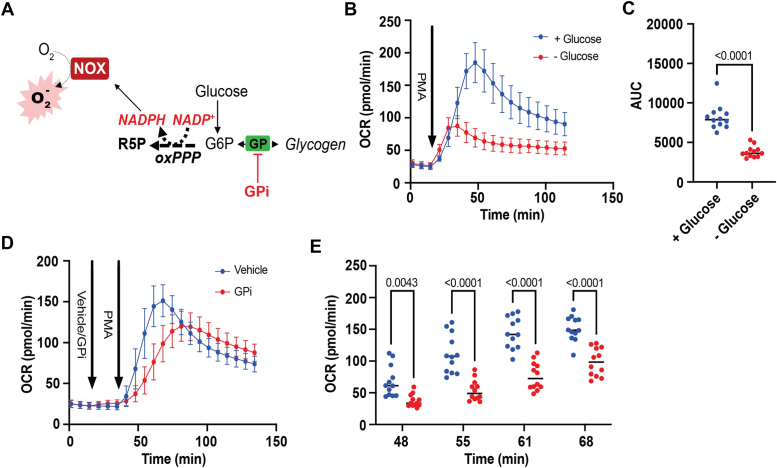
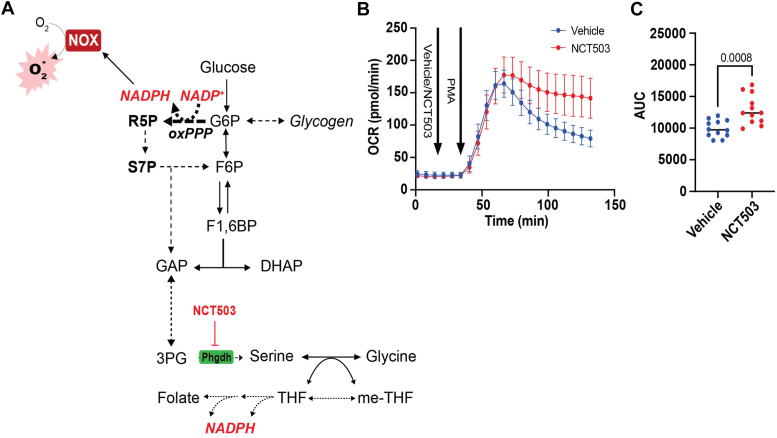
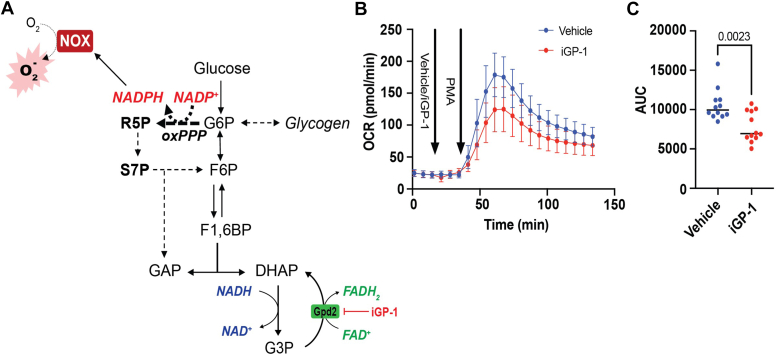
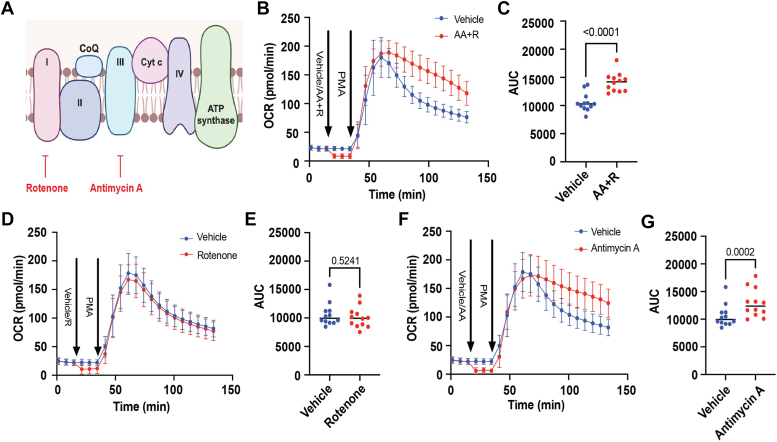
Neutrophils are a part of the innate immune system and produce reactive oxygen species (ROS) to extinguish pathogens. The major source of ROS in neutrophils is NADPH oxidase, which is fueled by NADPH generated via the pentose phosphate pathway; however, it is unclear how other accessory glucose metabolism pathways and mitochondrial activity influence the respiratory burst. We examined the temporal dynamics of the respiratory burst and delineated how metabolism changes over time after neutrophil activation. Bone marrow-derived neutrophils were stimulated with phorbol 12-myristate 13-acetate, and the respiratory burst was measured via extracellular flux analysis. Metabolomics experiments utilizing C-glucose highlighted the activation of glycolysis as well as ancillary pathways of glucose metabolism in activated neutrophils. Phorbol 12-myristate 13-acetate stimulation acutely increased C enrichment into glycerol 3-phosphate (G3P) and citrate, whereas increases in C enrichment in the glycogen intermediate, UDP-hexose, and end products of the hexosamine and serine biosynthetic pathways occurred only during the late phase of the oxidative burst. Targeted inhibition of the G3P shuttle, glycogenolysis, serine biosynthesis, and mitochondrial respiration demonstrated that the G3P shuttle contributes to the general magnitude of ROS production; that glycogen contributes solely to the early respiratory burst; and that the serine biosynthetic pathway activity and complex III-driven mitochondrial activity influence respiratory burst duration. Collectively, these results show that the neutrophil oxidative burst is highly dynamic, with coordinated changes in metabolism that control the initiation, magnitude, and duration of ROS production.
中性粒细胞是先天性免疫系统的一部分,可产生活性氧(ROS)以消灭病原体。中性粒细胞中ROS的主要来源是NADPH氧化酶,其由磷酸戊糖途径产生的NADPH提供能量;然而,尚不清楚其他辅助性葡萄糖代谢途径和线粒体活性如何影响呼吸爆发。我们研究了呼吸爆发的时间动态,并描绘了中性粒细胞激活后代谢如何随时间变化。用佛波醇12-肉豆蔻酸酯13-乙酸酯刺激骨髓来源的中性粒细胞,并通过细胞外通量分析测量呼吸爆发。利用¹³C-葡萄糖的代谢组学实验突出了活化中性粒细胞中糖酵解以及葡萄糖代谢辅助途径的激活。佛波醇12-肉豆蔻酸酯13-乙酸酯刺激使³¹³C急剧富集到3-磷酸甘油(G3P)和柠檬酸中,而糖原中间体、UDP-己糖以及己糖胺和丝氨酸生物合成途径终产物中¹³C富集的增加仅发生在氧化爆发的后期。对G3P穿梭、糖原分解、丝氨酸生物合成和线粒体呼吸的靶向抑制表明,G3P穿梭有助于ROS产生的总体幅度;糖原仅有助于早期呼吸爆发;丝氨酸生物合成途径活性和复合物III驱动的线粒体活性影响呼吸爆发的持续时间。总的来说,这些结果表明中性粒细胞氧化爆发是高度动态的,代谢发生协调变化以控制ROS产生的起始、幅度和持续时间。