Tran Thanh Nguyen Ai, Nguyen Tung Ba, Nguyen Vu Hoang Anh, Vu-Tri Thanh
Department of Internal Medicine, Thu Duc City Hospital, Ho Chi Minh City, Vietnam.
Board of Directors, Thu Duc City Hospital, Ho Chi Minh City, Vietnam.
J Thorac Dis. 2024 Nov 30;16(11):7499-7510. doi: 10.21037/jtd-24-955. Epub 2024 Nov 29.
Transthoracic biopsy has proven to be an effective procedure, especially for peripheral lung lesions, in obtaining samples that can definitively diagnose the underlying pathology. Despite its effectiveness, studies have demonstrated that it is associated with complications such as pneumothorax and hemoptysis. This study aims to evaluate the incidence of these complications and identify prognostic factors in patients who underwent a transthoracic biopsy.
This retrospective cohort analysis included adults from Thu Duc City Hospital, a sub-urban hospital who underwent transthoracic biopsy from 2017 to 2022. Complications that were evaluated included pneumothorax and hemoptysis. Separate logistic regression models estimated the association of pneumothorax or hemoptysis and selected baseline patient demographic and clinical characteristics.
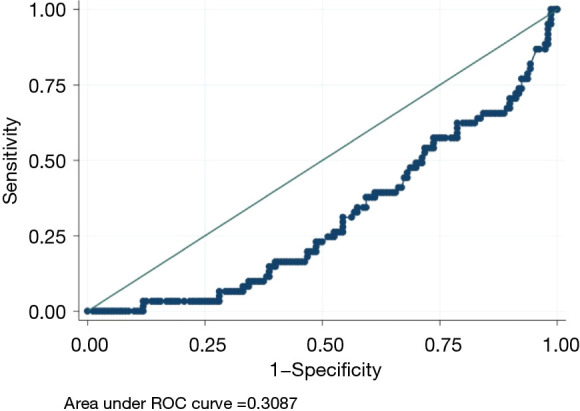
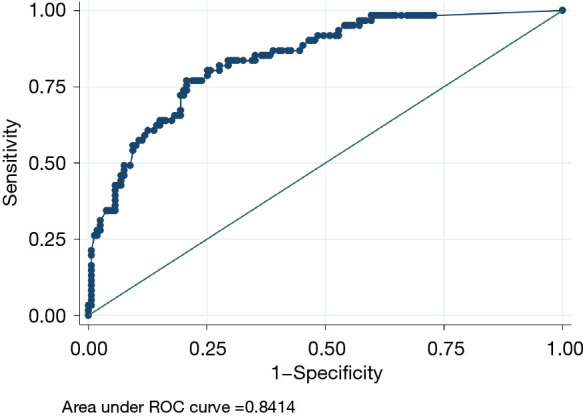
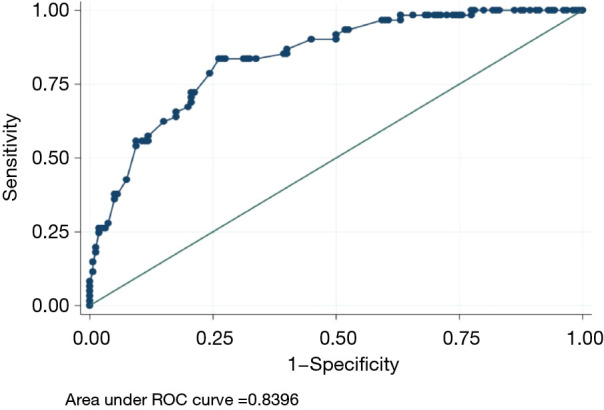
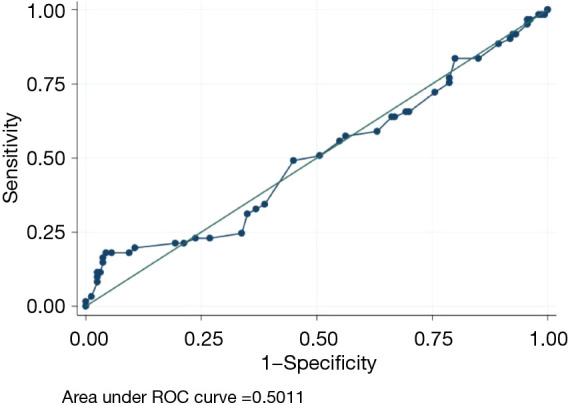
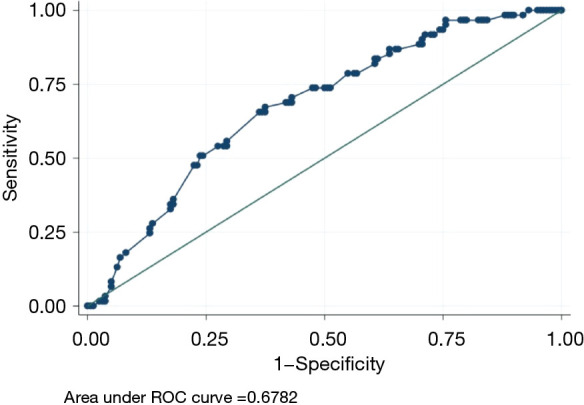
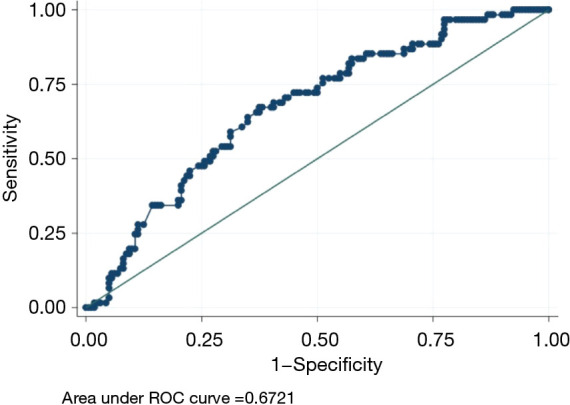
Among 221 patients who underwent transthoracic biopsy, 27.6% experienced pneumothorax complications, 19.9% had hemoptysis, and 5.4% had both. No air embolism was recorded. Most of the complications were mild and limited with medical management. Among patients who experienced pneumothorax, 6.6% (4/61) required chest tube drainage. Biopsy in tumors with a distance from chest wall to tumor edge of more than 20 mm and skin to tumor edge of more than 40 mm was associated with a higher risk of pneumothorax complication. Using the area under the receiver operating characteristic (AUROC) curve, a threshold of 23 mm for chest wall to tumor edge and 39.4 mm for skin to tumor edge could help predict pneumothorax with significant sensitivities and specificities.
This retrospective study demonstrated that approximately half of patients undergoing thoracic biopsy experienced complications. It was suggested that pneumothorax could be predicted by measuring the distance from the tumor edge to the chest wall and the skin to have better preoperation preparation and potentially mitigate the issue.
经胸活检已被证明是一种有效的方法,特别是对于周围型肺部病变,能够获取可明确诊断潜在病理状况的样本。尽管其有效性,但研究表明它与气胸和咯血等并发症相关。本研究旨在评估这些并发症的发生率,并确定接受经胸活检患者的预后因素。
这项回顾性队列分析纳入了来自胡志明市Thu Duc市医院(一家郊区医院)2017年至2022年期间接受经胸活检的成年人。评估的并发症包括气胸和咯血。分别采用逻辑回归模型估计气胸或咯血与选定的患者基线人口统计学和临床特征之间的关联。
在221例接受经胸活检的患者中,27.6%出现气胸并发症,19.9%有咯血,5.4%两者都有。未记录到空气栓塞。大多数并发症较轻,通过药物治疗即可控制。在出现气胸的患者中,6.6%(4/61)需要胸腔闭式引流。胸壁至肿瘤边缘距离超过20 mm且皮肤至肿瘤边缘距离超过40 mm的肿瘤活检与气胸并发症风险较高相关。使用受试者操作特征(AUROC)曲线下面积,胸壁至肿瘤边缘阈值为23 mm以及皮肤至肿瘤边缘阈值为39.4 mm有助于以显著的敏感性和特异性预测气胸。
这项回顾性研究表明,大约一半接受胸部活检的患者会出现并发症。建议通过测量肿瘤边缘到胸壁和皮肤的距离来预测气胸,以便更好地进行术前准备并可能减轻该问题。