Mbous Yves Paul Vincent, Siddiqui Zasim Azhar, Bharmal Murtuza, LeMasters Traci, Kolodney Joanna, Kelley George A, Kamal Khalid M, Sambamoorthi Usha
School of Pharmacy, Department of Pharmaceutical Systems and Policy, West Virginia University, Morgantown, WV, USA.
AstraZeneca Oncology Outcomes Research, AstraZeneca, Boston, Massachusetts, USA.
Clinicoecon Outcomes Res. 2024 Dec 11;16:847-868. doi: 10.2147/CEOR.S456968. eCollection 2024.
To evaluate chronic conditions as leading predictors of economic burden over time among older adults with incident primary Merkel Cell Carcinoma (MCC) using machine learning methods.
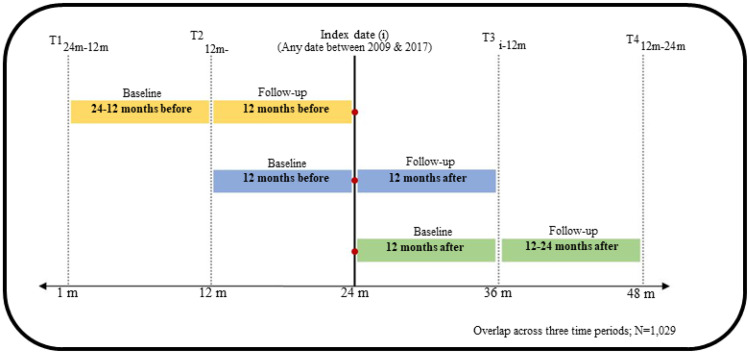
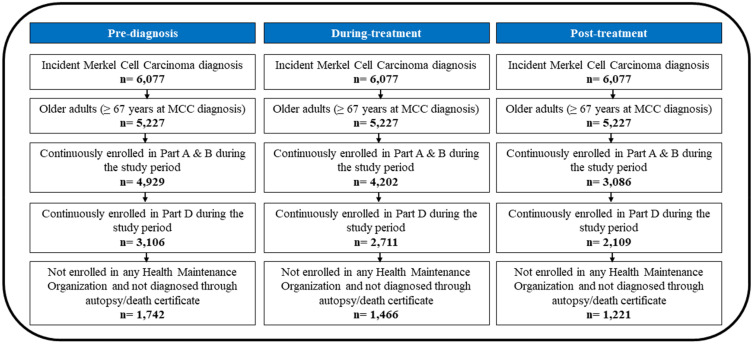
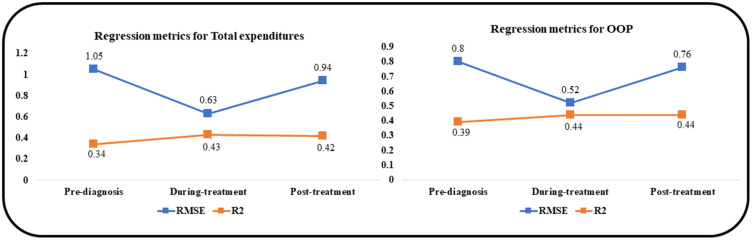
We used a retrospective cohort of older adults (age ≥ 67 years) diagnosed with MCC between 2009 and 2019. For these elderly MCC patients, we derived three phases (pre-diagnosis, during-treatment, and post-treatment) anchored around cancer diagnosis date. All three phases had 12 months baseline and 12-months follow-up periods. Chronic conditions were identified in baseline and follow-up periods, whereas annual total and out-of-pocket (OOP) healthcare expenditures were measured during the 12-month follow-up. XGBoost regression models and SHapley Additive exPlanations (SHAP) methods were used to identify leading predictors and their associations with economic burden.
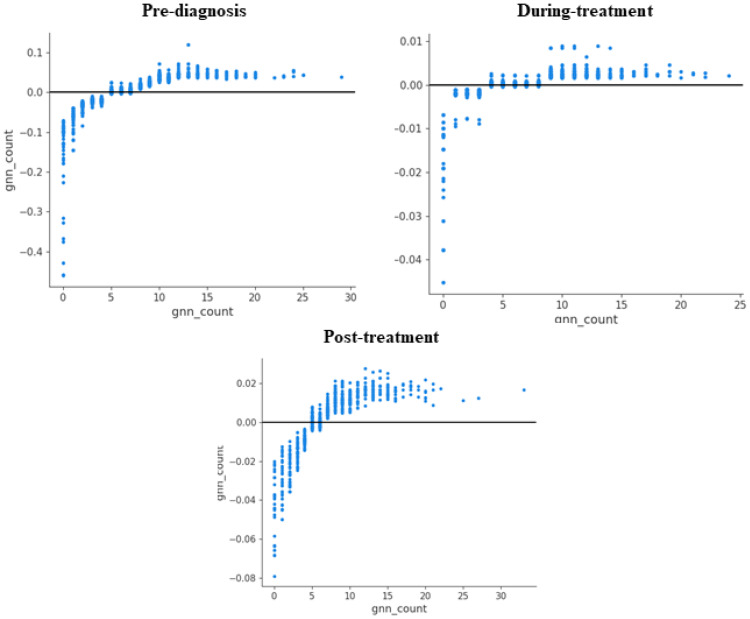
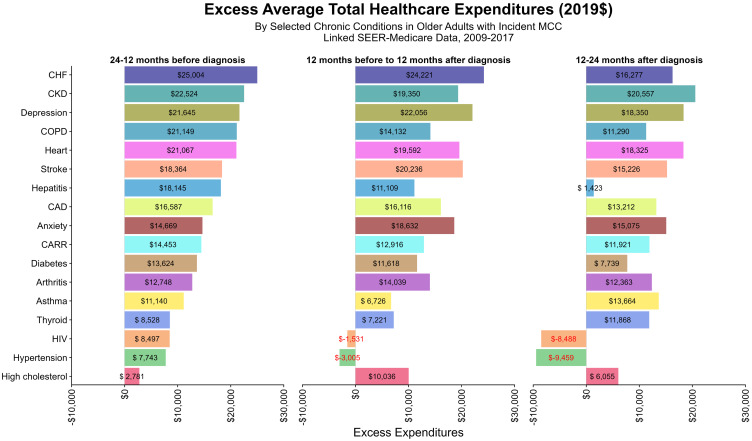
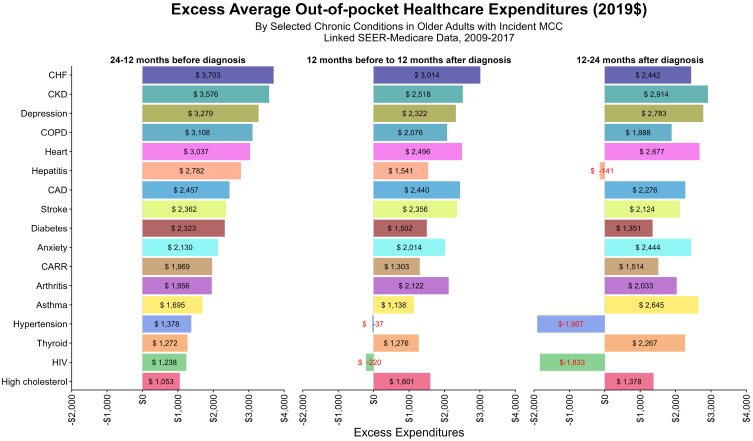
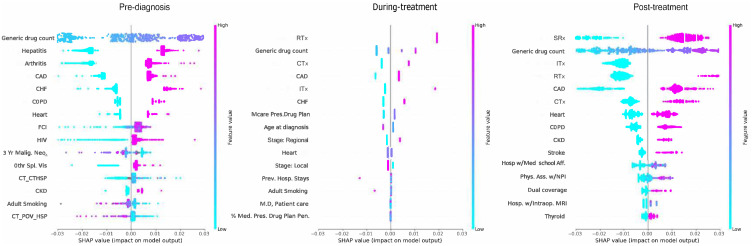
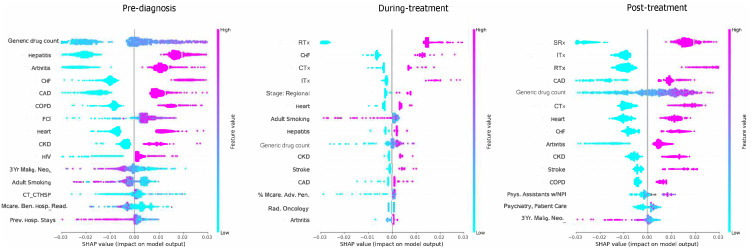
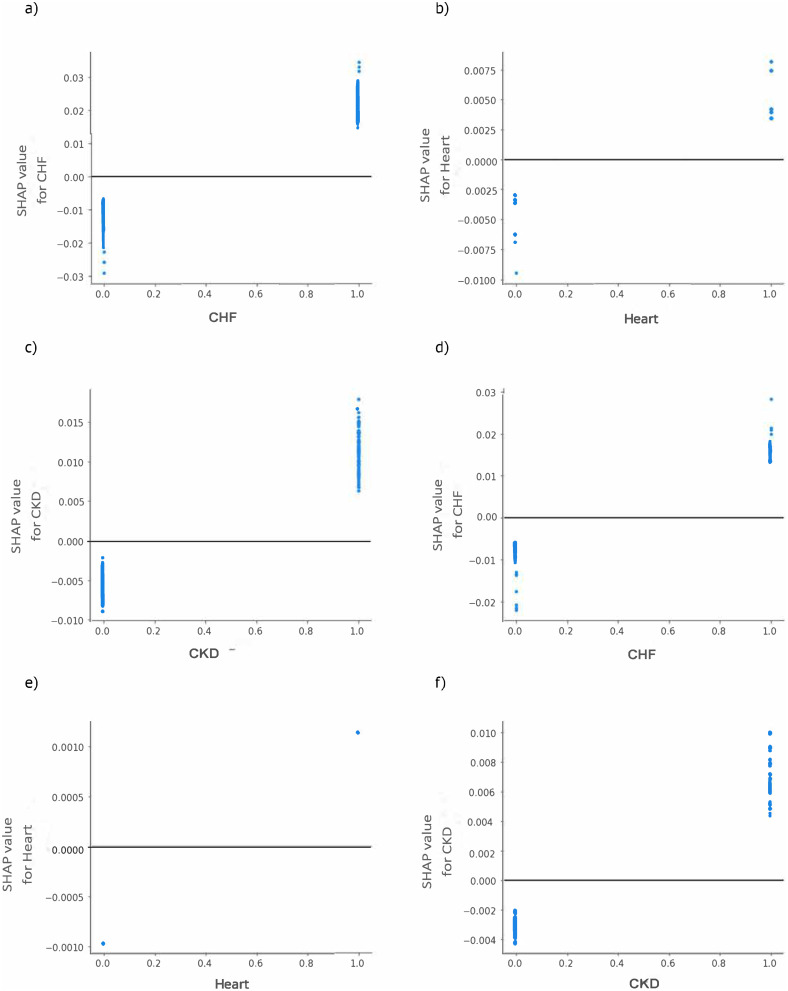
Congestive heart failure (CHF), chronic kidney disease (CKD) and depression had the highest average incremental total expenditures during pre-diagnosis, treatment, and post-treatment phases, respectively ($25,004, $24,221, and $16,277 (CHF); $22,524, $19,350, $20,556 (CKD); and $21,645, $22,055, $18,350 (depression)), whereas the average incremental OOP expenditures during the same periods were $3703, $3,013, $2,442 (CHF); $2,457, $2,518, $2,914 (CKD); and $3,278, $2,322, $2,783 (depression). Except for hypertension and HIV, all chronic conditions had higher expenditures compared to those without the chronic conditions. Predictive models across each of phases of care indicated that CHF, CKD, and heart diseases were among the top 10 leading predictors; however, their feature importance ranking declined over time. Although depression was one of the leading drivers of expenditures in unadjusted descriptive models, it was not among the top 10 predictors.
Among older adults with MCC, cardiac and renal conditions were the leading drivers of total expenditures and OOP expenditures. Our findings suggest that managing cardiac and renal conditions may be important for cost containment efforts.
使用机器学习方法评估慢性疾病作为初发性原发性默克尔细胞癌(MCC)老年患者长期经济负担的主要预测因素。
我们采用了一个回顾性队列,研究对象为2009年至2019年期间被诊断为MCC的老年人(年龄≥67岁)。对于这些老年MCC患者,我们围绕癌症诊断日期划分了三个阶段(诊断前、治疗期间和治疗后)。所有三个阶段都有12个月的基线期和12个月的随访期。在基线期和随访期确定慢性疾病,而在12个月的随访期间测量年度总医疗保健支出和自付费用(OOP)。使用XGBoost回归模型和SHapley加性解释(SHAP)方法来确定主要预测因素及其与经济负担的关联。
充血性心力衰竭(CHF)、慢性肾脏病(CKD)和抑郁症分别在诊断前、治疗期间和治疗后阶段的平均增量总支出最高(CHF分别为25,004美元、24,221美元和16,277美元;CKD分别为22,524美元、19,350美元、20,556美元;抑郁症分别为21,645美元、22,055美元、18,350美元),而同期的平均增量OOP支出分别为3703美元、3,013美元、2,442美元(CHF);2,457美元、2,518美元、2,914美元(CKD);3,278美元、2,322美元、2,783美元(抑郁症)。除高血压和艾滋病毒外,所有慢性疾病患者的支出均高于无慢性疾病的患者。各护理阶段的预测模型表明,CHF、CKD和心脏病是前10大主要预测因素之一;然而,它们的特征重要性排名随时间下降。虽然抑郁症在未经调整的描述性模型中是支出的主要驱动因素之一,但它不在前10大预测因素之列。
在患有MCC的老年人中,心脏和肾脏疾病是总支出和OOP支出的主要驱动因素。我们的研究结果表明,控制心脏和肾脏疾病可能对成本控制工作很重要。