Wang Donghui, Chen Jiasong, Wu Shili, Cai Kailai, An Junhui, Zhang Mingyue, Kong Xiangwei, Cai Zhigang, Li Yuan, Li Hongyan, Long Cuiyu, Chen Yijiao, Hou Rong, Liu Yuliang, Lan Jingchao
Chengdu Research Base of Giant Panda Breeding, Chengdu 610081, China.
Sichuan Key Laboratory of Conservation Biology for Endangered Wildlife, Chengdu 610081, China.
Animals (Basel). 2024 Dec 3;14(23):3486. doi: 10.3390/ani14233486.
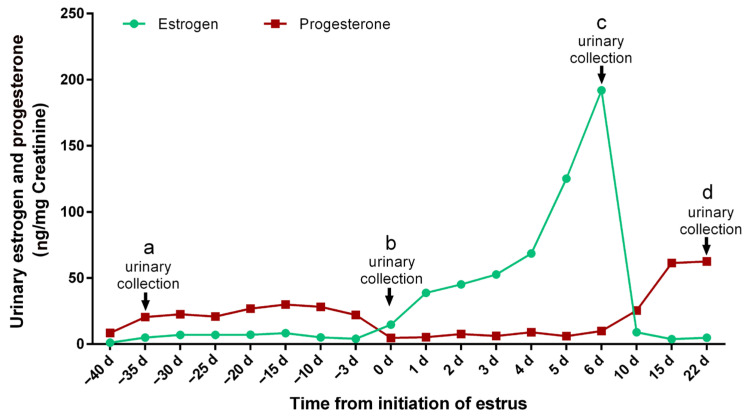
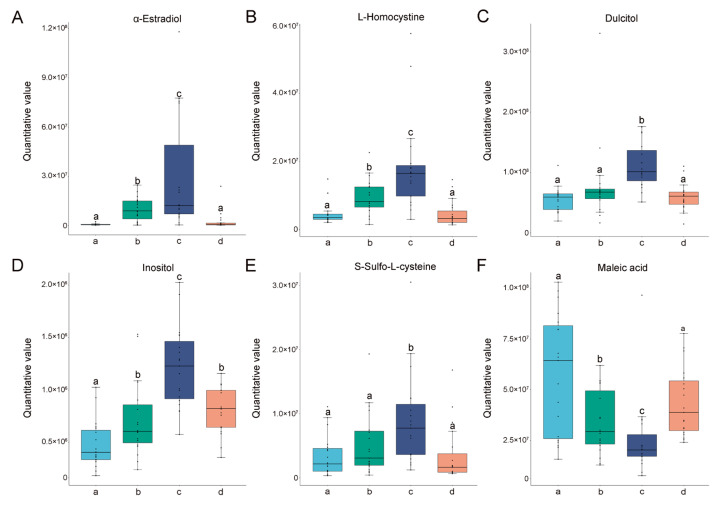
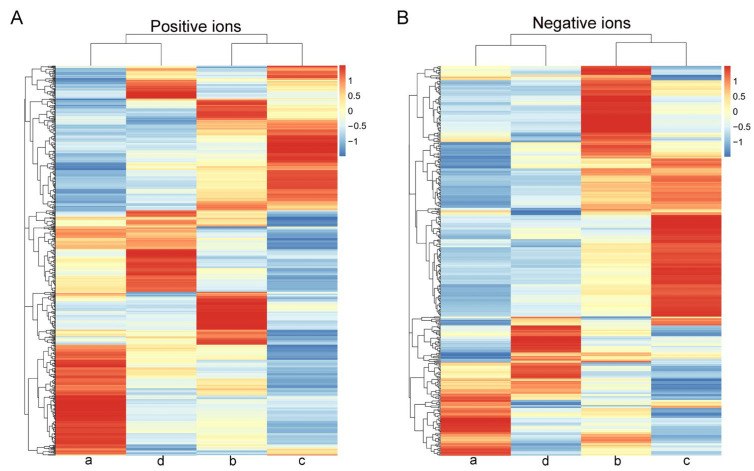
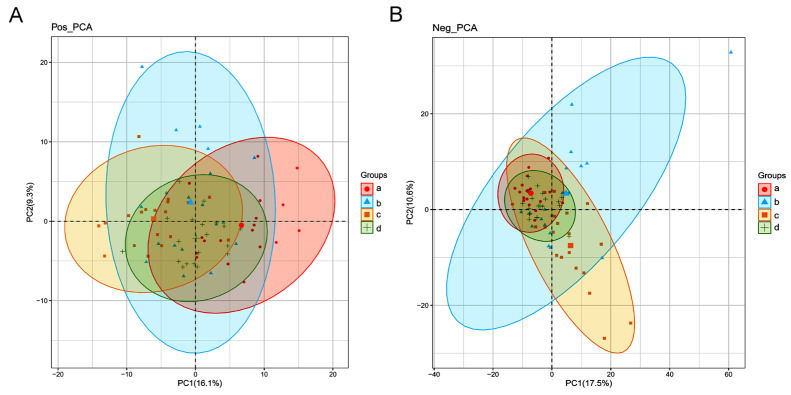
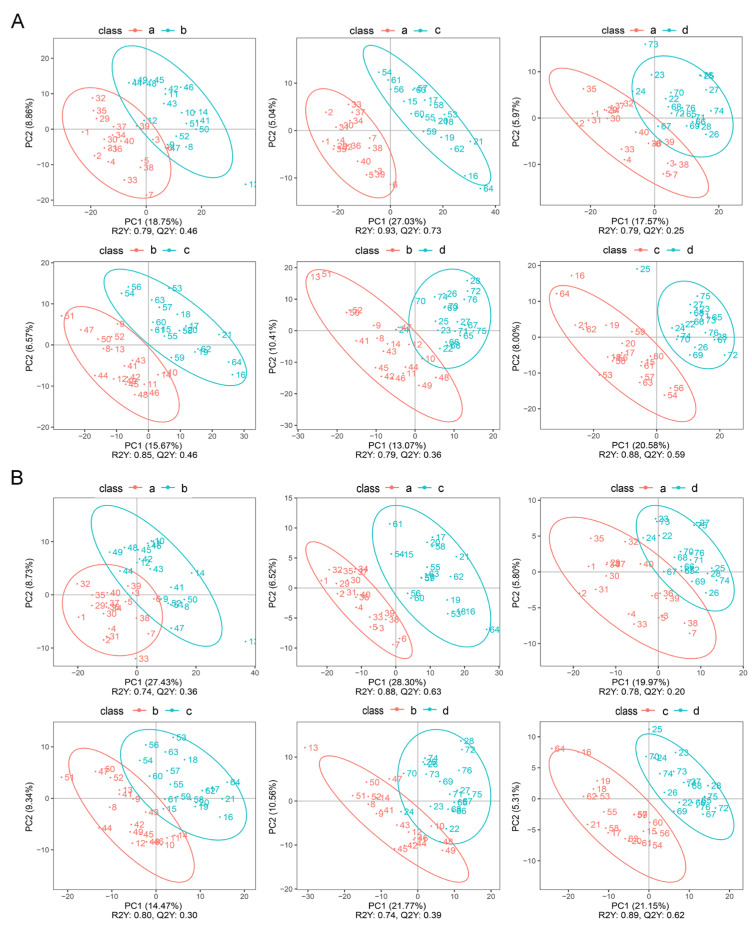
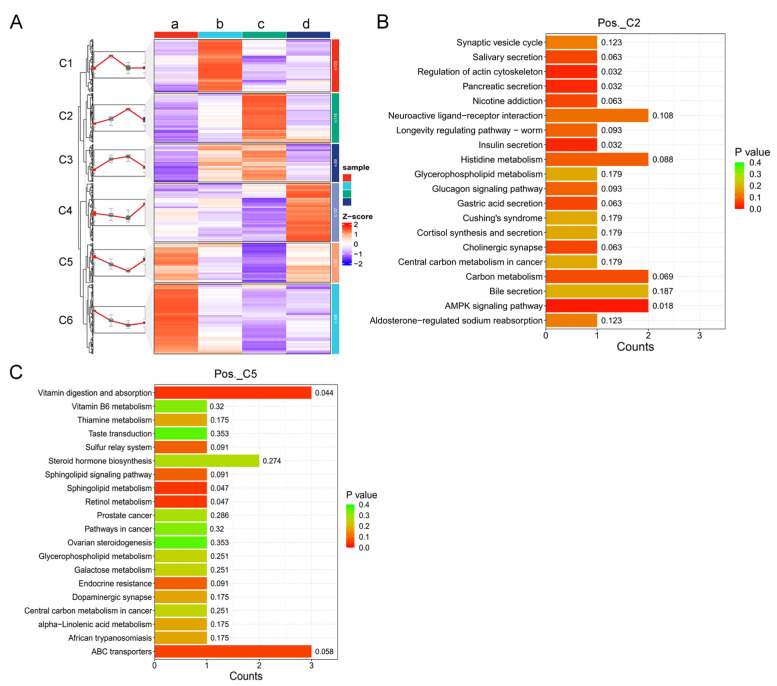
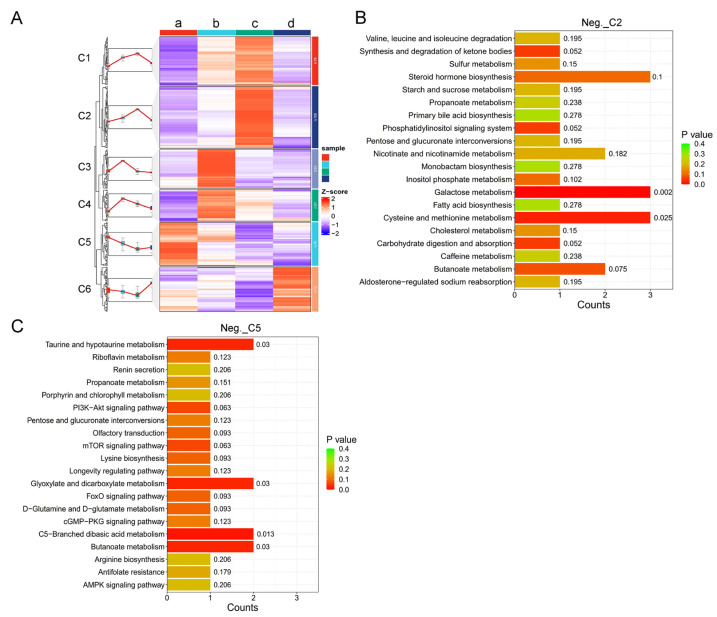
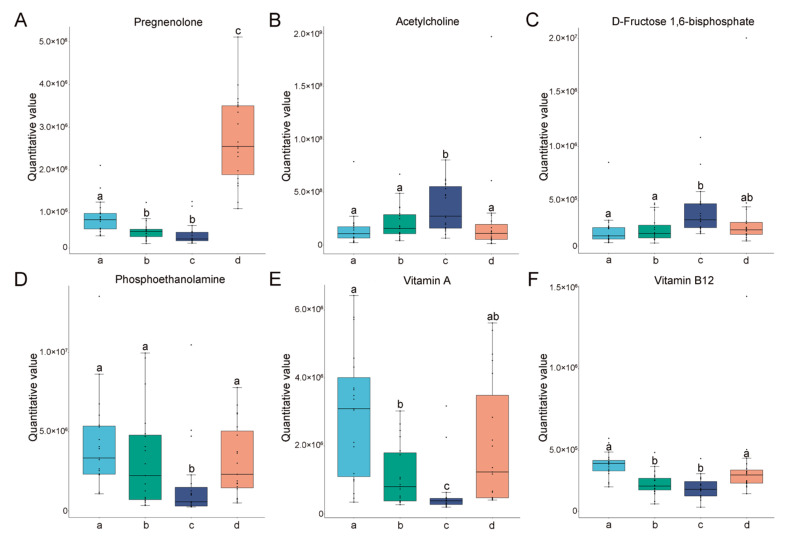
The composition of urinary metabolites can reflect the physiological state of animals. Investigating the alterations in urine metabolomics during the estrus stage can provide valuable insights for enhancing the efficacy of estrus monitoring. This study aimed to perform an analysis of urinary metabolomics in female giant pandas, specifically examining the variations in specific metabolites across different estrous stages, namely, diestrus, proestrus, estrus, and metestrus. A total of 1234 metabolites were identified in positive ion mode from 76 samples of 19 individuals, with 643 metabolites identified in negative ion mode. The content of urine metabolites exhibited significant variation throughout different stages of estrus. During the peak of estrus, the metabolic pathways primarily enriched by significantly differential metabolites were the AMPK signaling pathway, vitamin digestion and absorption, galactose metabolism, and cysteine and methionine metabolism, as well as taurine and hypotaurine metabolism. By comparing the content of specific metabolites in distinct pathways across the four distinct estrous stages, higher levels of acetylcholine, D-fructose1,6-bisphosphate, L-homocystine, dulcitol, inositol, and S-sulfo-L-cysteine and lower levels of phosphoethanolamine, vitamin A, vitamin B12, and maleic acid were detected at estrus. This study offers a novel comparative analysis of urine metabolomics across different estrus stages in female giant pandas, identifying several potential perspectives for estrus monitoring and contributing to the breeding management of captive giant panda populations.
尿液代谢物的组成可以反映动物的生理状态。研究发情期尿液代谢组学的变化可为提高发情监测的效果提供有价值的见解。本研究旨在对雌性大熊猫进行尿液代谢组学分析,具体研究不同发情阶段(即间情期、发情前期、发情期和发情后期)特定代谢物的变化。在19只个体的76个样本中,正离子模式下共鉴定出1234种代谢物,负离子模式下鉴定出643种代谢物。尿液代谢物的含量在发情的不同阶段表现出显著变化。在发情高峰期,显著差异代谢物主要富集的代谢途径为AMPK信号通路、维生素消化与吸收、半乳糖代谢、半胱氨酸和甲硫氨酸代谢以及牛磺酸和低牛磺酸代谢。通过比较四个不同发情阶段不同途径中特定代谢物的含量,发现在发情期检测到较高水平的乙酰胆碱、D-果糖1,6-二磷酸、L-高胱氨酸、卫矛醇、肌醇和S-磺基-L-半胱氨酸,以及较低水平的磷酸乙醇胺、维生素A、维生素B12和马来酸。本研究对雌性大熊猫不同发情阶段的尿液代谢组学进行了新的比较分析,确定了发情监测的几个潜在视角,并为圈养大熊猫种群的繁殖管理做出了贡献。