Alharthi Fahad, Althagafi Hussam A, Jafri Ibrahim, Oyouni Atif Abdulwahab A, Althaqafi Mohammed M, Al-Hazmi Nawal E, Al Hijab Layla Yousif Abdullah, Naguib Deyala M
Department of Biology, College of Science, Taif University, P.O. Box 11099, Taif 21944, Saudi Arabia.
Department of Biology, Faculty of Science, Al-Baha University, Al-Baha 65525, Saudi Arabia.
Polymers (Basel). 2024 Nov 23;16(23):3260. doi: 10.3390/polym16233260.
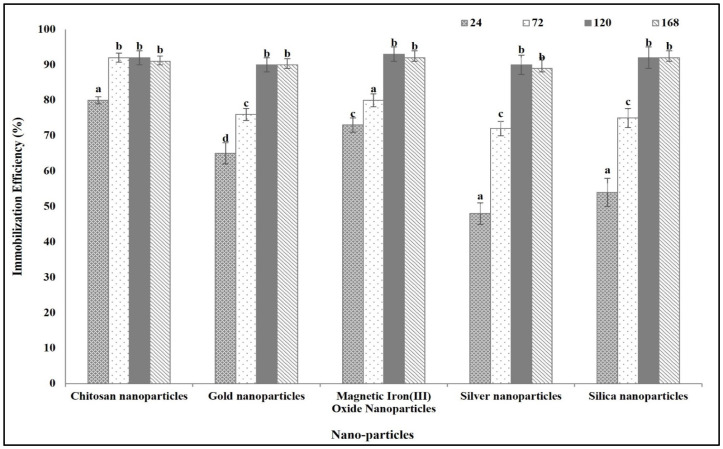
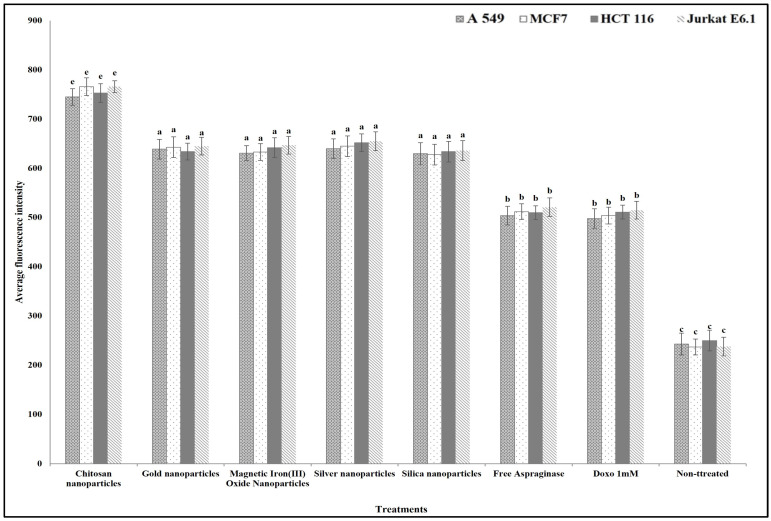
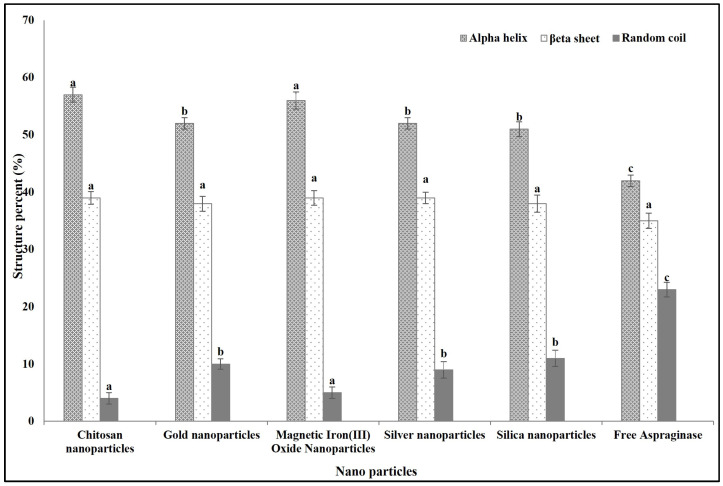
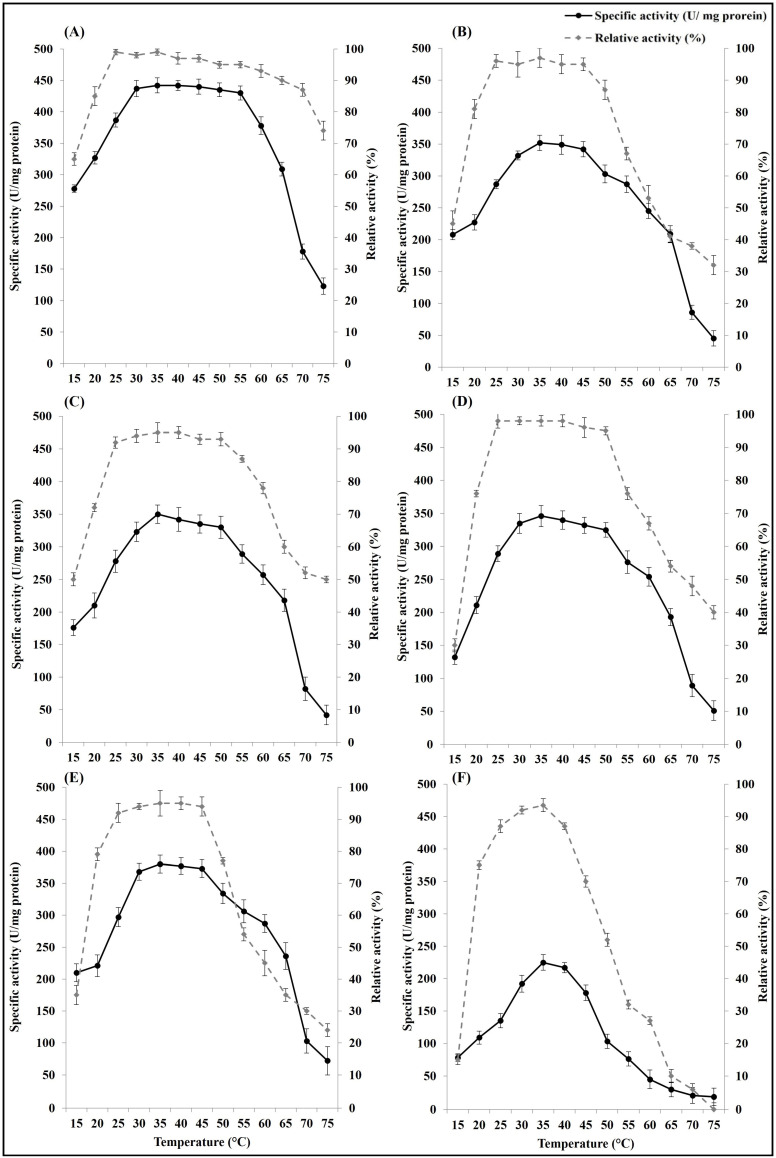
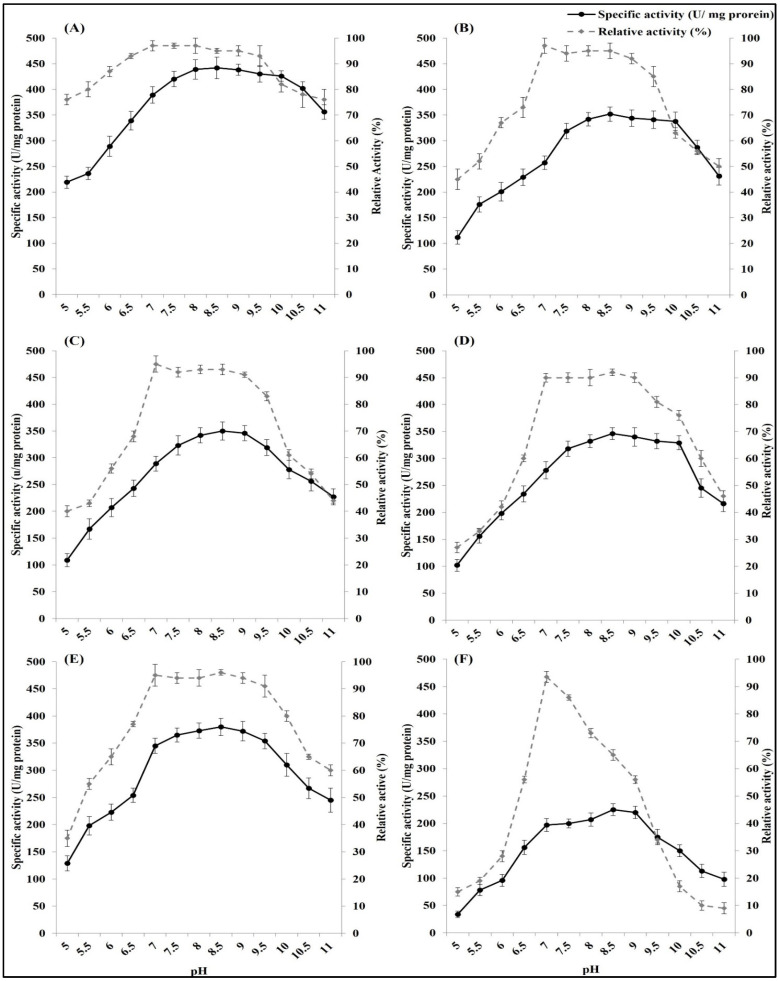
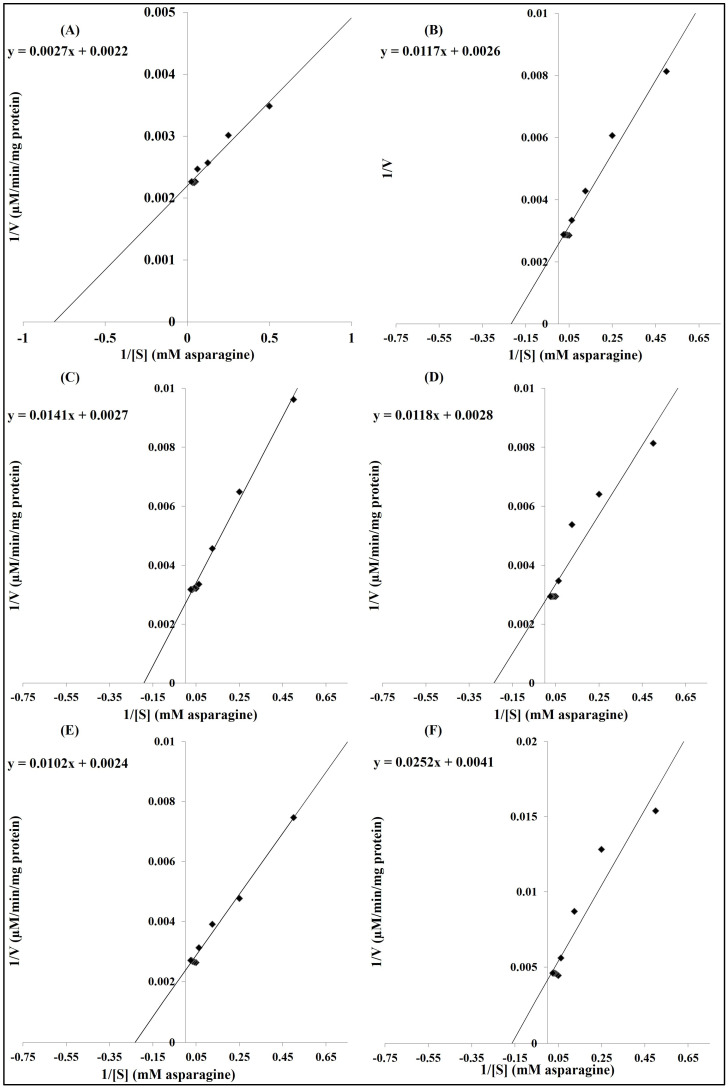
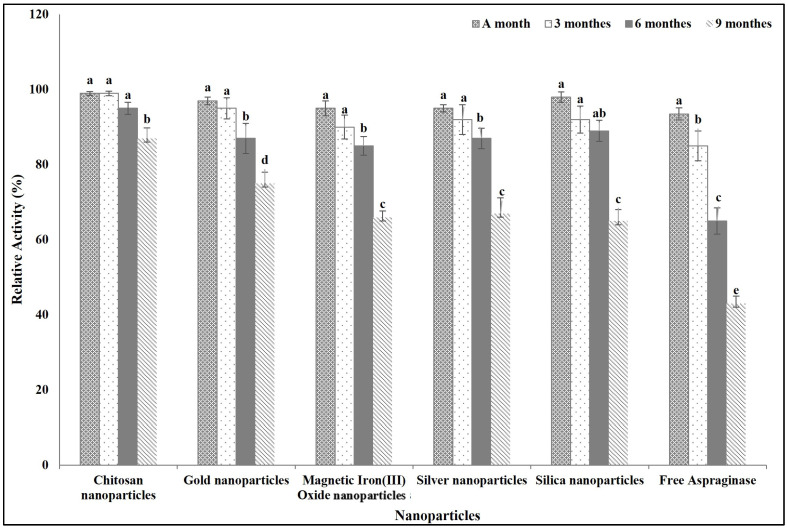
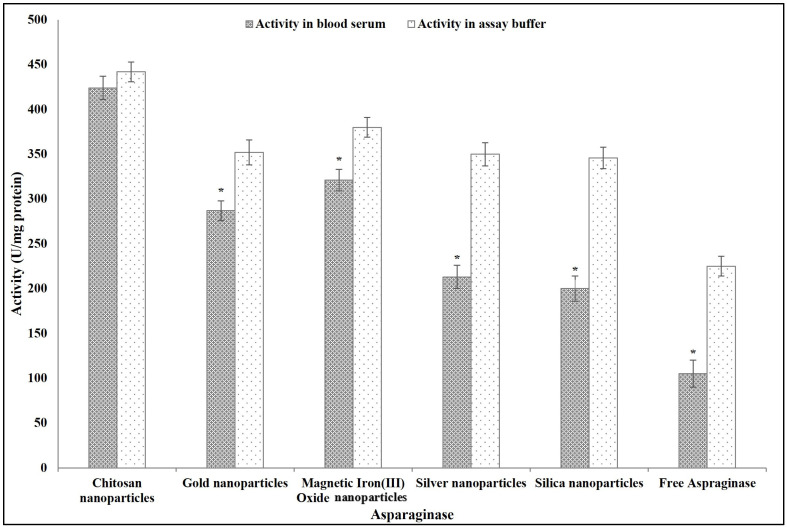
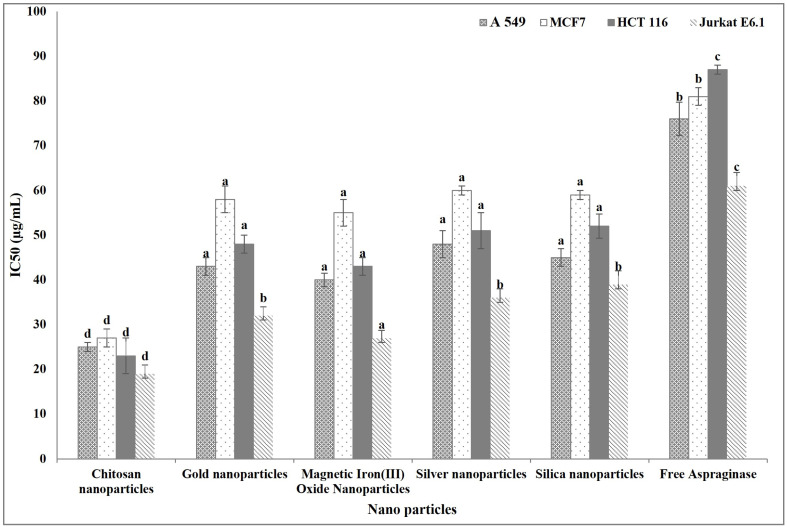
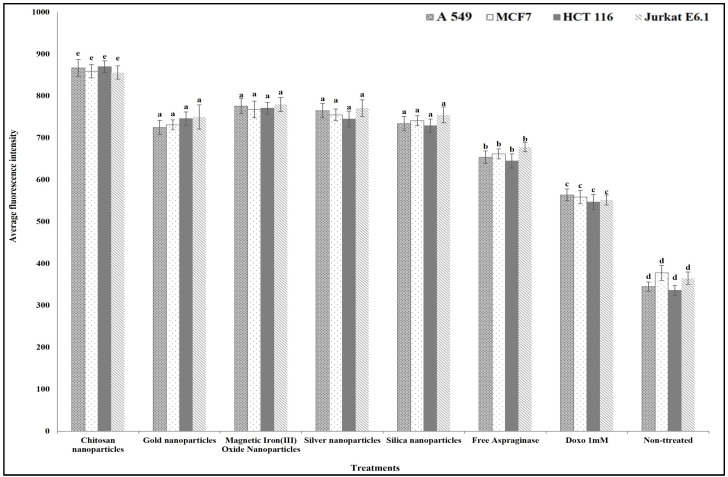
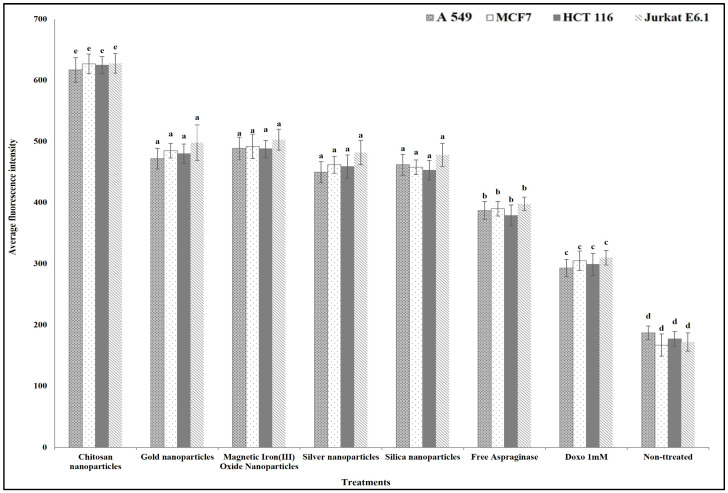
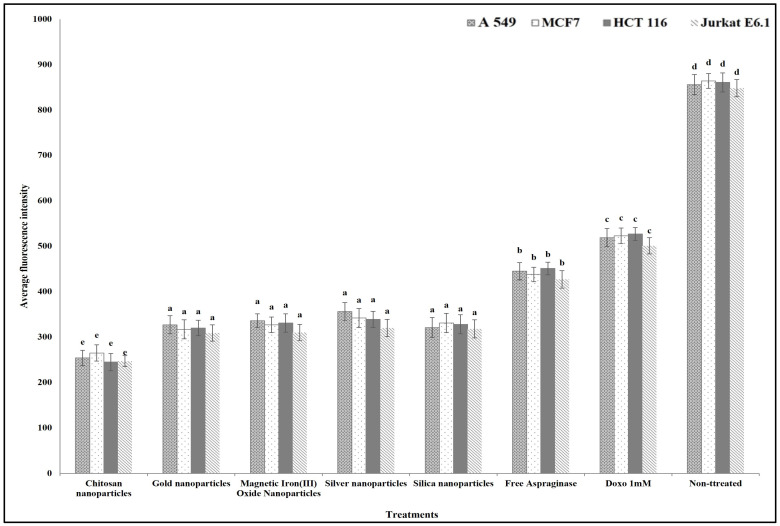
There is a shortage in the experimental research directly comparing the effectiveness of different nanoparticles in boosting asparaginase (ASNase) activity. This study assessed the impact of various nanoparticles on enhancing ASNase activity, stability, and anticancer effects through immobilization. ASNase was immobilized on different nanoparticles, and its efficiency was measured. The research included analyzing the enzyme's secondary structure, stability, activity at different temperatures, kinetic parameters, shelf life, and activity in blood serum. The anticancer efficacy was determined by measuring the IC. The study also investigated the anticancer mechanisms by examining the enzyme's toxicity on cancer cells, focusing on apoptosis indicators like nuclear intensity, membrane permeability, mitochondrial membrane permeability, and cytochrome c release. Among the tested nanoparticles, nano chitosan yielded the best improvements. ASNase immobilized on nano chitosan reached 90% immobilization efficiency fastest among the studied nanoparticles, achieving this within 72 h, whereas other nanoparticles took 120 h. Immobilization modified ASNase's secondary structure by increasing alpha helices and reducing random coils, with nanochitosan and magnetic iron oxide showing the most pronounced effects. Immobilized ASNase exhibited enhanced activity, stability across temperature (widest with nanochitosan, 25-65 °C), and a broader optimal pH range compared to the free enzyme, with a K of 1.227 mM and a V of 454.54 U/mg protein. Notably, the nano-chitosan-immobilized ASNase retained over 85% of its activity after 9 months of storage and maintained high activity in blood serum. This improved stability and activity translated into the highest anticancer activity (Lowest IC) and was more effective than doxorubicin in disrupting cancer cell structures.
在直接比较不同纳米颗粒增强天冬酰胺酶(ASNase)活性效果的实验研究方面存在不足。本研究通过固定化评估了各种纳米颗粒对增强ASNase活性、稳定性和抗癌效果的影响。将ASNase固定在不同的纳米颗粒上,并测量其效率。该研究包括分析酶的二级结构、稳定性、在不同温度下的活性、动力学参数、保质期以及在血清中的活性。通过测量IC来确定抗癌效果。该研究还通过检测酶对癌细胞的毒性来研究抗癌机制,重点关注凋亡指标,如核强度、膜通透性、线粒体膜通透性和细胞色素c释放。在所测试的纳米颗粒中,纳米壳聚糖产生的改善效果最佳。在研究的纳米颗粒中,固定在纳米壳聚糖上的ASNase在72小时内最快达到90%的固定效率,而其他纳米颗粒则需要120小时。固定化通过增加α螺旋和减少无规卷曲改变了ASNase的二级结构,纳米壳聚糖和磁性氧化铁的效果最为显著。与游离酶相比,固定化的ASNase表现出增强的活性、在较宽温度范围内的稳定性(纳米壳聚糖最宽,25 - 65°C)以及更宽的最佳pH范围,其K为1.227 mM,V为454.54 U/mg蛋白质。值得注意的是,纳米壳聚糖固定化的ASNase在储存9个月后仍保留超过85%的活性,并在血清中保持高活性。这种提高的稳定性和活性转化为最高的抗癌活性(最低的IC),并且在破坏癌细胞结构方面比阿霉素更有效。