Zazeri Gabriel, Povinelli Ana Paula Ribeiro, Bertozo Luiza de Carvalho, Jones Alan M, Ximenes Valdecir Farias
Departamento de Física, Universidade Federal de Roraima (UFRR), Boa Vista 69310-000, RR, Brazil.
Instituto de Biociências Letras e Ciências Exatas, Universidade Estadual Paulista (UNESP), São José do Rio Preto 15054-000, SP, Brazil.
Int J Mol Sci. 2024 Nov 25;25(23):12664. doi: 10.3390/ijms252312664.
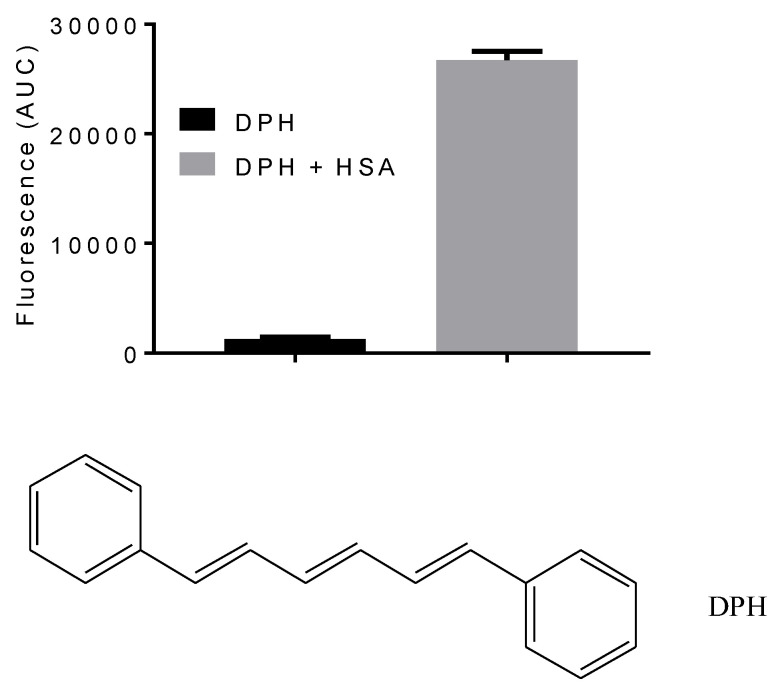
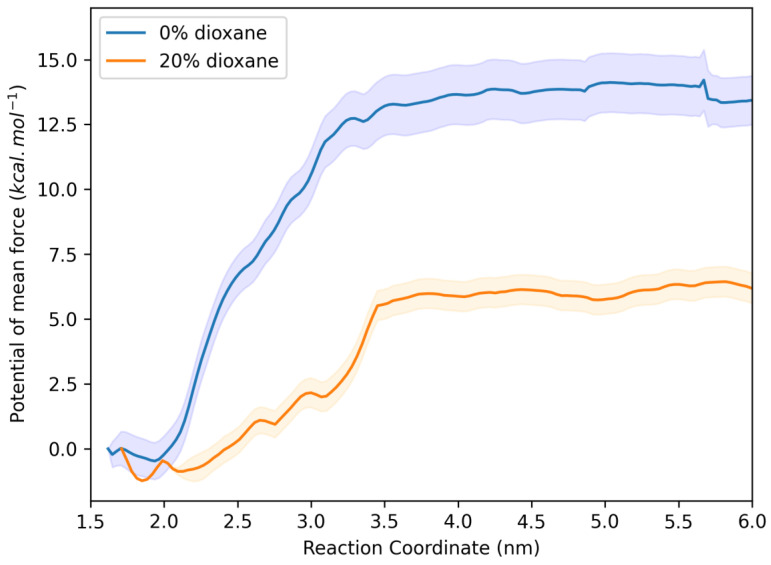
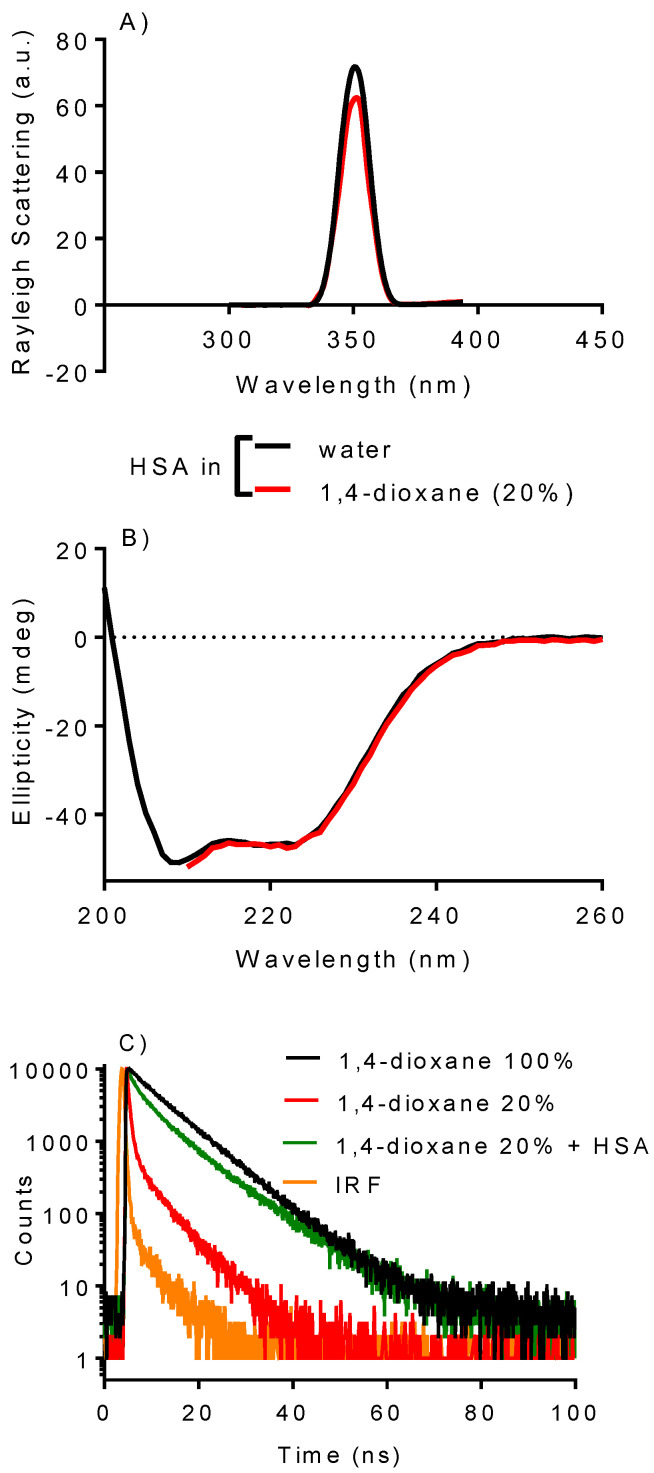
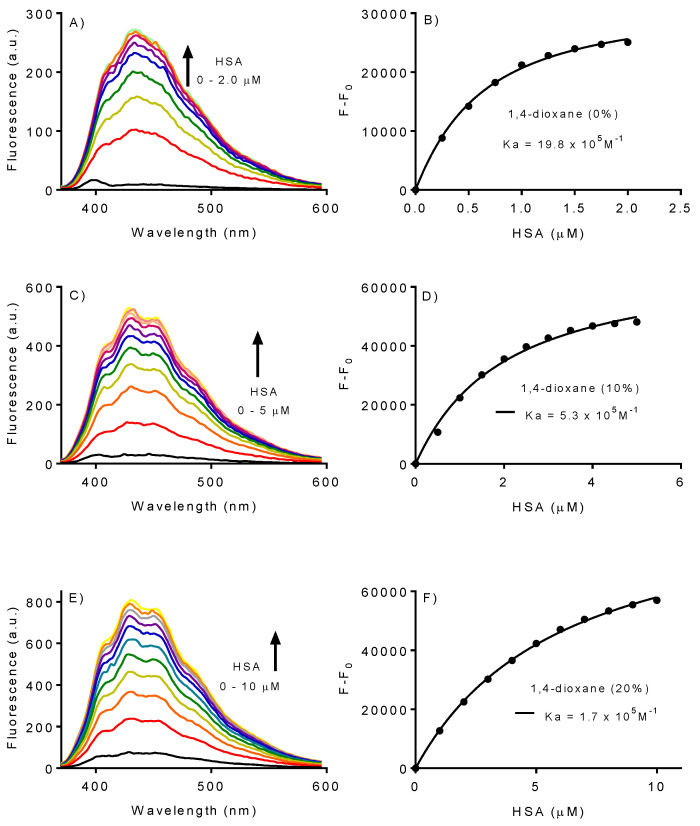
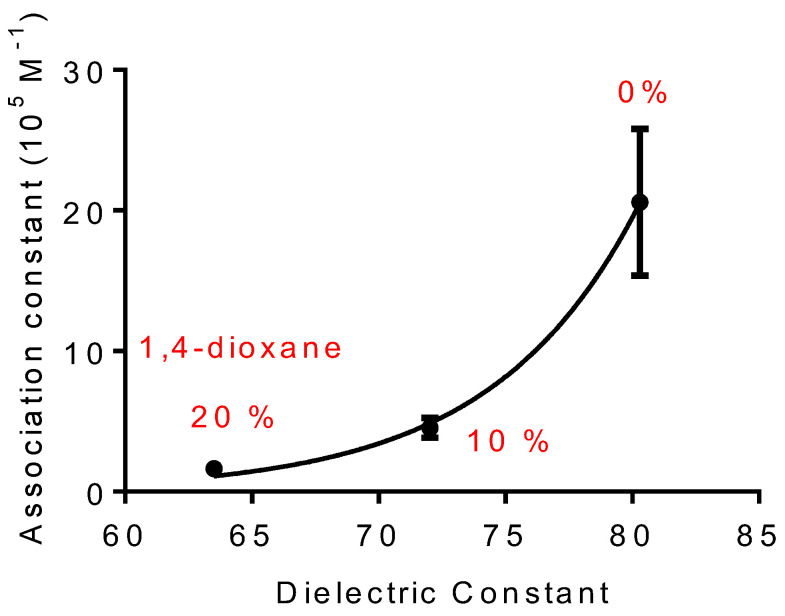
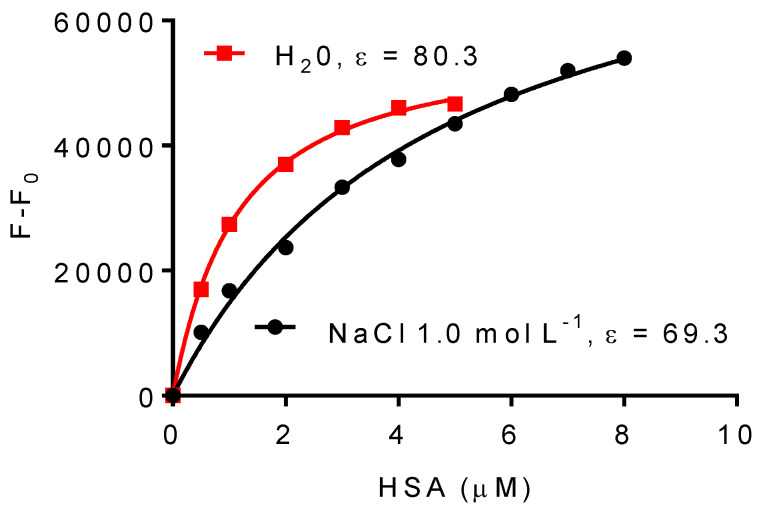
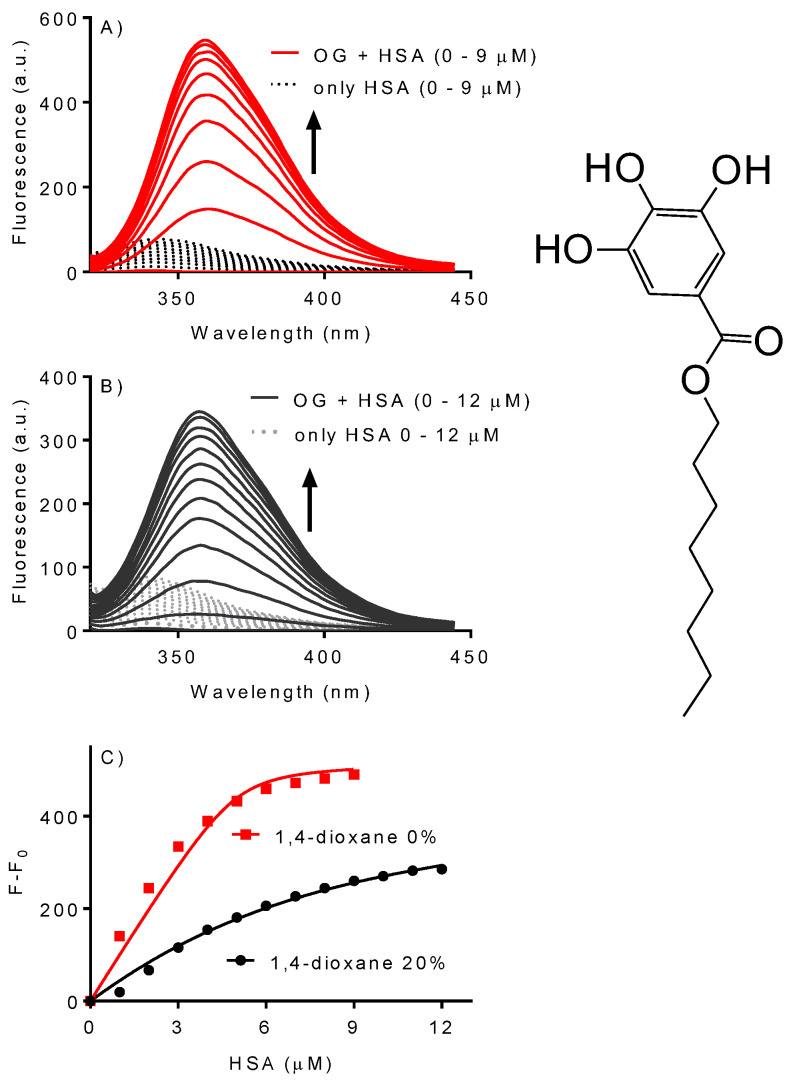
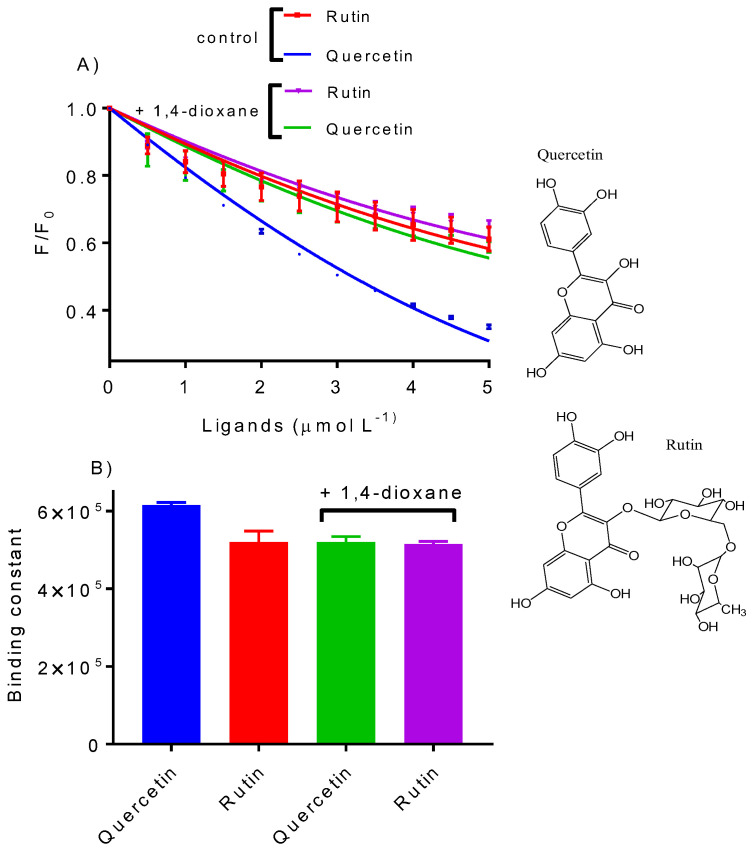
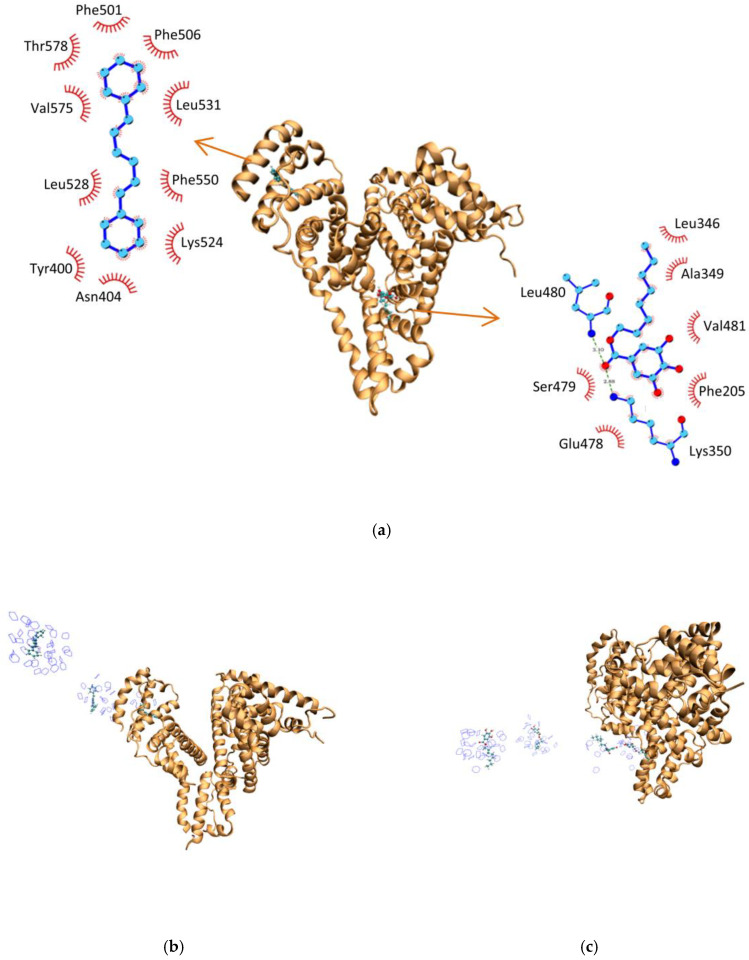
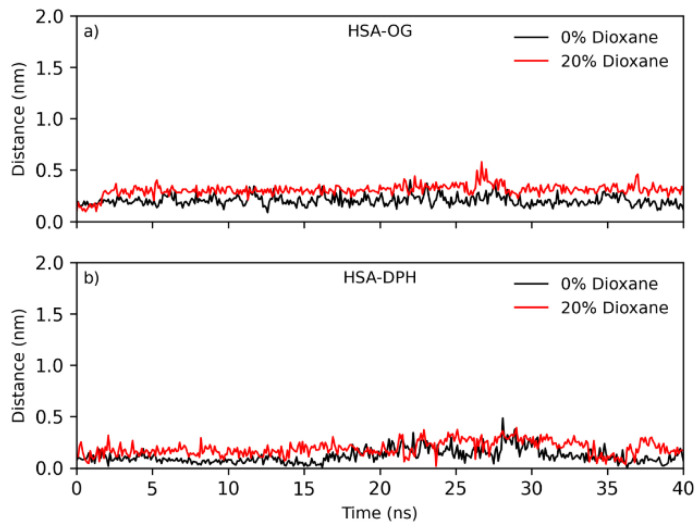
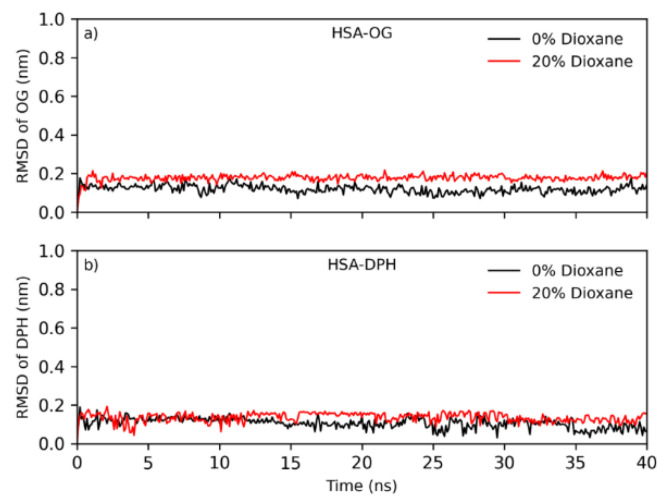
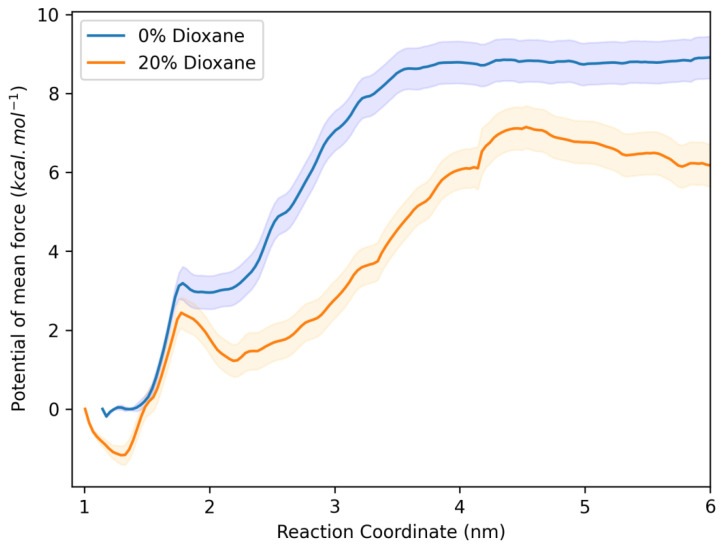
This study evaluates how the polarity of the medium affects the binding efficiency of hydrophobic ligands with human serum albumin (HSA). The polarity of the aqueous medium was changed by adding 1,4-dioxane in concentrations of 0%, 10%, and 20% /, resulting in solvent mixtures with decreasing dielectric constants (ε = 80, 72, and 63). The addition of 1,4-dioxane did not affect the integrity of the protein, as confirmed by Far-UV-CD, Rayleigh scattering, and time-resolved fluorescence experiments. The impact of medium polarity on the binding constants was evaluated using 1,6-diphenyl-1,3,5-hexatriene (DPH), octyl gallate (OG), quercetin, and rutin as ligands. The association constants of DPH decreased as the medium hydrophobicity increased: at 0%, = 19.8 × 10 M; at 10%, = 5.3 × 10 M; and at 20%, = 1.7 × 10 M. The decrease was still higher using OG: at 0%, = 5.2 × 10 M; and at 20%, = 2.2 × 10 M. The results in the same direction were obtained using quercetin and rutin as ligands. Molecular dynamics simulations illustrated the hydrophobic effect at the molecular level. The energy barrier for DPH to detach from the protein's hydrophobic site and to move into the bulk solution was higher at 0% (9 kcal/mol) than at 20% 1,4-dioxane (7 kcal/mol). The difference was higher for OG, with 14 and 6 kcal/mol, respectively. Based on these findings, it was shown that the difference in hydrophobicity between the protein's microenvironment and the surrounding solvent is an essential component for the effectiveness of the interaction. These results shed light on albumin-ligand complexation, a molecular interaction that has been extensively studied.
本研究评估了介质的极性如何影响疏水性配体与人血清白蛋白(HSA)的结合效率。通过添加浓度为0%、10%和20%的1,4 - 二氧六环来改变水性介质的极性,从而得到介电常数降低的溶剂混合物(ε = 80、72和63)。远紫外圆二色光谱(Far - UV - CD)、瑞利散射和时间分辨荧光实验证实,添加1,4 - 二氧六环不会影响蛋白质的完整性。使用1,6 - 二苯基 - 1,3,5 - 己三烯(DPH)、没食子酸辛酯(OG)、槲皮素和芦丁作为配体,评估介质极性对结合常数的影响。随着介质疏水性增加,DPH的缔合常数降低:在0%时, = 19.8×10 M;在10%时, = 5.3×10 M;在20%时, = 1.7×10 M。使用OG时降低幅度更大:在0%时, = 5.2×10 M;在20%时, = 2.2×10 M。使用槲皮素和芦丁作为配体也得到了相同趋势的结果。分子动力学模拟在分子水平上阐明了疏水效应。DPH从蛋白质疏水位点脱离并进入本体溶液的能垒在0%(9千卡/摩尔)时高于在20% 1,4 - 二氧六环时(7千卡/摩尔)。OG的差异更大,分别为14和6千卡/摩尔。基于这些发现,表明蛋白质微环境与周围溶剂之间的疏水性差异是相互作用有效性的重要组成部分。这些结果为白蛋白 - 配体络合作用提供了新的见解,这是一种已被广泛研究的分子相互作用。