Iordache Valentin, Minea Marius, Gheorghiu Răzvan Andrei, Bădău Florin, Cormoș Angel Ciprian, Stan Valentin Alexandru, Stăncel Ion Nicolae, Stoica Victor
Transport Faculty, National University of Science and Technology POLITEHNICA Bucharest, 060042 Bucharest, Romania.
Sensors (Basel). 2024 Nov 28;24(23):7607. doi: 10.3390/s24237607.
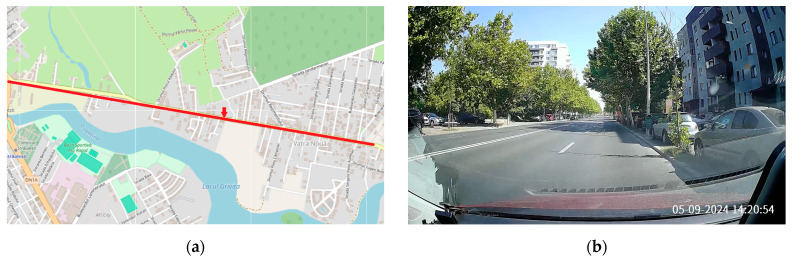
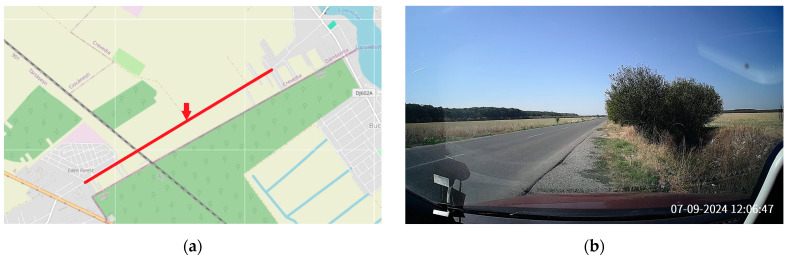
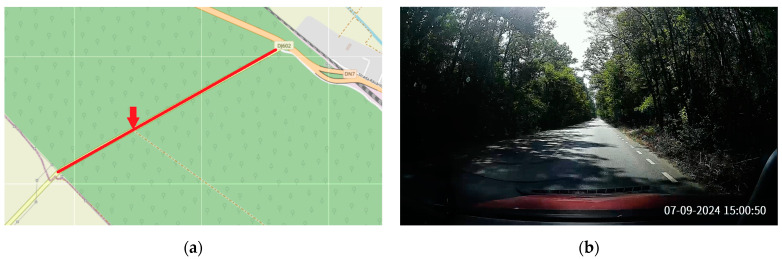
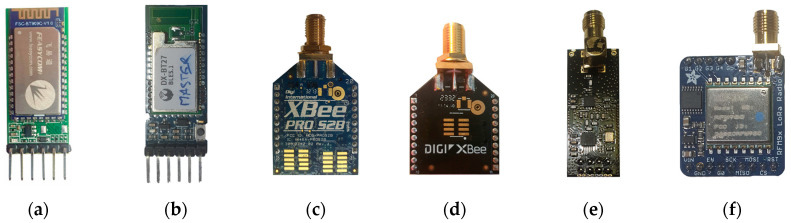
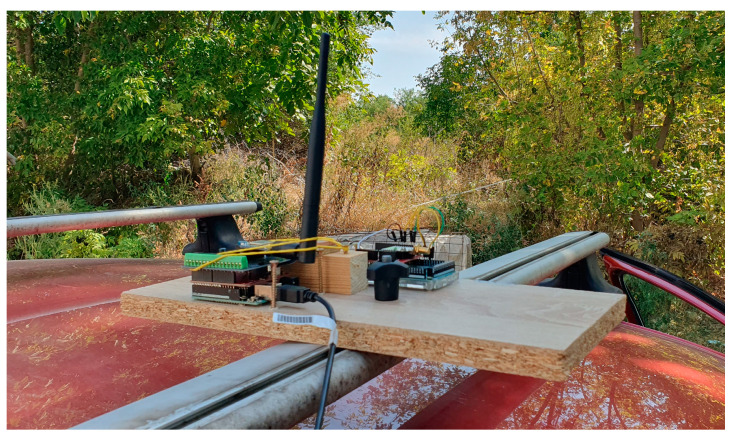
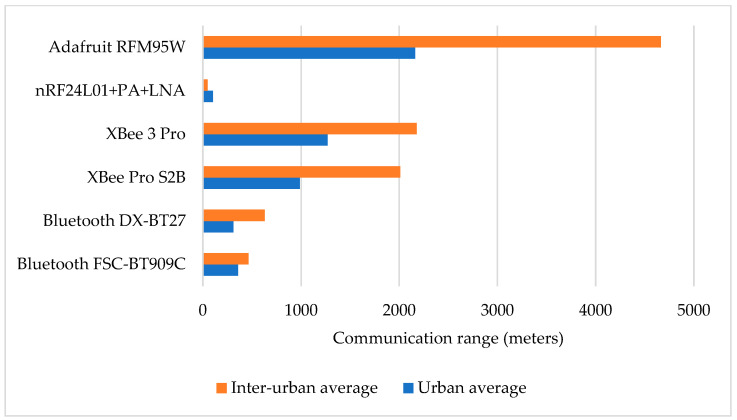
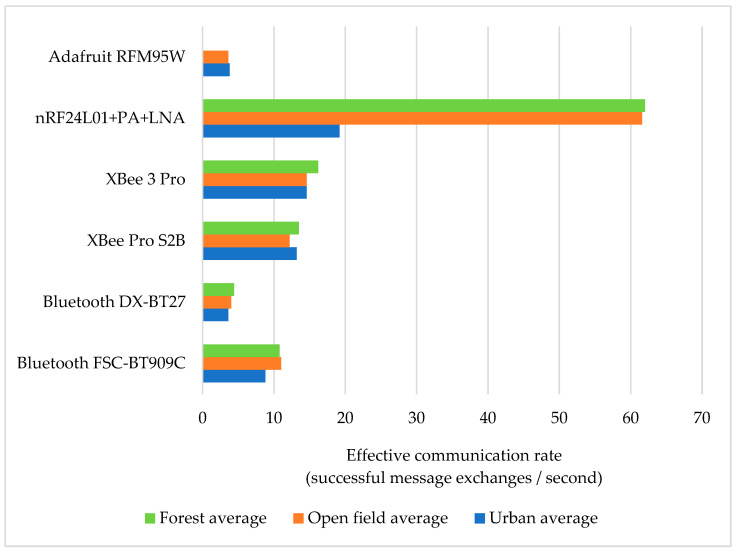
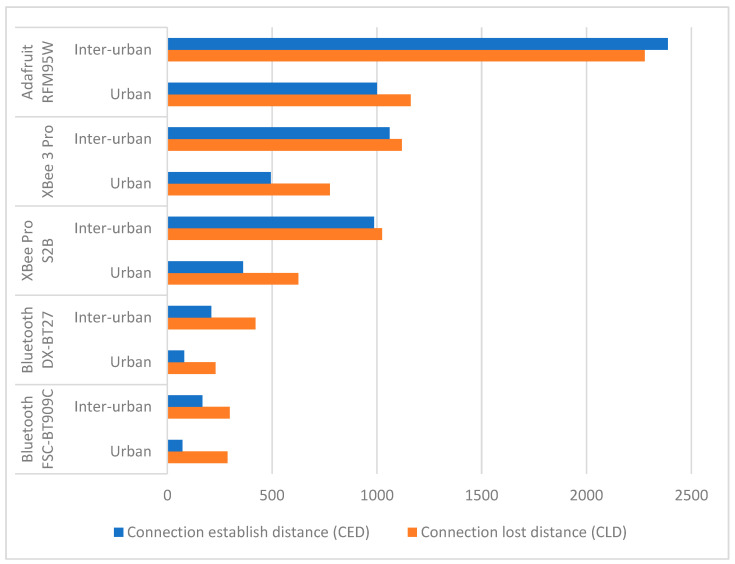
Integrating road vehicles into broader Internet of Things (IoT) ecosystems is an important step in the development of fully connected and smart transportation systems. This research explores the potential of using communication technologies that achieve a balance between low-power and long-range (LPLR) capabilities while remaining cost-effective, specifically Bluetooth Classic BR-EDR, Bluetooth LE, ZigBee, nRF24, and LoRa-for Vehicle-to-Infrastructure (V2I) and Vehicle-to-IoT (V2IoT) ecosystem interactions. During this research, several field tests were conducted employing different types of communication modules, across three distinct environments: an open-field inter-urban road, a forest inter-urban road, and an urban road. The modules were evaluated based on the communication range, messaging rate, error rate, and geographical data from GNSS (Global Navigation Satellite System) coordinates, using point-to-point communication between a roadside unit (RSU) and a moving vehicle equipped with an onboard unit (OBU). The results demonstrate the usability of these technologies for integrating vehicles into both public infrastructure (for V2I services) and private IoT systems, highlighting their potential for scalable, cost-effective deployment in smart transportation systems.
将道路车辆集成到更广泛的物联网(IoT)生态系统中是发展全连接和智能交通系统的重要一步。本研究探索了使用通信技术的潜力,这些技术在保持成本效益的同时,能在低功耗和远距离(LPLR)能力之间取得平衡,具体包括经典蓝牙BR-EDR、低功耗蓝牙、ZigBee、nRF24和LoRa,用于车到基础设施(V2I)和车到物联网(V2IoT)生态系统交互。在这项研究中,在三种不同环境下进行了多次现场测试,使用了不同类型的通信模块:开阔地城市间道路、森林城市间道路和城市道路。基于通信范围、消息传输速率、错误率以及来自全球导航卫星系统(GNSS)坐标的地理数据,通过路边单元(RSU)与配备车载单元(OBU)的移动车辆之间的点对点通信对模块进行评估。结果表明,这些技术可用于将车辆集成到公共基础设施(用于V2I服务)和私有物联网系统中,凸显了它们在智能交通系统中进行可扩展、经济高效部署的潜力。